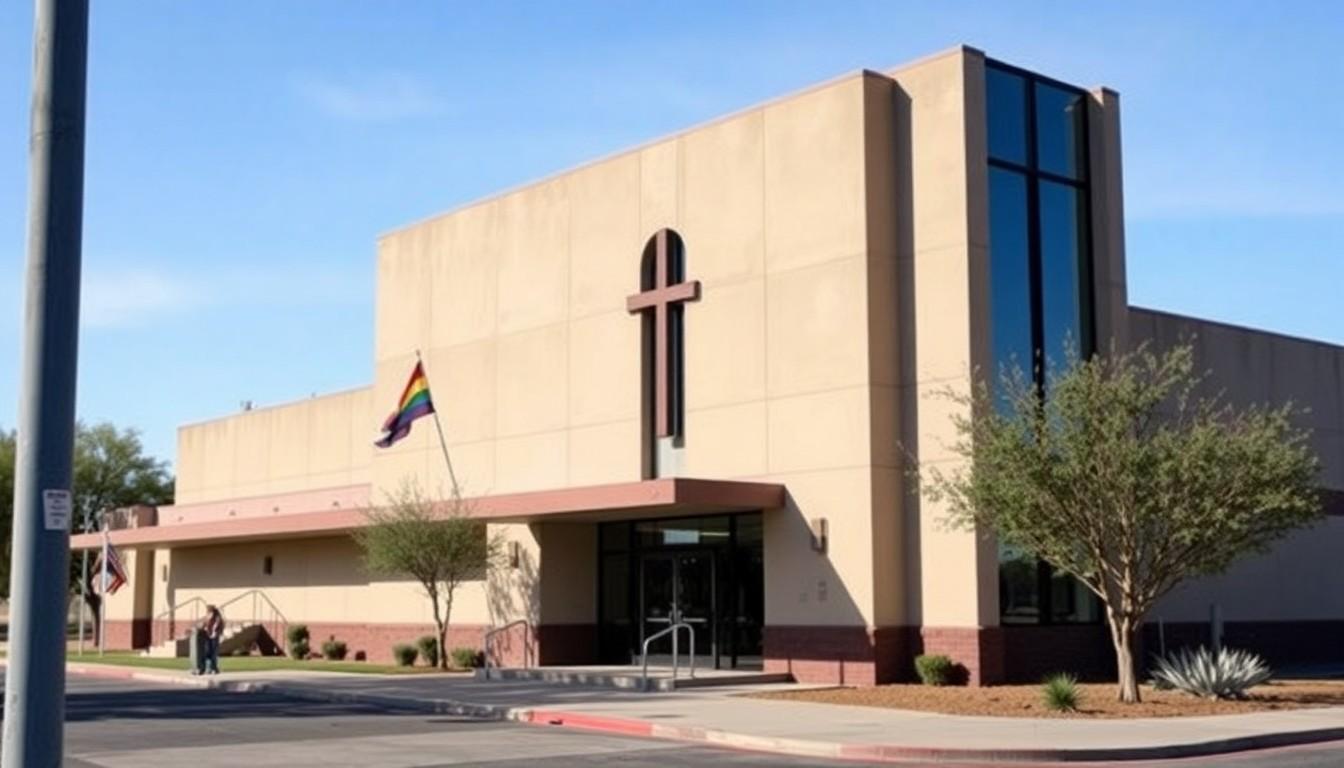
Shoppers are turning to faith-led activism: Arizona clergy and community groups are joining a Respect for Marriage campaign to remove the state’s constitutional ban on same-sex marriage, a local push that matters because a future U.S. Supreme Court reversal could leave couples without federal protection.
Essential Takeaways
- Visible support: Arizona Bishop Jennifer Reddall publicly signed the Respect for Marriage pledge outside Trinity Episcopal Cathedral, signalling clerical backing for the campaign and faith participation.
- What’s at risk: A Supreme Court rollback of Obergefell could reactivate state bans like Arizona’s constitutional wording that defines marriage as between a man and a woman.
- Grassroots push: ONE Community and Equality Arizona launched Respect for Marriage Arizona to educate voters and gather signatures ahead of a possible 2028 ballot amendment.
- Broad backing: The campaign is courting individual signatories and faith organisations, aiming for public pressure that might prompt legislative action.
- Practical step: Arizonans can sign the pledge on local campaign sites to show support and help build momentum for a ballot measure.
Why a bishop’s signature matters , and why it felt urgent
Bishop Jennifer Reddall’s decision to kneel and sign a pledge outside Trinity Episcopal Cathedral felt like a small, tactile act with big symbolism; it’s faith leadership meeting civic urgency. According to Episcopal News Service, she framed the move as protecting “every marriage” and announced her support on social media. For congregations used to internal rites and pastoral care, this is a visible translation of theological commitment into civic action. Clergy backing signals to parishioners that defending civil marriage isn’t just political theatre, it’s a moral concern for faith communities.
The legal backstory: Obergefell, Thomas’s warning, and what could change
The 2015 Obergefell ruling made same-sex marriage constitutional nationwide, but recent Supreme Court decisions have rattled that sense of permanence. Justice Clarence Thomas’s 2022 suggestion to reconsider substantive due process precedents has fuelled fears that the court could strip federal protections and send marriage law back to the states. ConstitutionalDesign at ASU explains how federal statutes like the Respect for Marriage Act interact with state law, but if the highest court reverses course, state constitutional language , like Arizona’s 2008 amendment , could once again determine couples’ rights. That’s why local fixes are suddenly urgent.
What Respect for Marriage Arizona is doing on the ground
ONE Community and Equality Arizona launched their Respect for Marriage Arizona educational campaign in February to build awareness and collect public pledges. The groups have built an online hub where people can sign and where faith organisations are invited to join, mirroring national Respect for Marriage efforts. The aim is twofold: inform voters about what legal marriage means and generate enough public momentum that the state legislature will act to place a constitutional amendment on the November 2028 ballot. For activists, education plus broad-based endorsement is the strategy.
Politics and polling: why Arizona is a test case
Arizona’s political mix , a Republican-leaning registration but swing-state voting patterns , makes it a useful barometer. Voters backed a ban in 2008, but federal court rulings later neutralised it; public opinion has shifted since then, with polls showing majority support for marriage equality in the state and nationally. That combination means an organised campaign could succeed where a decade earlier it might have failed. For organisers, the practical takeaway is to marry persuasion with turnout: educating persuadable voters and mobilising supporters in key districts.
How faith groups and everyday people can help , practical steps
If you live in Arizona and want to pitch in, the first, simplest move is signing the online pledge hosted by the campaign’s sites. Faith groups can add clout by endorsing publicly, hosting informational events, or offering their buildings as safe spaces for community organising. Campaigners recommend clear, calm conversations about what legal marriage protections mean for families, and practical logistics like collecting voter signatures and tracking deadlines for a 2028 ballot. Small acts , pinning a poster in a church hall or sharing a factual explainer on social media , add up.
What happens next and why this matters beyond Arizona
Organisers say the present phase is educational; the goal is to persuade the legislature to act so voters can decide at the ballot box by 2028. Even if Arizona succeeds, the story matters more broadly: it’s a model for how local coalitions , faith leaders, advocacy groups and ordinary citizens , can shore up civil rights in an uncertain national legal landscape. For families, it’s about practical security; for communities, it’s about who’s welcomed and protected.
It’s a small, civic-minded step that could make every marriage safer.
Source Reference Map
Story idea inspired by: [1]
Sources by paragraph: