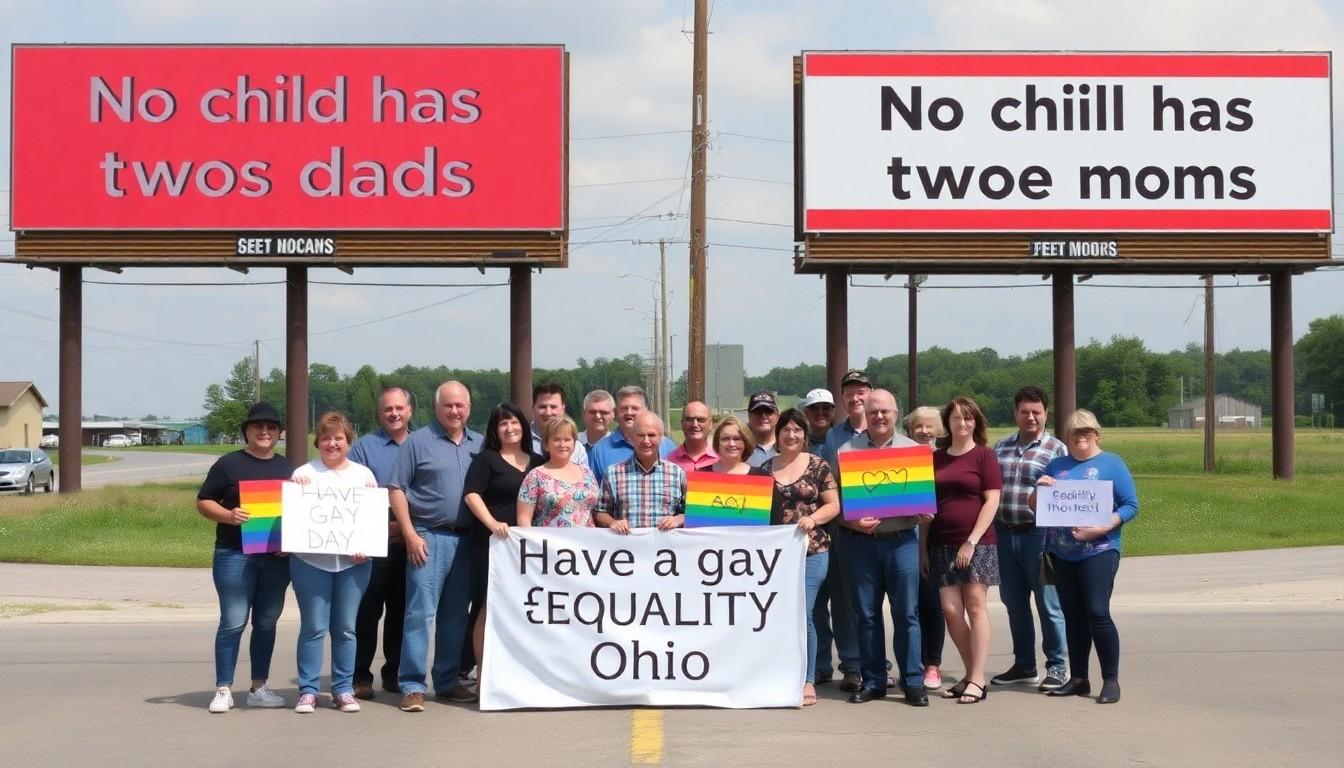
Shoppers and residents in rural Ohio have pushed back after a string of anti-LGBTQ+ billboards declaring “No child has two dads. No child has two moms” appeared beside roads and outside stores, sparking local outrage, fundraisers and conversations about hate speech and family visibility.
Essential Takeaways
- Who paid for them: Seattle-based group Them Before Us funded the billboards, a group known for opposing same-sex marriage and assisted reproduction.
- Local reaction: A Lima resident’s social post helped the signs go viral, mobilising community anger and city-level concern.
- Counter-action: Dayton’s Have a Gay Day group bought pro-family billboard space after raising more than $18,000.
- Emotional tone: Messages left many parents and kids feeling erased, while advocates call the ads fearmongering and desperate.
- Why it matters: The campaign has prompted public debate about free speech, hate speech, and who gets to define family.
A spark in Lima lit a wider debate
A passerby in Lima spotted the billboard outside a Walmart and shared a photograph on Facebook that quickly spread, showing just how small acts can amplify local concern. The image pulled in thousands of reactions and turned what might have been a quiet roadside ad into a statewide story. People described a hollow, erasing sensation , that the message denied their family’s reality , and that emotional sting is what drove so many to speak up.
According to reporting in the regional press and LGBTQ+ groups, the reaction wasn’t only online. Community members are now planning to raise the issue at Lima City Council and are talking about local measures to respond to what they see as hateful messaging.
Who’s behind the campaign and what they say
The billboards were paid for by Them Before Us, a Seattle-based organisation that has campaigned against marriage equality, IVF and no-fault divorce. The group’s public statements frame their work as protecting children, but critics point out links to well-known anti-LGBTQ+ networks and say the messaging is exclusionary.
Them Before Us has defended the copy on social media, arguing children have rights that match a specific family model. That language has galvanised opponents, who say the phrasing isn’t neutral policy debate but a deliberate attempt to marginalise gay and trans parents and children who live in a wide range of family arrangements.
How communities turned protest into action
Rather than only complain, local activists moved fast. Have a Gay Day, a Dayton-based organisation, bought billboard space in response and launched a fundraiser that pulled in more than $18,000 to keep pro-family messages going. That kind of giveaway-reclaim tactic does two things: it counters the original message visually, and it channels public frustration into a visible, affirmative alternative.
Groups like Equality Ohio and national advocates were quick to call the billboards erasing and harmful. They argue these ads aren’t just opinion; they communicate to children that their families “don’t count,” which has real psychological consequences. The counter-billboards aim to reassure kids and show that community support exists.
Where this fits into a wider cultural moment
This billboard dust-up is part of a larger trend of outside organisations buying local attention to push culture-war messages into smaller communities. Advocates say the strategy is deliberate: place stark, simple claims where they’ll shock and prompt viral reposting. The tactic works because it feels immediate , a sign beside the road , and because it’s visually shareable.
Polling cited by national LGBTQ+ groups suggests a majority of Ohioans support marriage equality, which undercuts the argument that these billboards represent mainstream public opinion. Still, as activists here note, the campaign has succeeded in stirring conversation and forcing local leaders to respond.
Practical takeaways for communities and families
If you see messaging like this in your area, there are a few constructive steps to take. Document the location with a photo, share it with local advocacy groups, and consider whether your community wants to pursue a counter-message via fundraising or public statements. Raise the issue at town or city council if you’re worried about local effects, and if a child’s safety is a concern, contact school officials or child welfare charities who can offer support.
Remember, visibility matters: pro-family billboards and local affirmations don’t erase debate, but they do reassure children who might otherwise feel isolated.
It's a small change that can make every child feel seen.
Source Reference Map
Story idea inspired by: [1]
Sources by paragraph: