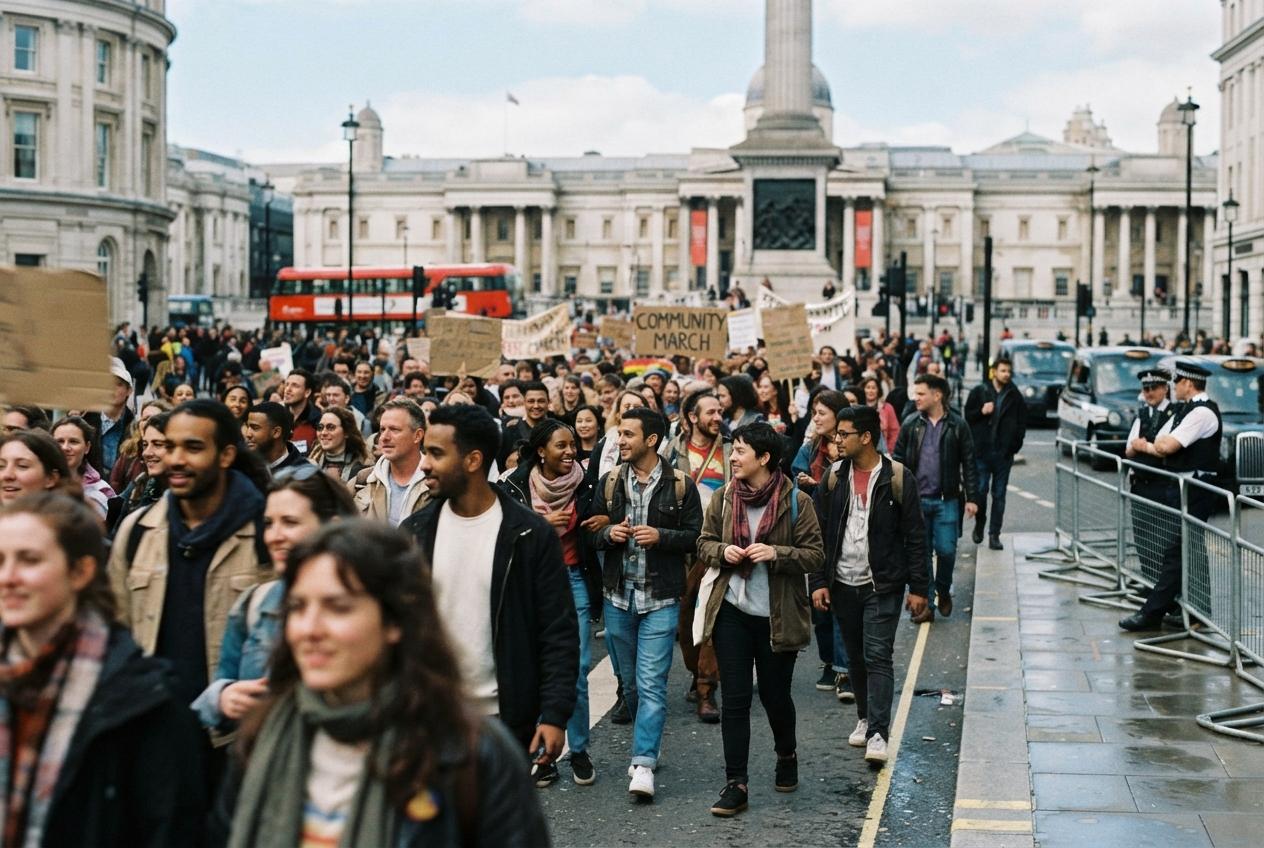
Shouting, hugging and marching , London Trans+ Pride drew roughly 150,000 people to the capital on 25 July, a record turnout that put trans+ visibility centre stage and brought speeches to Trafalgar Square for the first time. Here’s what happened, why it matters, and how the day felt for those who were there.
Essential Takeaways
- Record crowd: Organisers reported about 150,000 attendees, up from roughly 100,000 last year, signalling growing public support and visibility.
- New square-stage moment: For the first time, speeches followed the march at Trafalgar Square beneath Teresa Margolles’s sculpture of 726 faces, giving the event a dramatic, reflective backdrop.
- Big names, personal testimony: Performers and speakers included Kae Tempest, Ceyenne Doroshow and Qween Jean, alongside visible allies from TV and media.
- Community art and memory: The Trans Unity Quilt , a 96m patchwork of more than 300 personal panels , marched with protesters; its panels will now be archived for posterity.
- Political pressure: The event came just weeks before a contested EHRC Code of Practice change, underscoring the march’s political as well as celebratory tone.
A record turnout that felt like a city breathing in unison
The most striking fact of the day was the sheer scale , people packed parks and kerbs, the air warmed by chants and music, and a thread of energy you could feel underfoot. According to organisers and local reporting, about 150,000 people took part, a significant jump on last year’s estimates. For many, it wasn’t just numbers: it was the relief of being seen in public, together.
Behind the crowd was steady organising and a long history of grassroots work. London Trans+ Pride has grown steadily, and this year’s larger turnout reflects both cultural shifts and increased mobilisation against policy threats. If you weren’t there, imagine a river of colour and banners folding into Trafalgar Square , that’s the scale of visibility the movement commanded.
Speeches on Trafalgar Square: why the change mattered
This was the first year speeches were held at Trafalgar Square after the march, staged beneath Teresa Margolles’s installation bearing face casts of trans, non-binary and gender non-conforming people. The setting made the words feel weightier , a public square amplifying private stories.
Kae Tempest, who has long spoken about their own transition, gave a moving address about gratitude and community, speaking through tears and reminding the crowd why public gatherings matter. Other voices, like Ceyenne Doroshow and Qween Jean, brought international and grassroots urgency, blending celebration with calls to action. The square format gave the event a communal focus rather than just a moving parade.
The Trans Unity Quilt: a tangible archive of lives and laughter
One of the day’s most poignant sights was the Trans Unity Quilt, a 96-metre patchwork made up of more than 300 individual panels created by trans people across the UK. The patches captured everything from memorials to private jokes and family celebrations, giving the march a tactile, intimate counterpoint to the massed crowd.
Organisers say the quilt will be conserved , its 12 panels are now set for the Bishopsgate Archives , so the stories stitched into fabric won’t dissolve with the day. That archival move matters: it turns ephemeral protest into a record that future generations can study and hold. If you’re making a commemorative panel, think about including names, dates and a brief note so archivists have context.
Celebrity visibility: a double-edged boost
This year’s march included well-known faces from drama and media, which helped draw attention and mainstream coverage. High-profile attendees can amplify messages, bring cameras, and make it easier for non-activists to learn what’s at stake. But many attendees emphasised that celebrity presence doesn’t replace grassroots leadership , it supplements it.
Organisers and advocates used the attention to spotlight policy concerns, community safety and the everyday realities of trans lives. If you follow coverage on social media, look for the voices of grassroots organisers and lived-experience advocates: they usually frame what the day is actually about.
A political backdrop that sharpened the message
London Trans+ Pride didn’t happen in a policy vacuum. The event came weeks before a contested EHRC Code of Practice was due to take effect, guidance that critics say could lead to exclusions in single-sex spaces. The march’s theme, “Our Future, Our Fight”, reflected that urgency: this was celebration and resistance rolled into one.
Events like this often serve two purposes: to celebrate community and to push back on policy. For anyone watching from home, the takeaway is simple , public demonstrations still shift conversations and spotlight the human impact of abstract rules. If you care about these issues, signing petitions, supporting trans-led charities, or attending local events are concrete ways to help.
It's a small change that can make every public moment feel a bit safer and louder.
Source Reference Map
Story idea inspired by: [1]
Sources by paragraph: