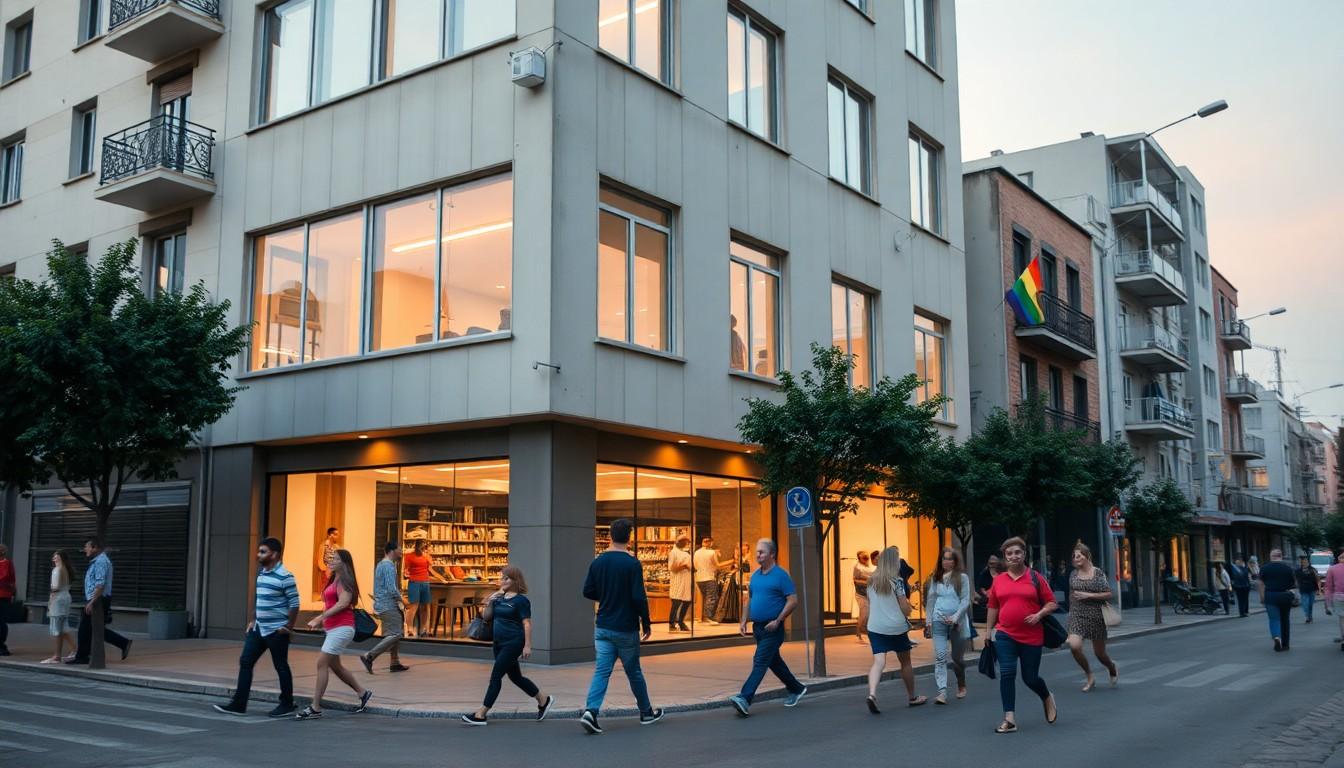
Discover how Athens’ queer scene has taken shape: a compact cluster of venues from Gazi to Exarchia, plus scattered queer-friendly spots across the city , useful if you’re planning a night out, organising events, or just curious about where queer culture is visible.
Essential Takeaways
- Dense core: Nineteen explicitly queer venues in Athens form a tight cluster, mostly between Gazi and Exarchia, giving a concentrated night-time atmosphere.
- Queer-friendly spread: Forty-three additional venues advertise queer-friendly programming and are dispersed more widely across the city.
- Scale: The study mapped 1,223 entertainment and cultural venues in Athens; queer-identified venues make up roughly one in 64.
- Rising interest: Searches for “queer friendly” in Athens have quadrupled over five years, signalling growing demand.
- Practical map: A new publicly available map lets residents and visitors see where queer and queer-friendly spaces sit in the real city.
A small but vivid queer cluster you can walk across
Athens’ explicitly queer venues are remarkably close together, creating a lively ribbon of nightlife you can stroll through in one evening. The Mood study found 19 venues clustered mostly between Gazi and Exarchia, generating a compact, walkable area with a distinct after-dark energy. This concentrated geography makes pub- and club-hopping easy, and gives the neighbourhoods a visible queer rhythm , bright lights, familiar faces, and a sense of belonging that you can almost feel.
According to the research, the map shows these venues sit within a couple of square kilometres. For locals and visitors that matters: concentrated areas help queer nights feel safer and more visible, and they make it simple to discover new spots by chance or on purpose. If you like a short walk between venues and the friendly buzz of a neighbourhood that knows its scene, this is where you’ll want to go.
Queer-friendly places take the diversity around the city
Beyond the compact core, Athens’ queer culture leaks into the wider urban fabric through 43 queer-friendly venues. These spots don’t define themselves solely as queer, but they programme queer events, welcome LGBT+ patrons and signal openness. That means whether you’re near Syntagma, Koukaki or somewhere else, there’s probably a place that will be affirming and sociable.
The practical upshot is flexibility: not every queer night has to be in the heart of Gazi. If you prefer calmer drinks or a mixed crowd, choose a queer-friendly bar close to where you live or are staying. The spread also helps bridge neighbourhoods, so queer culture isn’t entirely boxed into one pocket of the city.
How the study measured what counts as “queer” or “friendly”
Mood’s team mapped 1,223 entertainment and cultural venues across Athens and applied a dozen criteria to rate each place. Some venues explicitly identify as queer; others are listed as queer-friendly because they offer visible queer programming without being defined solely by it. The researchers made a point of mapping venues to their actual municipal coordinates, which gives a realistic picture of where people go.
That method means the map isn’t just anecdote , it’s a dataset you can consult. And while Mood’s COO stressed the role was to measure rather than interpret, the numbers still tell a story about visibility, concentration and demand. For anyone planning nights out, event programming or community outreach, this kind of evidence helps target where to focus energy.
Why demand is growing and what that means for nights out
Searches for “queer friendly” have quadrupled over five years, suggesting growing curiosity and need for inclusive spaces. That fits with a wider international shift: people are more vocal about identity, events are more varied, and tourists increasingly seek neighbourhoods where they’ll feel welcome. In this climate, more venues might add queer programming or be encouraged to advertise their openness.
For punters, the trend means more options and more choice. For venue owners, it’s an incentive to offer clearer booking policies, safer-space training for staff, and inclusive promotions. If you’re organising an event, aim to advertise inclusively and think about accessibility , both physical and cultural , so your night can reach the people looking for it.
Using the map: tips for visitors and locals
The new map is a practical tool: use it to plan an evening that matches your mood, whether you want the concentrated buzz of Gazi–Exarchia or a quieter queer-friendly bar closer to your hotel. If you’re visiting, check event listings in advance , queer nights can be themed, ticketed, or peak only on certain days. Locals should consider joining community mailing lists or social channels to get the freshest updates.
Also, think about size and safety: choose venues that suit how you like to socialise, and arrive with friends if it’s your first time. And remember, places change fast , a friendly bar today might shift its programming, so the map is a starting point, not a lifetime guarantee.
It’s a small change that can make every night out easier and more inclusive.
Source Reference Map
Story idea inspired by: [1]
Sources by paragraph: