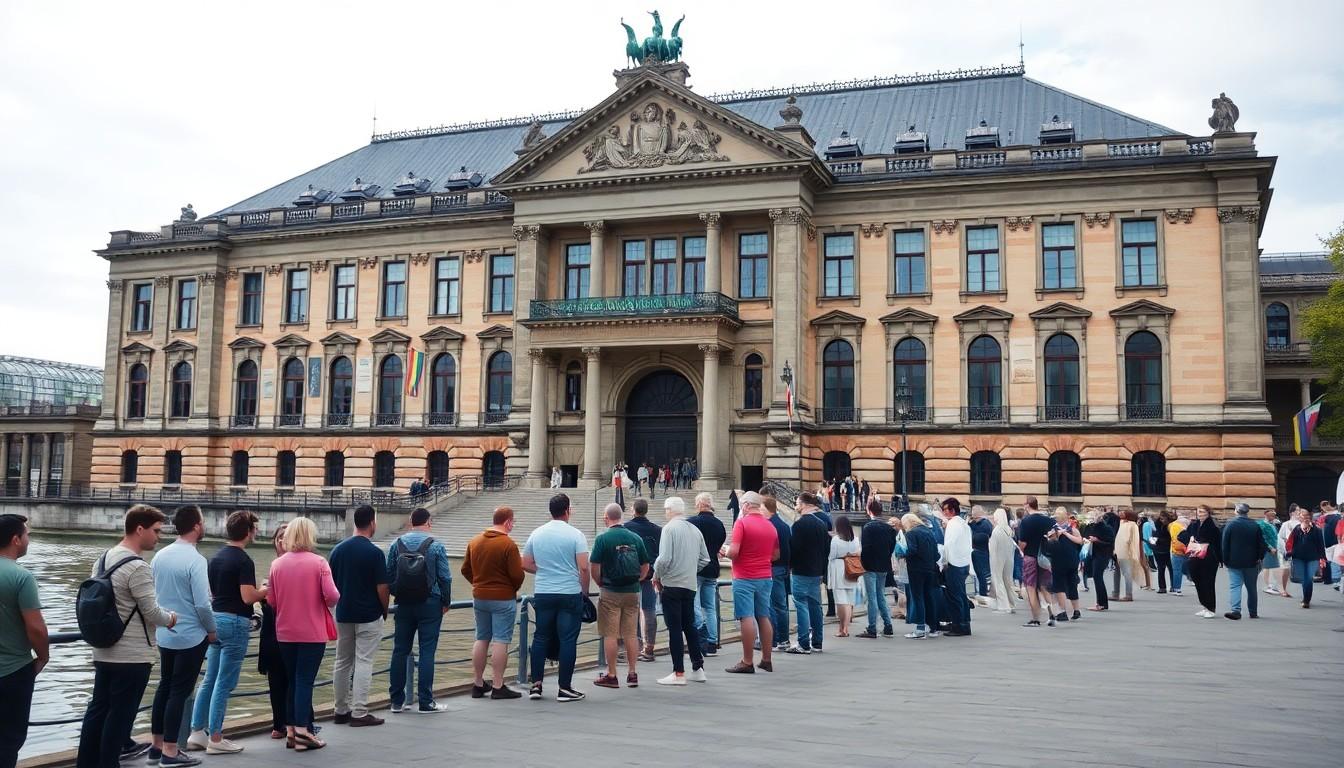
Shoppers and onlookers have seen resilience on stage: a Syrian artist in Berlin transformed a night of mourning into communal celebration, performing hours after a deadly attack at Pride to show visibility matters and that joy can be an act of resistance.
Essential Takeaways
- Immediate defiance: A Syrian performer, Haidar Darwish, danced on Berlin’s Museum Island hours after a deadly attack, signalling resilience and visibility.
- Mixed traditions, strong impact: His act blended dervish spinning and belly dance, creating a striking, emotional spectacle that moved the crowd.
- Community solidarity: The performance was part of Queens Against Borders, highlighting refugee and migrant LGBTQ+ voices amid mounting fear.
- Public reaction: Audience members leapt to their feet and joined the dancing, turning grief into a collective, cathartic moment.
- Ongoing concerns: The attack has raised questions about security and how the suspect remained at large despite a past conviction.
A performance that refused to be silenced
The strongest image from the night was immediate and theatrical: a red hoop skirt spinning, a fez perched proudly, an artist asking quietly for a moment of silence before launching into motion. Haidar Darwish’s opening was both tender and defiant, the kind of small, human ritual that cuts through shock. According to coverage from the Associated Press and other outlets, he acknowledged the attack and then declared, plainly, that the show must go on.
This wasn’t a polished, corporate response; it felt raw and necessary. Darwish is a Syrian refugee who fled in 2016, and his presence on stage carried extra weight , a reminder that migrants and refugees are part of the queer community fabric of Berlin, not separate from its grief or its joy.
Tradition meets protest: dance as political language
Darwish’s act blended traditional Anatolian dervish spinning with belly dance, moving from a slow, swirling solemnity into rousing, physical celebration. The choreography felt like narrative: first hold the sorrow, then shed it and invite others into motion. Observers noted how the billowing red skirt and the shift into faster rhythms turned the performance into a kind of communal exhale.
Arts and activism have long overlapped, and this night was a vivid example. Groups like Queens Against Borders use stagecraft to spotlight marginalised voices. Performances like this are more than spectacle; they’re public statements , visible, unignorable and intentionally joyful in the face of violence.
Why the timing mattered to Berliners and tourists alike
The decision to perform so soon after the attack was deliberate. Darwish and his fellow artists said they wanted to reach beyond the LGBTQ+ bubble, to show the city at large that the community remains present and unbowed. The audience included Berliners from many backgrounds and numerous tourists; that mix amplified the message.
It’s a reminder that public acts of visibility can rebalance narratives in days after trauma. Instead of retreating indoors, these performers chose to reclaim public space. For many in the crowd, joining in the dancing was a way to respond , not with silence alone, but with embodied solidarity.
Security questions and the wider fallout
While the stage offered a temporary balm, it didn’t erase serious policy questions. Reports from several outlets have noted that authorities are probing how the attacker, who had ties to extremist networks and a prior conviction, was able to move freely. That has sparked wider debate in Germany about monitoring, rehabilitation, and public safety around large events.
For the community, this adds a heavy layer to the emotional response. Artists like Darwish said they’re tired of continually having to fight for safety, yet they also recognise that public performance is a way to insist on belonging. The tension between mourning and mobilisation will shape conversations in Berlin for weeks to come.
How to support LGBTQ+ refugees and public events safely
If you want to show solidarity or help beyond applause, practical steps matter. Support groups that work with queer refugees financially or through volunteering. Attend community-led events and donate to mutual aid funds set up after attacks. When you join public gatherings, follow organisers’ safety guidance and be aware of emergency exits and first-aid points.
Small actions add up: donating, amplifying marginalised voices, and showing up to community events helps sustain the spaces that let people turn grief into joy.
It's a small change that can make every public gathering safer and every performance mean more.
Source Reference Map
Story idea inspired by: [1]
Sources by paragraph: