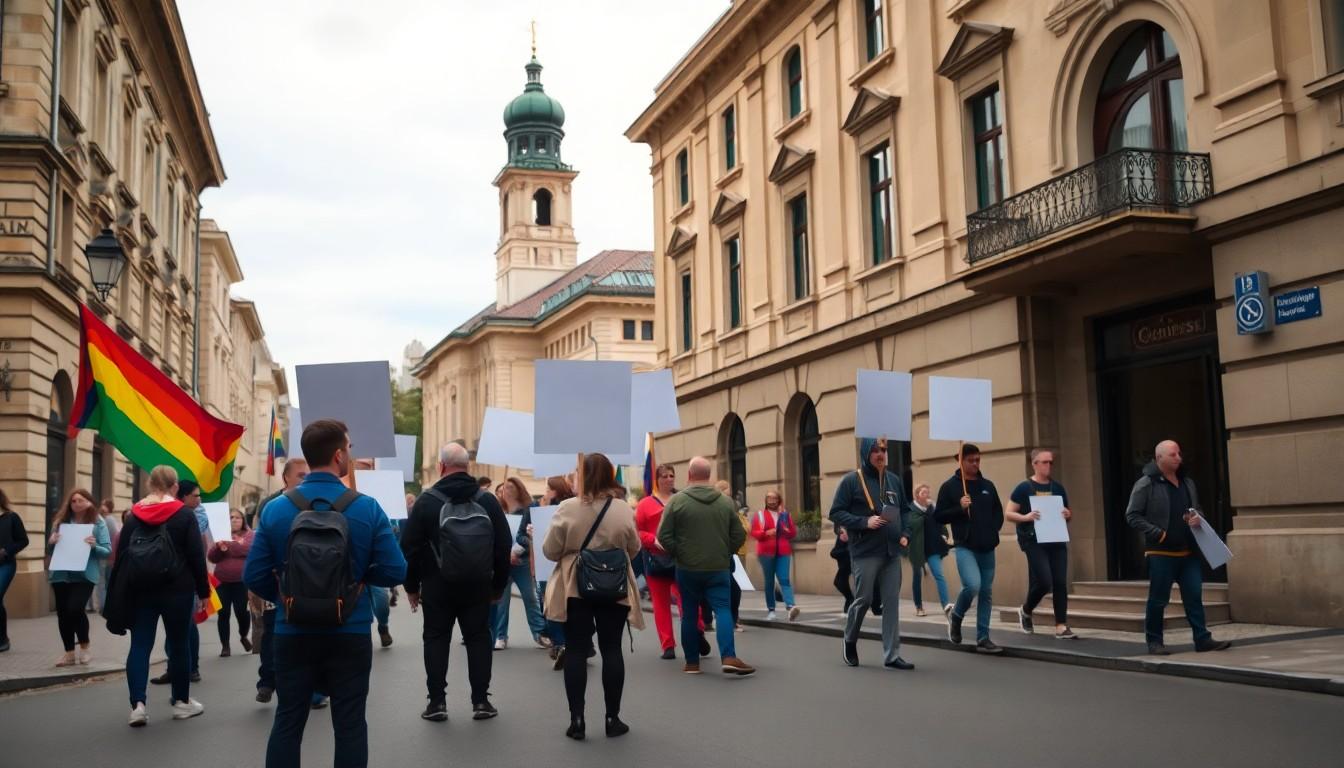
Shoppers and passers-by watched as around 200 people marched in Oradea on Saturday, carrying rainbow flags and placards after the city council refused permission; the unauthorised event drew international messages of solidarity and fresh questions about local bans on Pride marches.
Essential Takeaways
- Attendance: About 200 people joined the unauthorised Pride march through Oradea, with rainbow flags and banners creating a bright, defiant scene.
- Authority action: Local gendarmes warned participants the event wasn't permitted and said fines would be issued.
- Political imagery: Demonstrators used provocative placards, including one depicting the mayor alongside Viktor Orbán and Vladimir Putin.
- International support: Organisers received messages of solidarity from European Commission officials, diplomatic missions and mayors from Paris and Budapest.
- Context: Oradea has seen Pride restrictions before; this year's ban sits alongside wider debates in Romania and Europe about public demonstrations for LGBT+ rights.
Why people marched even after a ban
The strongest image from Saturday was the colours , rainbow flags snapping in the breeze, placards held high , a quiet, human proof of determination. According to regional reporting, the march began in front of the town hall, where gendarmes notified the crowd the council had not authorised the event and that fines could follow. Organisers decided to go ahead anyway, a choice that felt both risky and familiar to supporters.
Local officials have repeatedly cited public order or "good morals" when refusing permission for Pride events in Oradea, and this latest ban is part of a pattern observed over several years. International outlets and local media have tracked those refusals and the way activists respond, often with small marches that nevertheless attract outsized attention because of the political context.
What the imagery and solidarity signals mean
Demonstrators used imagery to make a point , one banner showed the mayor beside Viktor Orbán and Vladimir Putin, a striking visual intended to underline perceived alliances in the region. That kind of symbolism helps explain why the event drew not just local participants but also diplomatic notices: the European Commission and several foreign embassies, plus the mayors of Paris and Budapest, publicly offered support to the organisers.
Solidarity from abroad matters in multiple ways. It signals that local policing and permitting decisions are being watched, and it bolsters activists who may face legal and financial consequences. At the same time, it can harden local opposition, so organisers have to weigh visibility against safety , a practical trade-off familiar to campaigners everywhere.
How authorities handled the march , and why fines matter
Officials opted for a policing approach rather than mass arrests, with gendarmes warning marchers and informing them they could be fined. That tactic keeps immediate tensions lower, but fines and administrative penalties create a chilling effect over time: repeated fines can discourage future events and raise costs for activists.
For anyone organising or attending a demonstration under similar conditions, the basics still matter. Notify local authorities early, document any official communications, and have legal counsel or observers present where possible. Those steps won't change a council's decision, but they make it easier to challenge bans later and help protect participants on the day.
Where this sits in the wider trend across Romania and Europe
Oradea is not unique; several Romanian cities have seen disputes over Pride permissions, and international outlets have flagged patterns of repeated bans. The story echoes a wider European conversation about public assembly, minority rights and the role of local government. In some places, bans have provoked court challenges or intervention from higher levels of government; in others, organisers have adapted with creative, smaller-scale events that still keep attention on the issues.
Looking ahead, organisers say they'll keep pushing, and supporters abroad will likely continue to monitor developments. The result is a cycle of small, vivid acts of dissent paired with legal and political contestation , a familiar dance in rights campaigns, but one with real human stakes for those involved.
Practical tips if you're following or joining a Pride in a city that has refused permission
- Check for official communications from organisers about meeting points and safety plans.
- Stay in groups, carry identification, and keep mobile phones charged; consider sharing live-location with a trusted person.
- If approached by police or gendarmes, remain calm and ask for clear reasons in writing where possible.
- Consider bringing a portable charger, water and a small first-aid kit; solidarity is emotional, but comfort helps too.
It's a small change that can make every march safer and more resilient.
Source Reference Map
Story idea inspired by: [1]
Sources by paragraph: