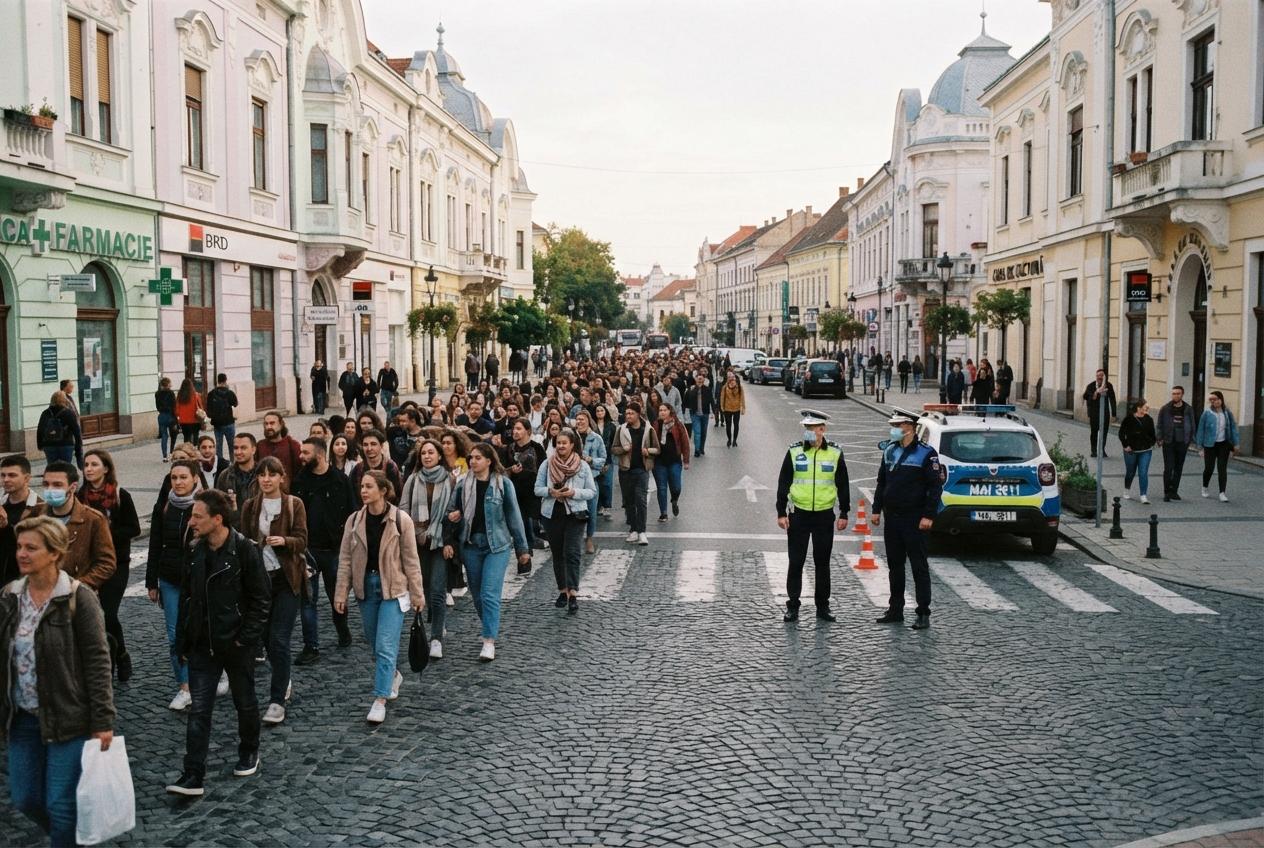
Shoppers and residents watched as LGBTQ+ activists set off through Oradea despite a municipal ban, and gendarmes handed out fines , a tense, colourful protest that raises fresh questions about the right to peaceful assembly and how local authorities enforce it.
Essential Takeaways
- What happened: Activists began the Pride march in front of Oradea City Hall and walked the central route with rainbow flags and music, despite the event not being authorised.
- Enforcement: Gendarmes issued multiple fines during the procession, citing the absence of authorisation; penalties reportedly totalled nearly 20,000 lei.
- Legal pushback: Participants and political allies say they will contest the sanctions, arguing that peaceful assembly is constitutionally protected.
- Prominent voices: Romania’s Ombudsperson attended and said there was no legal ground to bar the march; EU rights officials and NGOs also expressed concern.
- Atmosphere: The march mixed defiance and humour , protesters sang "I Don't Care" and held up placards calling for equal rights, creating a vivid, determined scene.
A march with music and fines , the opening scene
The Pride gathering began with a visual splash: people holding rainbow flags, placards and small speakers filling the air with familiar pop tunes. The mood was resolute and, at times, light-hearted , a deliberate and public claim to space. According to reports, gendarmes moved quickly to issue fines, creating confrontations and heated exchanges on the pavement. Those on the march said the sanctions amounted to an overreach; authorities maintained they were enforcing rules about unauthorised assemblies.
Why the city denied authorisation and what critics say
Oradea’s mayoralty again refused to approve the march, invoking public order and what officials described as "good morals" as justification. Opponents of the ban argue the reasons are flimsy: the law sets strict timing and notification requirements for refusals, and organisers say those deadlines weren’t respected. Renate Weber, Romania’s Ombudsperson, who attended the march, publicly questioned the legality of the prohibition and framed the right to peaceful assembly as a constitutional guarantee. That kind of pushback from a senior rights official shifts the dispute from a local spat to a legal and political debate.
Fines, numbers and planned legal fights
Local outlets report that the gendarmes handed out fines adding up to almost 20,000 lei, a figure that gives weight to the organisers’ plan to challenge the penalties in court. Party SENS and other allies said some of their members were fined and vowed to contest the reports and administrative orders. If legal challenges proceed, judges will have to consider whether municipal procedure was followed, and whether penalising mere participation in a peaceful march is lawful. For anyone watching, the immediate takeaway is that fines have not silenced the activists; they’ve signalled an intention to litigate.
The wider context , local politics and international attention
This is not an isolated tiff: Oradea has clashed with Pride organisers for years. The matter has drawn attention beyond the city, with EU human-rights officials and national commentators watching how municipal rules are used to restrict demonstrations. Former local leaders have been asked about the ban and said they weren’t fully briefed, which adds an odd political layer: who decides when a public assembly is legitimate, and on what grounds? Observers say these flashpoints are emblematic of a wider debate in Romania about civil liberties, local discretion and the role of public institutions when identity politics are involved.
What organisers, participants and bystanders said , atmosphere and reactions
Participants reported heated exchanges with law enforcement, with some calling the sanctions abusive and others insisting they’d defend their rights in court. Protest chants captured a mix of humour and seriousness , “Our rights aren’t up for grabs” and “Equal rights” were common refrains. On the street, ordinary residents watched or stepped around the procession; police blocked traffic along the planned route. For many on the march, the symbolic act of assembling in front of City Hall was itself the point , a visible reminder that civic space should be inclusive.
It's a small change that can make every public assembly safer and clearer for both organisers and authorities.
Source Reference Map
Story idea inspired by: [1]
Sources by paragraph: