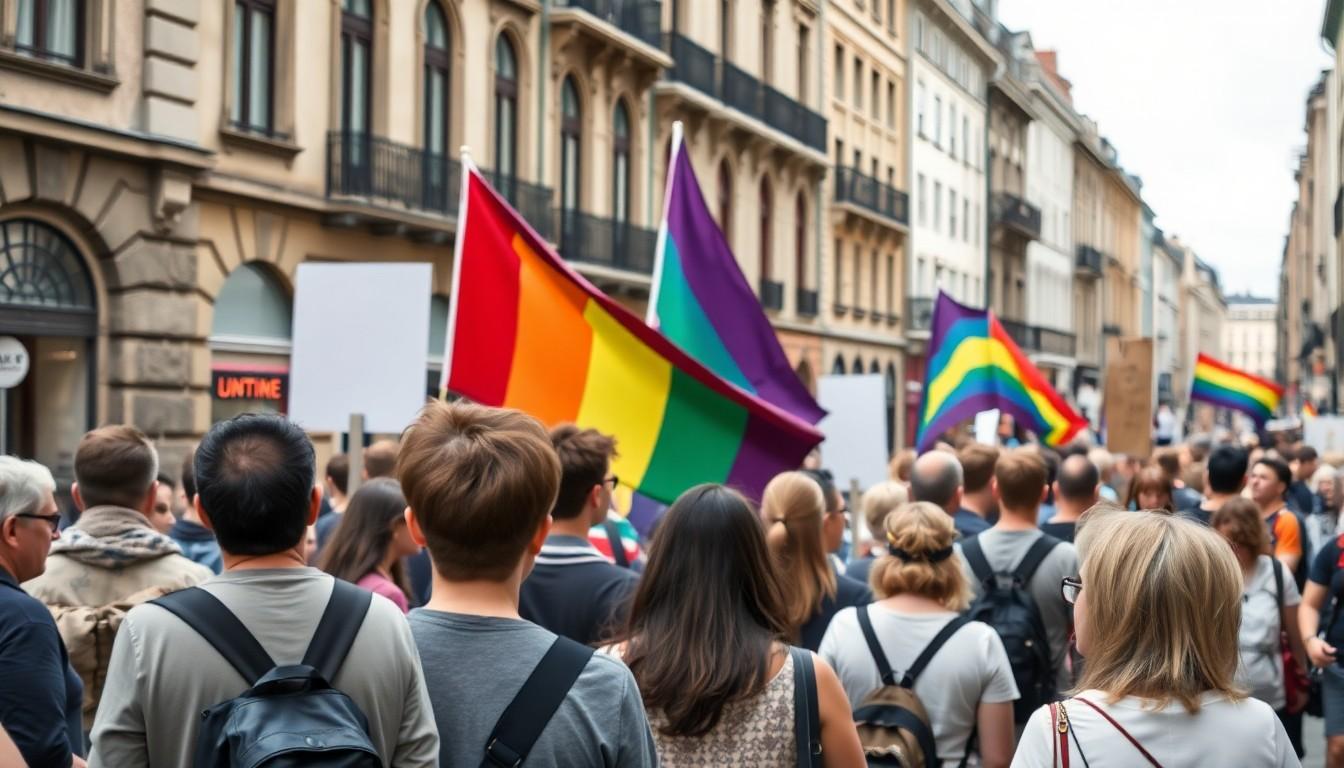
Spot a CSD on a German events calendar and don’t be puzzled , organisers are deliberately naming Pride after a New York street to keep the Stonewall story alive. This piece traces how Christopher Street became shorthand for liberation, why Germans still say CSD, and what it means when Berlin advertises “CSD Berlin” and “Berlin Pride.”
Essential Takeaways
- Origin: Christopher Street refers to the Stonewall Inn on Christopher Street in New York, the flashpoint of the 1969 uprising.
- First march: The 1970 Christopher Street Liberation Day march in New York set the template for annual Pride marches worldwide.
- Adoption in Germany: West Berlin staged its first CSD in 1979; local organisers adopted the name as a memorial and rallying cry.
- Name vs. format: CSD usually equals Pride in Germany , parties, speeches and political demands all appear under that label.
- Why both names: “Berlin Pride” helps international audiences; “CSD” keeps the Stonewall link visible and historical.
A street that became a slogan
The simplest fact is the most striking: Christopher Street is an actual lane in Manhattan’s Greenwich Village, and it houses the Stonewall Inn. The bar’s raid in June 1969 sparked protests that stretched into several nights, a raw, noisy reaction that felt electric and visible to everyone there. Remembering that texture , the chants, the heat, the sense of refusal , explains why organisers outside the US borrowed the name. Using a street name instead of a generic label keeps the memory tactile, as if you can still smell the smoke and hear the crowd.
From “Liberation Day” to an international shorthand
Activists celebrated the first anniversary of Stonewall with the Christopher Street Liberation Day march in 1970, and that event is the direct ancestor of modern Pride parades. Over time, the word “liberation” faded from many titles and “Pride” took centre stage, but the Christopher Street tag survived in parts of Europe. According to German museum and cultural write-ups, the name travelled because it mapped a clear origin story , activists abroad could trace their protest to New York and adopt not just the idea but the vocabulary.
How Germany made CSD its own
West Berlin’s first CSD in 1979 drew a few hundred people under the banner “Gay Pride” alongside the Christopher Street name. Local organisers chose the label voluntarily; there was no national decree ordering cities to say CSD. Instead, the initials caught on because they carried history and heft. Over the 1980s and 1990s many German cities established annual CSDs, each one mixing festival atmosphere with demands for rights and recognition. The result is a term that feels both celebratory and political.
Why CSD isn’t a literal “day off”
It’s worth clearing up a common misunderstanding: “Day” in Christopher Street Day doesn’t mean a public holiday. The phrase is closer to a named day of action and remembrance , a date for protest, partying and political education rolled into one. Events often run for days or a whole month, with parades, concerts and workshops. City guides and municipal pages use CSD to flag political intent as much as celebration; the name signals a history as well as a big weekend.
“Berlin Pride” for visitors, CSD for locals
You’ll see both labels used , and there’s good reason. “Berlin Pride” tells English-speaking visitors exactly what to expect; it’s clear, immediate and searchable. Meanwhile, CSD preserves the link back to Stonewall and the 1970 march. Tourism boards and organisers will use both terms depending on the audience: one word for recognition, the other for remembrance. So when a programme lists CSD Berlin, read it as Pride with a wink towards history.
Picking what matters for you
If you’re planning to attend, think about what you want: a political march, a family-friendly festival, or a big party. CSD events usually include all three, so check the programme for speeches and demonstrations if you want the activist side, or for stages and terraces if you’re in it for the atmosphere. And remember, the name is the same across many cities , it’s the local politics and programming that give each CSD its flavour.
It’s a small naming choice that keeps a crucial origin story vivid , and it means every German Pride carries a direct shout-back to Stonewall.
Source Reference Map
Story idea inspired by: [1]
Sources by paragraph: