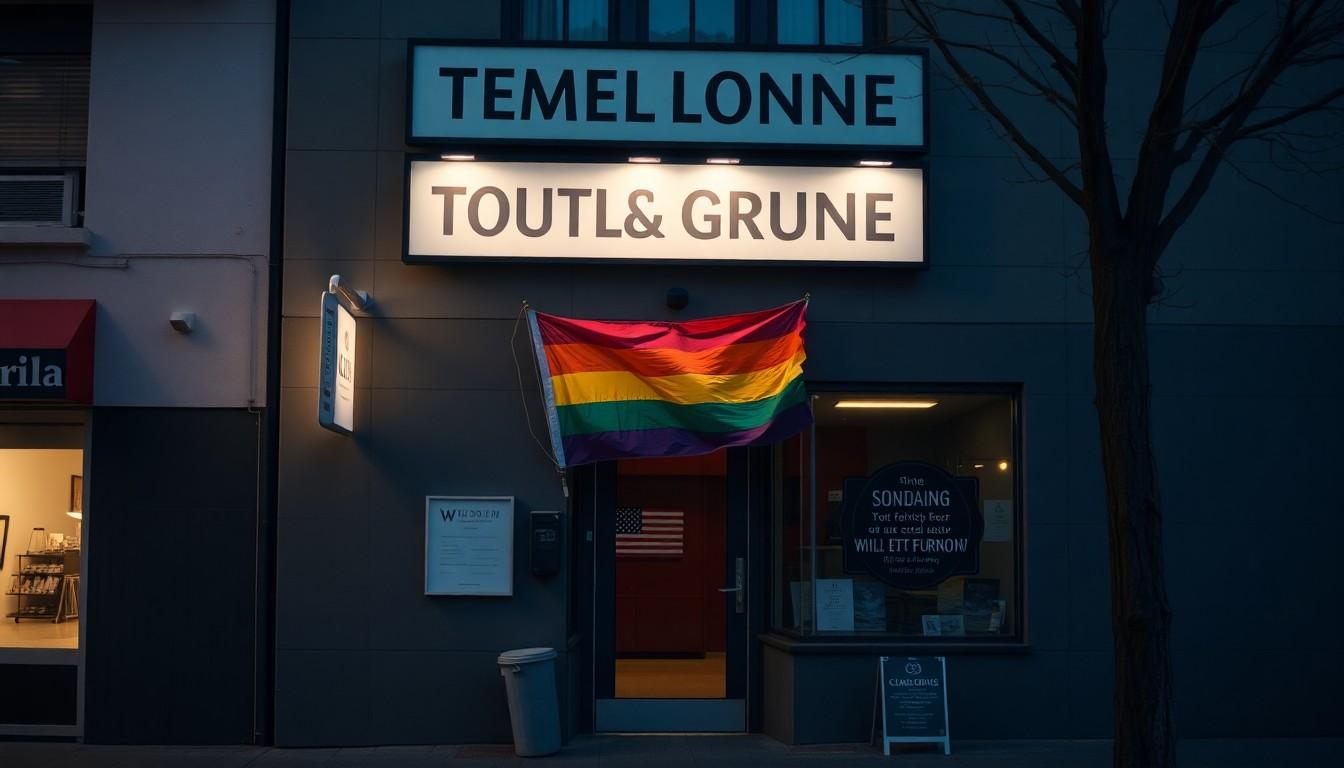
Shocked Canberra locals are rallying after ChiChiz, the city’s only LGBTQIA+ bar, had its pride flag torn down for a third time , owners vow to keep the flag flying and explore smarter, sturdier display options to deter future attacks.
Essential Takeaways
- Repeated targeting: ChiChiz’s pride flag has been removed or destroyed at least three times, most recently captured on video.
- Community hub at risk: Since Cube nightclub closed, ChiChiz is the only dedicated LGBTQIA+ venue left in Canberra, hosting drag nights, trivia and line dancing.
- Owners fighting back: Proprietor Oliver Mclean says they’ll keep replacing displays and are planning alternatives like a projector or a higher-mounted flag.
- Reporting encouraged: Police encourage anyone with information to contact Crimestoppers on 1800 333 000 or Police Link 131 444.
- Wider pattern: Similar attacks on pride symbols have been reported internationally, prompting neighbourhood resistance and police investigations.
Why this matters: flags are more than fabric
A ripped or stolen pride flag feels personal because it’s a visible claim to safety and belonging; when it’s attacked, people notice the silence that follows. According to local reporting, ChiChiz is more than a bar , it’s a chosen-family space where people come to feel at home. That’s why repeated vandalism lands so hard emotionally, not just practically.
Across the globe, neighbourhoods have rallied after attacks on flags and public displays, from community fundraisers to vigils. So this isn’t an isolated incident , it’s part of a pattern that prompts venues and residents to rethink how they protect symbols of identity.
What venues are already trying , and what worked elsewhere
ChiChiz’s owners have tried replacing the flag and now plan to use a projector on the footpath or mount the flag higher above the door. Other venues and councils have pursued similar fixes: higher or tamper-proof fittings, CCTV cameras, and community watch schemes.
In Anaheim, neighbours rallied around a couple whose flag was slashed, turning anger into visible support. In some cities police have opened investigations when displays were destroyed, and civic groups have rebuilt damaged memorials or flowerbeds as statements of solidarity. Practical measures and community response often work hand-in-hand.
How to deter vandalism without making a fortress
You don’t have to turn a venue into a citadel to reduce risk. Simple, effective steps include:
- Mount flags on higher brackets or inside recessed frames that are harder to reach.
- Use tamper-proof fittings and reinforced grommets.
- Install affordable motion-activated lighting and visible cameras , vandals dislike being filmed.
- Project a pride image onto a wall at night, which can’t be snatched.
- Build local alliances: neighbours, nearby businesses and regulars who’ll report suspicious behaviour quickly.
If you’re a venue owner, match the fix to your vibe; a harsh security look can put off patrons, while subtle measures keep the space welcoming.
Community response: outrage, solidarity, and practical support
Oliver’s reaction , pissed off but determined , mirrors how many venue owners feel when a safe space is violated. Public shaming on social channels, crowdsourcing funds for replacements, and boosted attendance at events have all been used to counteract the message vandals try to send.
Local patrons can help simply by showing up, bringing friends, and flagging footage to police. International examples show how community visibility often shifts the narrative from victimhood to resilience.
Legal and safety notes: report it, document it, and stay safe
If you witness vandalism, call the relevant police line and provide as much detail as possible; recordings and eyewitness accounts matter. In Canberra, Crimestoppers is 1800 333 000 and Police Link is 131 444. Avoid confronting suspects directly , let law enforcement handle it.
There’s debate over whether flag vandalism should automatically be treated as a hate crime in every case, but when symbols of marginalised groups are targeted repeatedly, authorities increasingly take it seriously and communities expect a response.
It’s a small change that can make every display harder to snatch and every night a touch safer.
Source Reference Map
Story idea inspired by: [1]
Sources by paragraph: