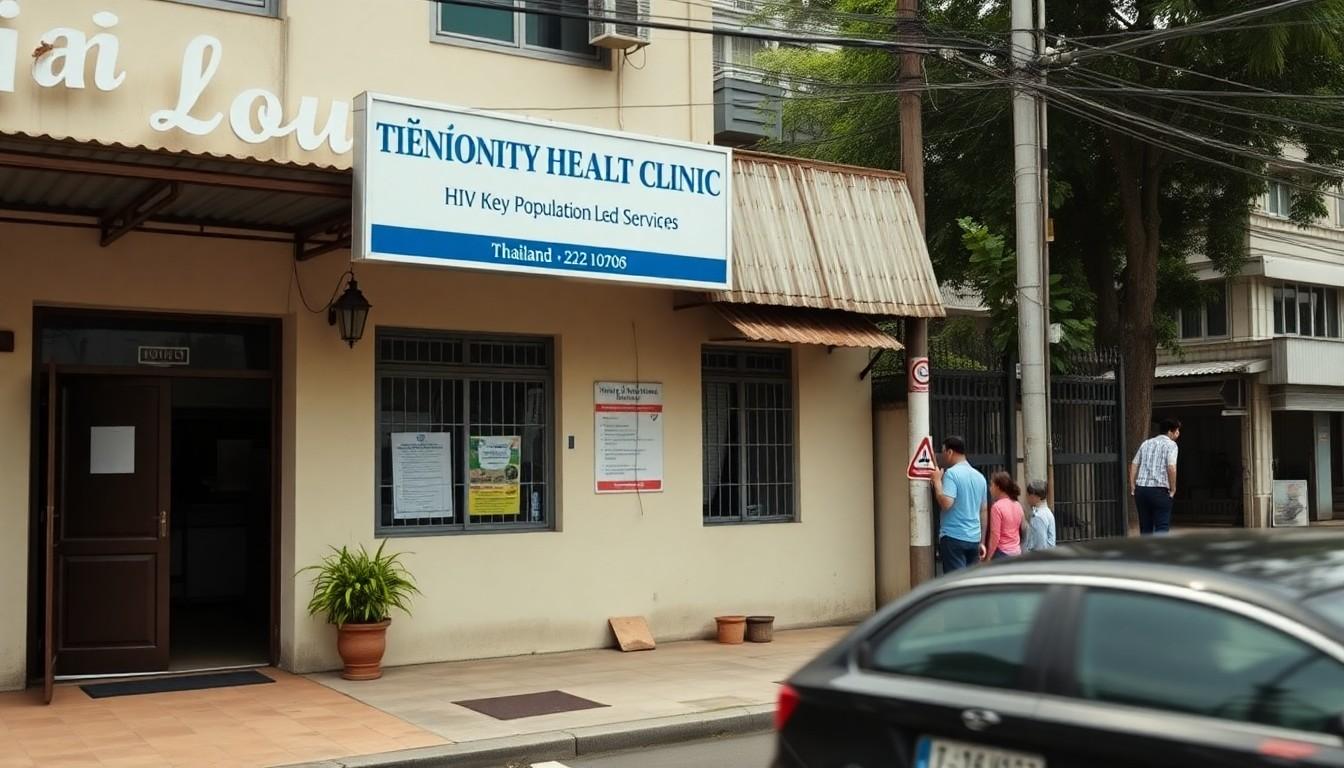
Shoppers of ideas and policy-makers are turning to Thailand’s community-led HIV model; it’s showing how people-centred, peer-run clinics can expand PrEP, speed diagnoses, and link marginalised groups to care , and why this matters for reaching the 2030 end-of-AIDS goals.
Essential Takeaways
- Proven impact: Community-run clinics in Thailand deliver a large share of national PrEP and achieve earlier diagnosis and strong viral suppression.
- Peer-led care: Trained lay providers from affected communities offer testing, counselling, PrEP/PEP, ART linkage, and follow-up with a trusted, low-stigma feel.
- Policy wins: Thailand’s 2019 regulation and UHC reimbursement moves have begun to legalise and finance community providers, improving sustainability.
- Holistic reach: Services now often include mental health, substance-use support, transgender care and integrated HIV–TB work, creating a gentler, more complete experience.
- Remaining gaps: Full accreditation, domestic financing and wider legal reforms are still needed to scale the model across regions and countries.
Why Thailand’s peer clinics feel different , and why that matters
Walk into a Key Population-Led Health Service site and you’ll immediately notice the calmer atmosphere; people recognise peers, not strangers in white coats. According to the Institute of HIV Research and Innovation, that trust translates into earlier testing, higher uptake of prevention like PrEP, and quicker starts on antiretroviral therapy. The model grew from community frustration , a refusal of one-size-fits-all services , and now shows how dignity and confidentiality change outcomes. If you’re choosing services for a friend or yourself, peer-led clinics often mean judgement-free conversations and faster linkage to care.
How the KPLHS model actually works on the ground
KPLHS are designed and co-delivered by members of key populations , gay men, transgender women, sex workers and people who inject drugs. Trained lay providers offer HIV and STI testing, pre- and post-test counselling, specimen collection, same-day PrEP and ART initiation, and retention support. Thailand’s Ministry of Public Health regulation in 2019 formalised many of these roles, which helped expand scope and quality. For commissioners and funders, the practical takeaway is clear: invest in training peers and build referral links with hospitals to make same-day initiation feasible.
From HIV prevention to whole-person care: the expansion story
Thailand didn’t stop at HIV. Clinics like Tangerine and other community hubs folded in mental health, chemsex support, transgender-affirming services and even TB screening, reflecting the reality that people rarely present with a single need. UNAIDS coverage and IHRI materials highlight that integrated services increase retention and reduce repeated clinic visits, a real win for clients juggling jobs, stigma and travel. For programme designers, integrating services reduces drop-off and improves outcomes across the board.
Why legal recognition and financing change the game
Legalisation and the ability for community organisations to receive reimbursements under Thailand’s universal health coverage have been described as game-changers. Reuters-style reporting and sector analysis show that when peer groups can register as providers and bill publicly funded schemes, programmes move from precarious donor projects to sustainable health services. Yet coverage gaps persist: accreditation processes, predictable domestic financing and policy reforms to remove punitive laws are still needed. Policymakers should view funding community leadership as core health infrastructure, not a soft add-on.
What the evidence says and what other countries can copy
Peer-led services routinely report comparable or superior outcomes to traditional clinics on testing uptake, ART initiation and viral suppression, according to IHRI and peer-reviewed literature. Thailand’s scale-up , often cited as delivering 60% or more of national PrEP users through community channels , offers a template for adapting services in contexts with high criminalisation or stigma. For health planners elsewhere, the practical step is to pilot peer training, link community sites to hospitals for clinical backstopping, and build monitoring that listens to real users.
The remaining challenge: politics, law and long-term money
Despite successes, experts warn that punitive laws and limited access to new prevention technologies keep many people offline. Advocacy leaders and community groups call for decriminalisation, meaningful engagement in national planning, and financing guarantees. If governments honour recent political commitments and donors pivot to blended domestic funding, community-led systems could be scaled across regions that still struggle to put prevention in reach. The next few years will show whether political will matches the proven capacity of communities to lead.
It’s a small change that can make every clinic visit feel safer, fairer and more effective.
Source Reference Map
Story idea inspired by: [1]
Sources by paragraph: