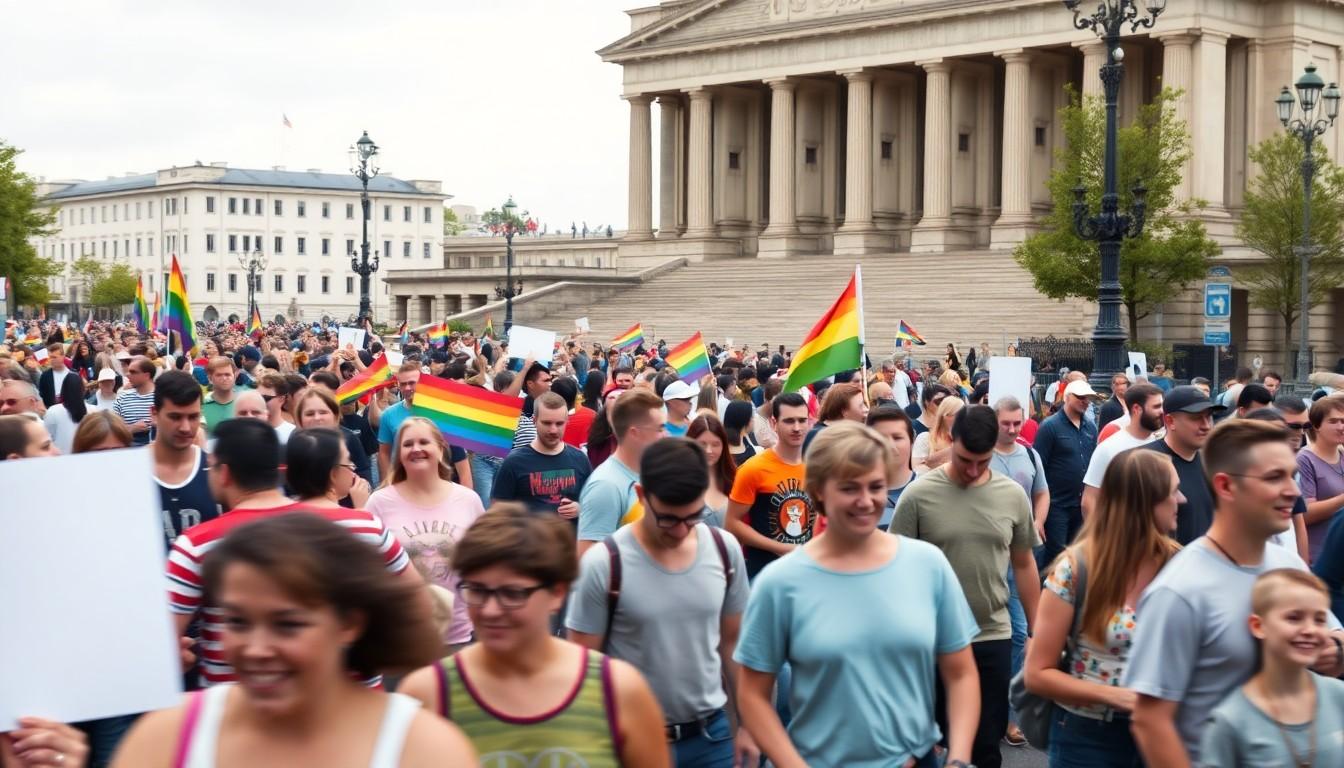
Shouting, stitching and stomping: Berlin’s new Drag* March and the boisterous Dyke* March drew hundreds to the capital, with organisers and participants saying visibility, solidarity and safety mattered more than ever. Here’s what happened, who turned up, and why these short, fierce routes are resonating.
Essential Takeaways
- Small but striking: Around 200 people joined Berlin’s first Drag* March, a deliberately short, one-kilometre route led by a live big band and flamboyant costuming.
- Personal firsts: Several participants said it was their first time in public drag, motivated by a rising right-wing backlash and a desire not to hide.
- Lesbian energy: Tens of thousands later gathered for the Dyke* March, a sunlit, high-spirited procession with DIY culture, chants and a strong internationalist block.
- Practical atmosphere: Marches were intentionally compact to accommodate heels and comfort; stalls, snacks and impromptu knitting added a communal, picnic-like feeling.
- Solidarity mix: Flags and slogans showed cross-community ties, from trans support to international messages like “No Pride in Genocide.”
A tiny, theatrical Drag* March that packed a punch
Berlin’s inaugural Drag* March may have been short, but it felt loud and ceremonious, with the first trumpet played by a Queen in a wedding dress. Participants noted the route was kept deliberately compact , sensible if you’re in platform heels , and the mood mixed celebration with urgency. Organisers including the city’s CSD association, Travestie für Deutschland and the Sisters of Perpetual Indulgence framed the event as both party and protest, and many performers treated it as a first public outing in drag. For anyone thinking of joining next year, expect lots of colour, a live band, and organisers who factor in accessibility and footwear.
Why first-time draggers came out despite the political weather
Several attendees said they’d never performed in public before; others explained they felt compelled to be visible now because of a perceived rightward shift in public debate. The emotional register swung between defiance and relief , people laughing, hugging and declaring they wouldn’t be driven underground. That mix of personal courage and political statement is what organisers hoped for; it’s also a reminder that visibility can feel both risky and liberating. If you’re nervous about joining, go with a friend, scout the route in advance, and wear what makes you feel safe.
The Dyke* March: sun, scarves and a riot of DIY culture
Later in the day, the Dyke* March filled with a different kind of kinetic energy. Tens of thousands gathered near the town hall, where knitting, scavenged snacks and handmade “Dyke” scarves sat alongside slogan T-shirts proclaiming pride in blunt terms. The event’s delay didn’t dampen spirits; instead, it fed the communal vibe as people waited in the sun, making the pre-march atmosphere feel like a block party. If you attend, bring water, a hat and a sense of humour , you’ll find more camaraderie than choreography.
When humour and cosplay become crowd safety
Not everything at these gatherings was solemn. A cheeky moment , someone brandishing a whoopee-spray , was countered by a homemade Stormtrooper in lesbian-flag colours patrolling the crowd. That playful policing speaks to a broader trend: queer street safety often mixes creativity with community vigilance. It’s both a cultural flourish and a practical tool when formal security is thin. For groups organising local marches, encourage volunteer stewards with clear roles and a few theatrical touches to keep morale high.
Conversations about splitting events and expanding visibility
At the Drag* March, participants compared Berlin to New York, where Friday’s Drag* March, Saturday’s Dyke* March and Sunday’s larger Pride events are spaced out. Some suggested Berlin could stagger its calendar in future so different communities don’t compete for space and attention. That debate hints at growing sophistication in festival planning: staggered events can boost attendance, reduce logistical friction and broaden media coverage. Event planners should consider timing, route length and shared resources so the queer calendar serves varied communities without overlap.
Solidarity on the route: more than rainbow flags
Both marches carried local and international messages. Alongside lesbian and trans flags, a handful of Palestine flags and calls for international solidarity appeared in the Dyke* March’s political block. That mix reveals how modern Pride events are not just about parties but also about aligning with wider struggles. For attendees, that means being ready for both joyous and serious moments; for organisers, it means clear messaging about codes of conduct and the political tone they want to set.
It's a small change that can make every march feel safer, louder and more deliberately visible.
Source Reference Map
Story idea inspired by: [1]
Sources by paragraph: