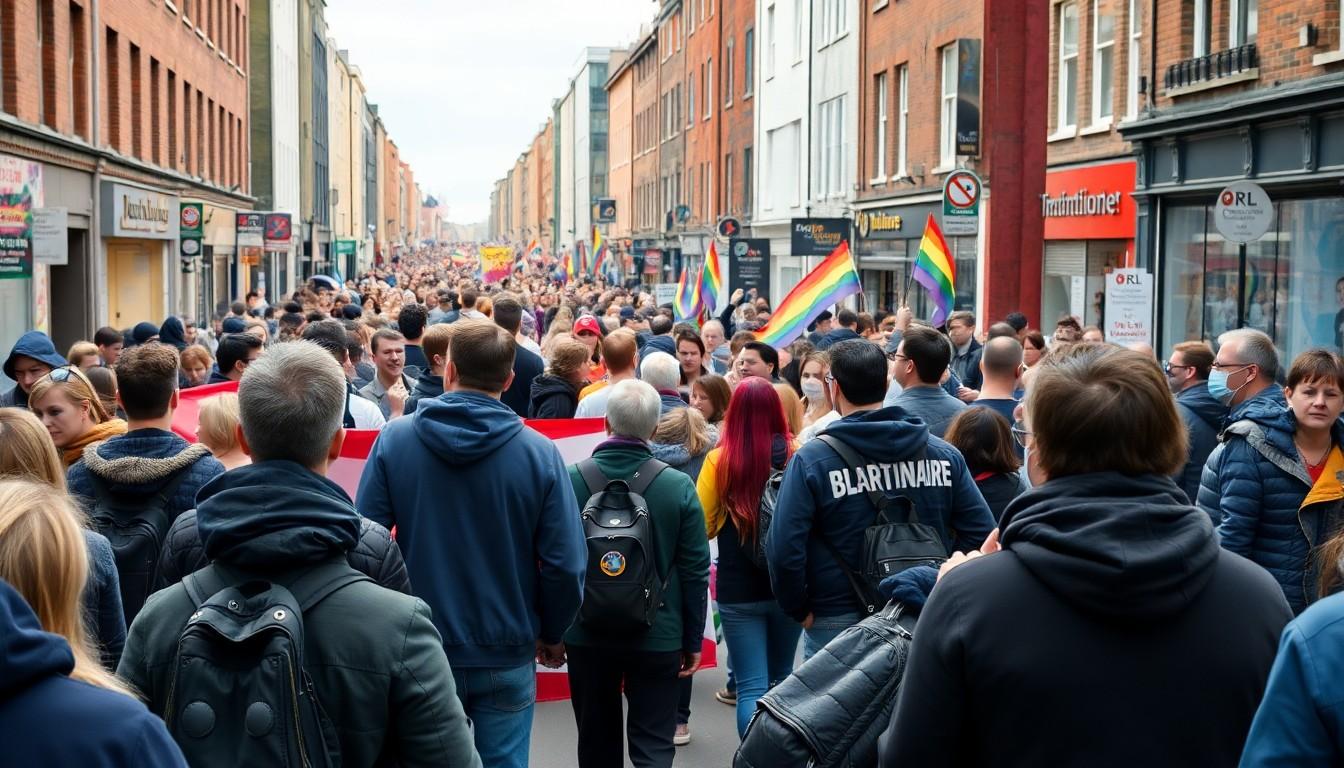
Celebrate the colour and courage of Belfast: crowds poured into the city for the 35th Belfast Pride festival, which ran for 10 days and culminated in a vibrant parade under the theme Love in Every Colour , and for the first time in years the festival opted out of corporate sponsorship, shifting reliance to public funding and community support.
Essential Takeaways
- 35th anniversary: Belfast Pride ran a 10-day programme of talks, culture and nightlife before the parade, bringing renewed buzz to the city.
- Big turnout: Organisers estimated roughly 8,000 marchers and tens of thousands of spectators, with hopes to match last year’s 80,000-plus attendance.
- No corporate cash: This year’s festival accepted public funds and in-kind support only, so branding was visible but direct financial sponsorship was paused.
- Inclusive vibe: The Love in Every Colour theme emphasised multiculturalism, trans visibility and broad queer identities, with family-friendly spaces and alcohol-free zones.
- Community-led energy: Local performers, community stalls and grassroots groups filled the Pride village, giving the event a neighbourly, activist feel.
A parade with a punch , colourful, loud and defiantly joyful
The parade threaded through the city at 1pm and wrapped up mid-afternoon, leaving streets awash in rainbow and sound. There was a tactile sense of relief and celebration in the air , the sort of warmth that only a public party with a purpose can deliver. According to reports, organisers put the marcher count at about 8,000, while the wider festival aims to draw the same large crowd the city welcomed last year. For anyone who’s been to Belfast before, the scale felt both intimate and energising; it’s a city that knows how to make noise, and it did.
Why the theme matters: Love in Every Colour
Love in Every Colour wasn’t just pretty branding , it was a deliberate nod to the activists and everyday people whose visibility has expanded over decades. Festival organisers said the theme recognises those who came before and the rising voices who are securing the community’s future. Coverage and festival notes highlighted how the festival has broadened from early gay and lesbian representation to include non-binary, trans and ethnically diverse groups, and that shift was visible in the stalls, performances and messaging across events.
The sponsorship shift: visible names, invisible cash
This year’s notable change was the decision to halt corporate financial sponsorship. The festival accepted public funding and in-kind support , so you still saw business logos on flyers and stages, but the cheque book came from public funders instead. The organisers framed it as ensuring partners align with charitable and community aims. It’s a move that changes the tone: less about big brand visibility, more about community ownership. For volunteers and small groups, it meant a stronger sense that Pride is by and for the city.
Community spaces and accessibility , a Pride village for everyone
Donegall Quay became the Pride village, combining community stalls, a family area, kids’ entertainment and a dedicated alcohol, smoke and vape-free zone. That layout matters; it signals that Pride is for families, for those who don’t drink, and for younger people experiencing visibility safely. Local performers filled the Custom House Square stage, and the mix of grassroots groups meant conversations and support services were front and centre, not buried behind commercial activation.
Personal stories: protest alongside celebration
For many attendees, the event was both joyful and political. First-time marcher Nazir Uddin spoke about Pride as protest , a demand for the right to live honestly without fear. Other participants highlighted visibility and safety, with grassroots groups like ROSA raising transgender awareness and local drag artists drawing proud family members to the kerbside. Those personal notes are what make Pride more than a parade: it’s a living, changing community statement.
It's a small change that can make every celebration feel more rooted in the people it serves.
Source Reference Map
Story idea inspired by: [1]
Sources by paragraph: