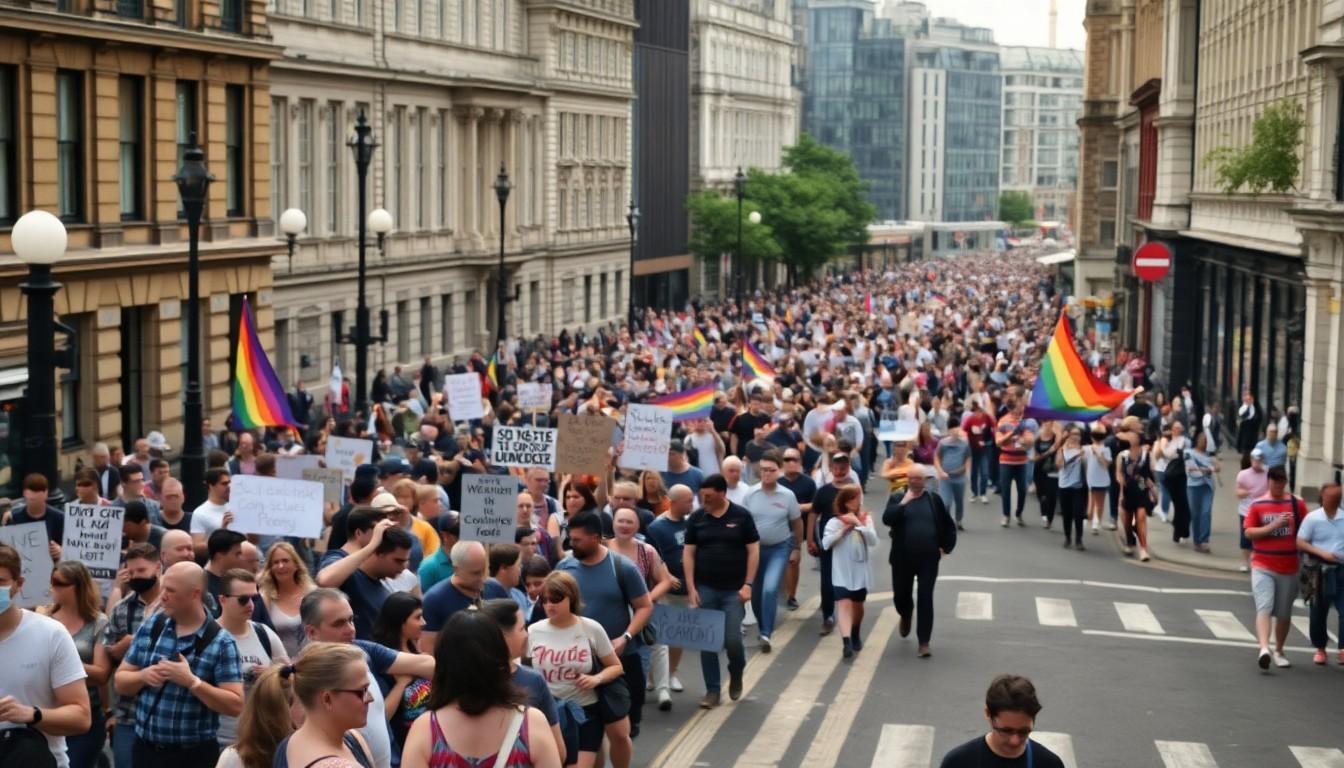
Get ready to join a sea of blue and pink , London Trans+ Pride is back with the theme ‘Our Future, Our Fight’. If you’re heading to central London this Saturday, here’s when to arrive, where the march goes, who’s expected to speak and simple tips to make your day safer and more joyful.
Essential Takeaways
- Start time: The gathering begins at Langham Place from 1pm; the march sets off at 2pm.
- Route: Parade proceeds south along Regent Street, through Haymarket and Pall Mall East, finishing at Trafalgar Square around 3.30pm.
- Speeches: Planned at Trafalgar Square between 4pm and 5.30pm; last year featured high-profile speakers and the event has received many celebrity messages of support.
- Free to attend: It’s a public march and protest , no tickets required, join for any part of the day.
- Practical note: Expect large crowds (organisers anticipate 100,000+); there will be a scheduled 10-minute stop near Swallow Street and the finish at Trafalgar Square is a first for the march.
Where to meet and when to arrive
Arrive early if you want a front-row spot or to march together with friends; Langham Place is the official meeting point from 1pm and the crowd starts moving at 2pm. Langham Place sits close to the BBC and All Souls Church, so it’s easy to find and well served by public transport. Expect the atmosphere to be buzzy and colourful , a lot of people like to take photos before the march begins, so give yourself extra time if you want shots without gaps.
The route and what the finish at Trafalgar Square means
The procession will travel down Regent Street, through Haymarket and Pall Mall East, onto Cockspur Street before arriving at Trafalgar Square. Organisers call this the first time the march finishes at Trafalgar Square , a symbolic move that stakes visible claim to a major civic space. For anyone planning to spectate, note the roughly 2pm–3.30pm marching window and the short 10-minute pause near Swallow Street, which can be useful for meeting points.
Speakers, solidarity and the political backdrop
Speeches are slated for Trafalgar Square from about 4pm to 5.30pm. Last year’s line-up included prominent voices in TV and campaigning, and this year organisers have shared messages of support from high-profile names across entertainment and politics. The march comes amid heated legal changes and political debate in the UK, which organisers describe as making 2026 one of the most politically urgent years for the movement. That urgency gives the event both a celebratory and protest-driven tone , expect passion and heartfelt testimony.
Practical tips: safety, travel and accessibility
Public transport is the simplest way to get there , stations around Oxford Circus, Regent Street and the Strand are closest; check TfL updates as services can be busy or rerouted. Bring water, weather-appropriate layers and comfortable shoes; large crowds mean you’ll be standing and walking a lot. If you need accessible routes or support, consult the event’s official guidance in advance , organisers usually publish FAQs and accessibility info to help attendees plan. And remember, it’s a family-friendly protest, but emotional speeches and intense moments can happen, so plan where to meet your group if you need to step away.
Why this march matters , for the city and for people
London Trans+ Pride started as a grassroots alternative and has quickly grown into a major public statement about visibility and rights. Organisers and participants often describe it as both a protest and a community celebration , a place to grieve, to rage, to celebrate resilience and to demand legal and social changes. For many attendees, taking the streets is both a practical act of solidarity and a symbolic claim on public space, especially in a year with fraught legal developments around trans rights.
It's a small change that can make every march feel safer and more meaningful.
Source Reference Map
Story idea inspired by: [1]
Sources by paragraph: