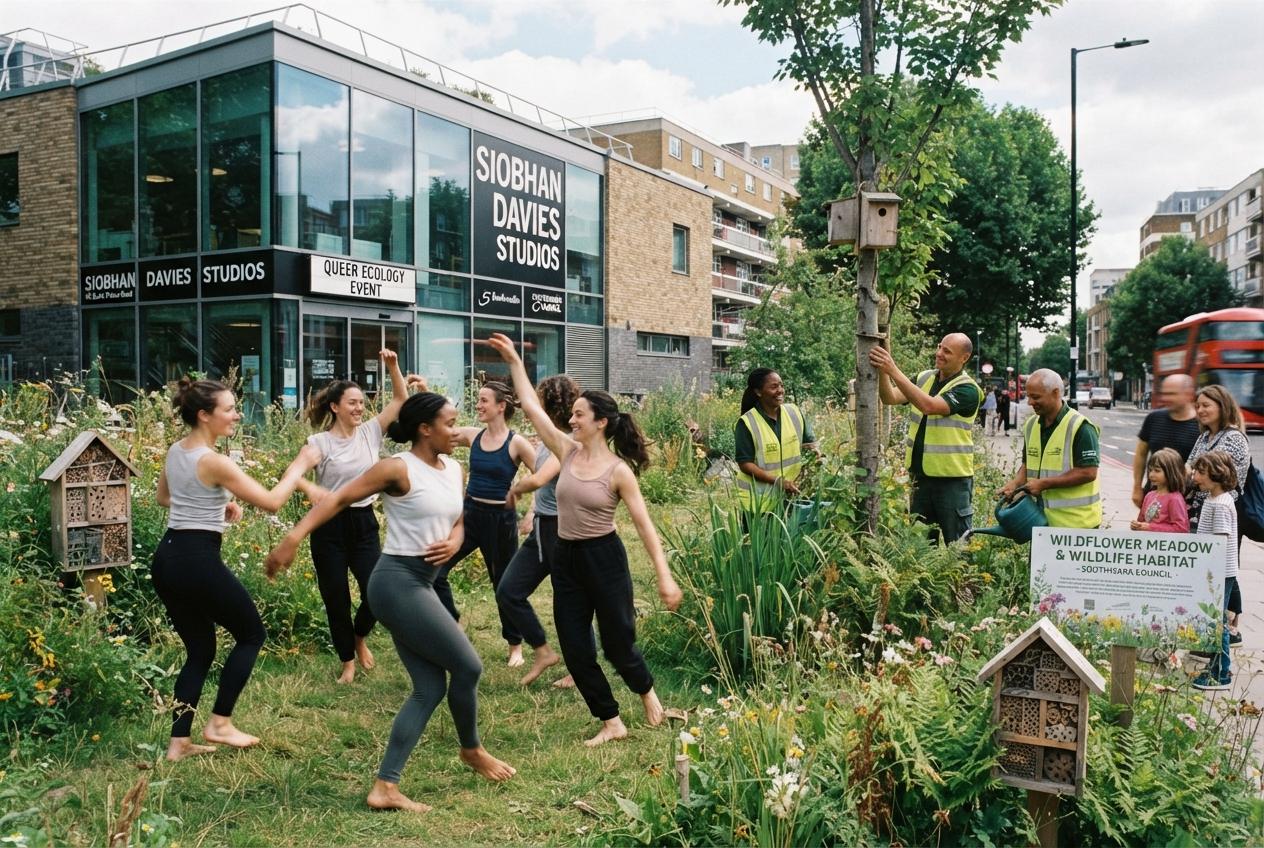
Shoppers and residents are noticing how public cash is being used locally , Southwark Council recently funded a “Queer Ecology” walk and movement session that mixed nature, arts and community support, sparking conversation about what the Pride fund pays for and why it matters to local LGBTQI+ communities.
Essential Takeaways
- Fund source: Southwark’s Pride Fund provides small grants from a £30,000 pot to support LGBTQI+ projects across the borough.
- What ran: The Siobhan Davies Dance Company hosted a Queer Ecology event combining a nature walk and improvisation-based movement session for LGBTQI+ people.
- Who it served: The session welcomed people with intersectional or emerging queer experiences, explicitly naming access and identity as part of its remit.
- Tone and feel: Attendees could expect a reflective, sensory experience , pausing with plants, noticing local wildlife, and moving together in a gentle, artistic setting.
- Practical note: Southwark’s Pride Fund publishes guidance on who can apply and what it will fund, so community groups can plan similar projects.
Opening Hook: why this grant felt different Southwark Council’s Pride Fund is deliberately small-scale and local, but events like the Queer Ecology walk show how those modest grants can produce something tactile and surprising , a quiet, leafy workshop rather than a headline parade. The idea of “sensing, feeling and moving” with plant life gives the project a soft, sensory thread that sits oddly pleasing next to more conventional Pride programming.
Backstory: the fund and the company involved According to council materials, the Pride Fund is a £30,000 pot aimed at supporting grassroots activity across the borough. The Siobhan Davies Dance Company , a contemporary dance organisation , won funding to run the Queer Ecology session, bringing an arts-led approach to an outdoor, identity-focused gathering. For organisers, it’s about creating a space where people who don’t fit normative expectations can meet, move and reflect together.
What the event actually did, and who attended The session was framed as an ecology walk followed by an improvisation-based movement practice; participants were invited to notice plants and wildlife and to think about the queer histories embedded in local ecologies. That kind of format tends to attract people looking for low-pressure, reflective community spaces , artists, activists, people with access needs, and those exploring intersections of race, class and disability alongside queer identity.
Trends and context: arts, wellbeing and community funding Across the UK, councils increasingly use targeted funds to support smaller, identity-led projects that big grants miss. Arts organisations frequently partner with community groups to offer wellbeing-focused activities that blend creativity and nature. If you’re comparing projects, this one sits at the intersection of contemporary dance, environmental awareness and queer community care , a niche but growing field.
Practical advice: if you want to apply or attend If you’re a grassroots group thinking of applying to a local Pride Fund, check the council’s guidance on who can apply and what will be funded; be specific about community benefit and accessibility needs, and explain how your project reaches under-served people. And if you want to attend similar events, expect gentle movement, outdoor observation and a focus on shared, reflective experience rather than performance.
Reaction and outlook: small grants, visible impact Small pots of money can yield quietly meaningful experiences that build local networks and offer respite. Whether you love the idea of a queer ecology walk or find it unfamiliar, it highlights how community funding can support new ways of belonging. Expect to see more arts-and-wellbeing hybrids cropping up in council-funded programmes.
It's a small change that can make everyday community life feel a bit kinder.
Source Reference Map
Story idea inspired by: [1]
Sources by paragraph: