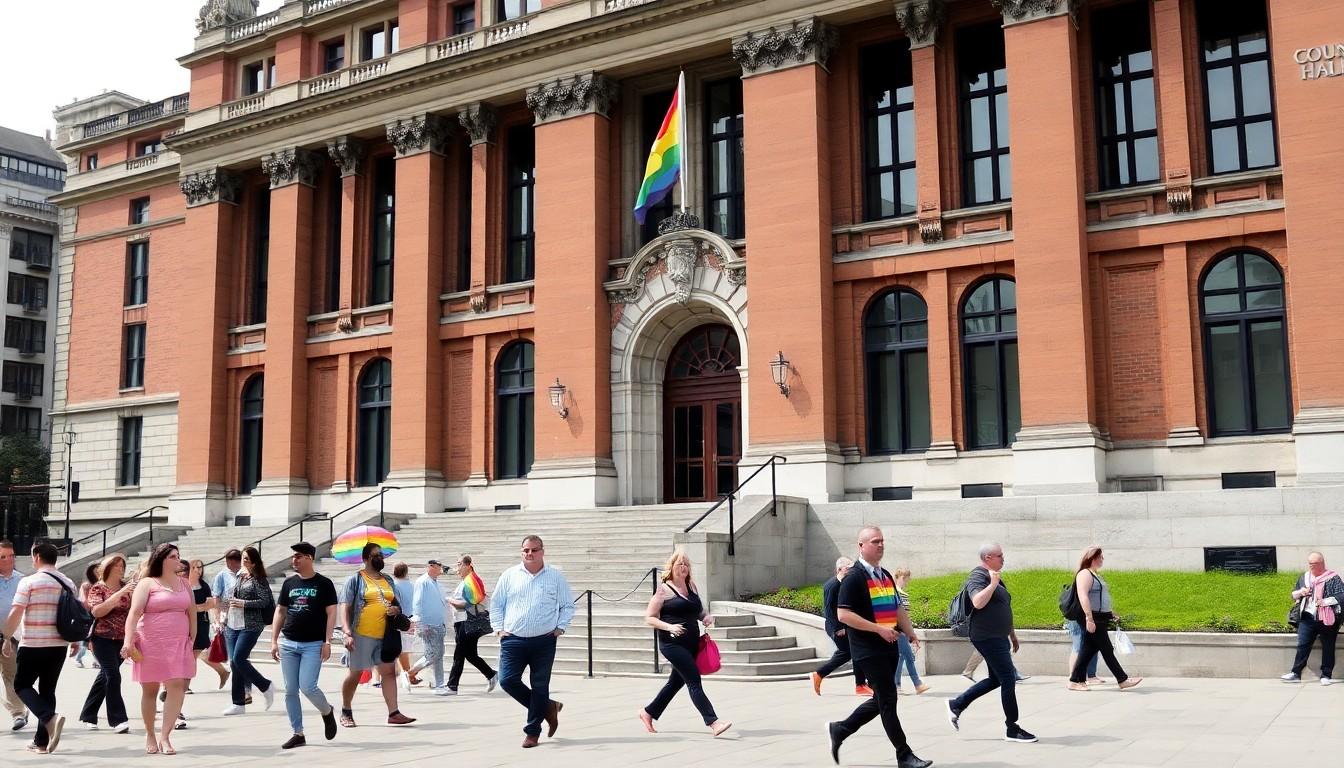
Shoppers, council staff and residents noticed a steady stream of demonstrators gathering outside a county hall recently, drawing attention to Pride flags, free speech and community tensions , here’s a clear look at who turned up, what unfolded, and why these events are becoming a recurring local issue.
Essential Takeaways
- Visible scene: Protesters gathered outside county buildings, creating a noisy but largely peaceful atmosphere with chants and signage.
- Flag disputes: The trigger was often a Pride flag or Pride-related event, sparking clashes between supporters and opponents.
- Safety concerns: Officials reported heated moments , in one case a flag was nearly set on fire , prompting police presence and safety measures.
- Local impact: Events drew families and passers-by, affected access to services briefly, and prompted official statements defending free expression and safety.
- What to expect: If you plan to attend or work near a county hall during Pride season, expect demonstrators, visible signage, and potential road disruptions.
What the gatherings looked like , noisy, colourful, and tense
The images from several towns show a mix of handmade placards, rainbow flags and a steady crowd, with the atmosphere swinging from festive to febrile. According to local reports, demonstrators often arrive early and set up near main entrances, so staff and visitors see them immediately. The sensory detail is obvious: folding chairs, bullhorns and the smell of coffee from nearby cafés, plus the sort of low thrum you get when lots of voices talk at once.
Organisers and opposers tend to stay in distinct clusters, trading chants more than blows. Still, officials cite moments of real concern , for instance, one county executive said a flag was nearly set alight, which pushed police to step in. If you’re attending, wear layers, stay aware of exits and keep your phone charged for updates.
Why flags and Pride events trigger these sit‑ups at county buildings
Pride flags have become an instantly recognisable signal of inclusion , and a provocation to some. Local authorities decide whether to fly flags or host Pride storytimes, and those choices can draw organised responses. Demonstrations outside public buildings are a way for both sides to be seen and heard when they feel civic processes haven’t reflected their values.
This pattern mirrors other towns where Pride-related events prompted protests. Officials often say they balance free expression with public safety, and that’s where the tricky decisions come in: allow visible support without inflaming tensions, or limit displays and face criticism. Expect more of these flashpoints while Pride season is on.
How councils and police respond , caution, statements and crowd control
Councils typically issue statements affirming safety and inclusivity while calling for calm, and police maintain a presence to prevent escalation. In several examples, officers monitored the perimeter, directed traffic and kept protesters off steps and inside designated public spaces. Authorities emphasise the right to protest but also warn against actions that endanger people or property.
If you work for a council, practical steps include moving sensitive meetings online, adjusting public access times and posting clear signage. For residents, follow official social media for real‑time updates and avoid confrontations , document, don’t dispute.
What this means for families, staff and local businesses
Pride demonstrations outside civic buildings draw a mix of attendees: activists, counter‑protesters, parents with children and curious locals. That crowd mix affects nearby shops and services , footfall can rise, but some customers steer clear. Schools and libraries that host Pride events may find attendance affected by protest activity outside, and staff can feel the pressure of being on the frontline of heated community debates.
Practical advice: if you plan to visit a county building during a planned Pride event, check opening times, consider online services and, if you expect a strong crowd, arrive early or reschedule. For businesses, a calm response and clear communication with customers will help.
Looking ahead , an ongoing local story with national echoes
These demonstrations are unlikely to be one‑offs. As Pride visibility grows, so does the likelihood of civic friction in towns across the country. Local leaders face repeated choices about symbols and programming, while police and civic staff must refine crowd plans. The conversation about inclusion and public space will keep spilling into shared civic places, and how communities handle it will matter for neighbourly life.
There’s space for decent, civil conversation amid the noise; it just takes good planning and a willingness to listen. If nothing else, these scenes remind us how symbolic gestures can carry real consequences for everyday public life.
It's a small change that can make every civic encounter a little safer.
Source Reference Map
Story idea inspired by: [1]
Sources by paragraph: