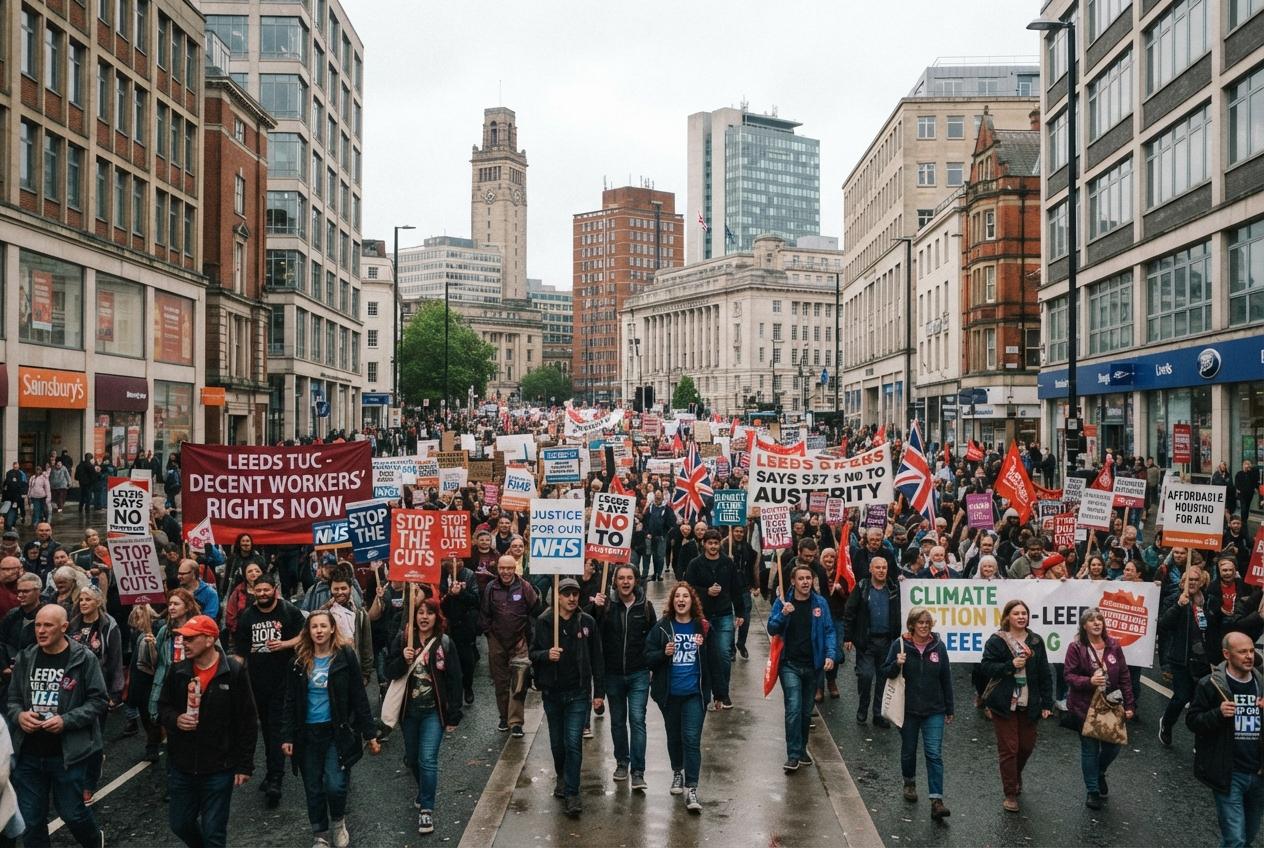
Shoppers and marchers are turning Pride into a political battleground, as organisers and protesters push for events that tackle NHS cuts, hospital parking charges and attacks on trans rights , and that matters because visibility without substance leaves communities exposed.
Essential Takeaways
- Big turnout: Thousands marched in cities like Leeds and Bristol, with organisers reporting strong public engagement and urgent conversations about rights and services.
- Healthcare focus: Hospital parking charges and NHS funding emerged as concrete concerns that intersect with gender-affirming care and access.
- Trans rights under pressure: Recent guidance and legal fights mean Pride is seen as a frontline to defend trans people’s basic protections.
- Corporate unease: Many activists question sponsorship and want Pride to prioritise grassroots campaigning over branding.
- Local organising works: Stalls, leaflets and meetings converted curiosity into membership interest and practical campaigning energy.
Pride is becoming a platform for everyday issues, not just celebration
Pride crowds still bring the colour and music, but increasingly they bring sharp conversations about day-to-day struggles, from hospital parking fees to job security. Organisers in Nuneaton reported selling more papers and signing up new activists, which tells you people aren’t just in a party mood , they want to act. According to local campaigners, pitching practical issues alongside LGBTQ+ rights gets people talking and stays relevant beyond one weekend.
NHS and hospital parking charges: a surprising rallying cry
Campaign stalls outside Pride gates have become an unlikely place to debate the cost of getting to hospital. Activists say hospital parking charges hit disabled and chronically ill people hard, including those seeking gender-affirming care, so challenging these fees ties directly into LGBTQ+ wellbeing. Campaigners note that linking Pride to specific local demands , like free or reduced parking and properly funded services , makes the politics tangible and winnable.
The legal backdrop: guidance and court battles make rights feel fragile
Recent moves in the legal and regulatory sphere have made trans rights a flashpoint, and organisers say Pride needs to push back. With public bodies’ interim guidance and legal challenges shaping access to facilities and services, many attendees see Pride as a place to mobilise opposition and explain the stakes. Goodlawproject’s legal actions and coverage of guidance changes have made clear to activists that legal pressure can shift policy quickly, which in turn fuels urgency at marches and meetings.
Corporate sponsorship: support that looks conditional
Across cities people are debating the role of big brands. They add resources and visibility, but activists warn their backing often feels conditional , a festival-friendly sheen without commitment to long-term change. In Bristol, for instance, marchers and unions discussed how corporate presence can dilute political messages. The result: many want events that balance fundraising with clear, accountable commitments to campaigning and community priorities.
Small-scale organising converts energy into action
The classic tools still work. Stalls, leaflets and follow-up meetings turned Pride footfall into real momentum for local campaigns, organisers found. In towns where Socialist Party teams set up visible stalls, they reported strong interest and future meeting attendees. Practical tips from campaigners: pick a clear local ask, make materials readable, and follow up quickly. That’s how a day of Pride becomes the start of sustained civic work.
It's a small change that can make every Pride march feel like part celebration, part campaign.
Source Reference Map
Story idea inspired by: [1]
Sources by paragraph: