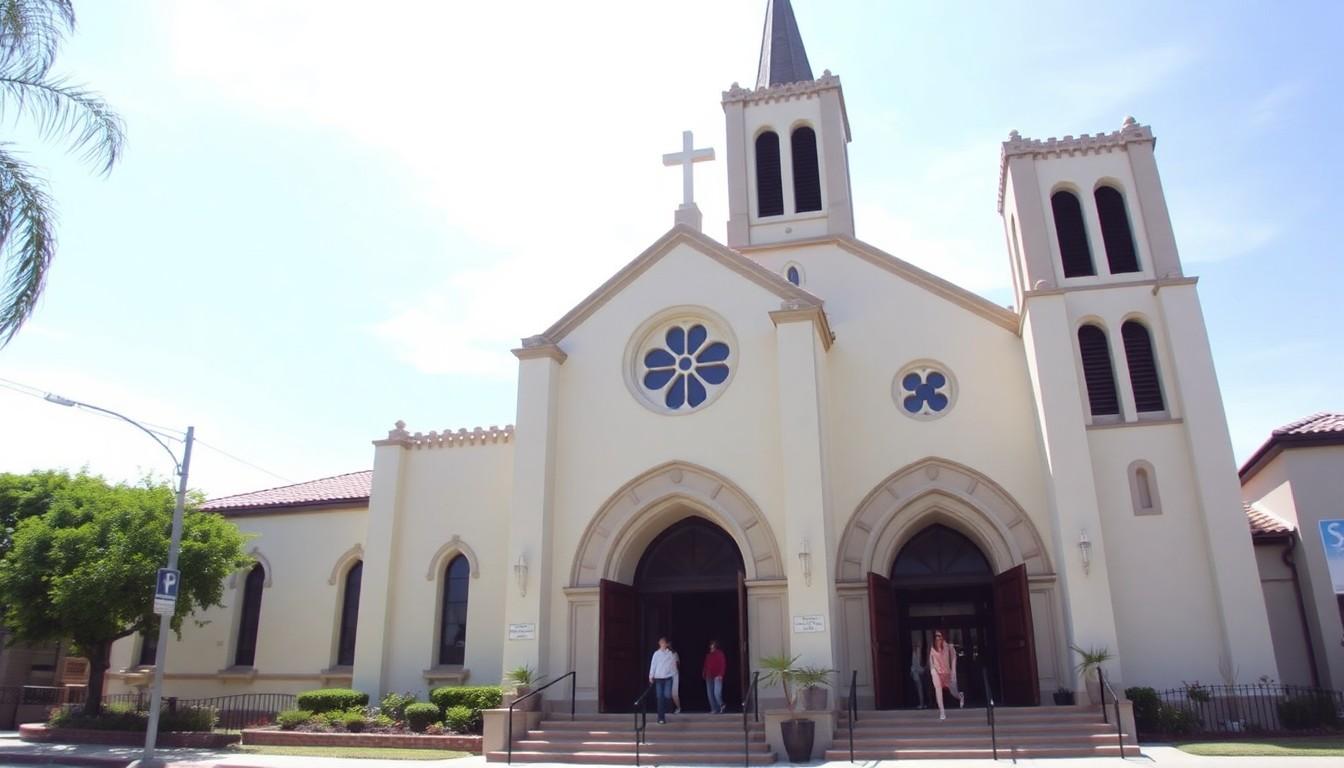
Observers are watching as tensions around Pride events meet parish life in Hillcrest, San Diego , where a widely promoted "All Are Welcome" Mass drew colourful displays, organised protest and debate over how churches should welcome LGBTQ+ people. Here's what happened, why it mattered, and what it tells us about faith communities today.
Essential Takeaways
- Event context: The Mass took place during San Diego Pride Week in the Hillcrest neighbourhood, the city's LGBTQ+ hub, and was billed as an "All Are Welcome" service connected to Pride celebrations.
- Visuals and atmosphere: The church interior featured rainbow-themed decorations, reserved seating for LGBTQ ministry representatives and clergy wearing pride-coloured stoles , a strong visual signalling of welcome.
- Outside reaction: A rosary vigil and protest were held across the street; participants reported hostile responses from passing traffic while praying and displaying banners.
- Liturgical changes: Organisers substituted the usual responsorial psalm with Psalm 139 and included petitions naming LGBTQ people and families among the intentions.
- Local resonance: The service echoed a wider civic Pride programme taking place across Hillcrest and San Diego that week, drawing supporters and critics alike.
A vivid scene in the middle of Pride Week
The most striking detail from the service was how visually explicit the welcome was , rainbow bouquets, ribbons on candles, and parish collection boxes with colours of Pride. That kind of sensory signalling matters: it tells people, quickly and emphatically, who the parish hopes to include. San Diego’s Pride Week has grown into a major local fixture, and Hillcrest is at the heart of it, so a high-profile parish choosing to stage an inclusive Mass was always going to draw attention. For anyone deciding whether to attend, the décor alone made the church’s stance clear.
How the liturgy itself shifted tone
Organisers kept the general structure of the Catholic liturgy but made selective changes to underline inclusion. The substitution of Psalm 139 and petitions explicitly mentioning LGBTQ people and transgender individuals altered the prayer focus in ways that some parishioners will welcome and others will find uncomfortable. Changes like these highlight a tension between liturgical norms and pastoral gestures: according to observers, the choices were deliberate and meant to affirm dignity and belonging for people who don’t always feel that in church.
Protest, prayer and a noisy neighbourhood response
Across the street a rosary vigil and banners , including those invoking traditional Catholic teaching on marriage , staged a visible counterpoint to the service. Participants described loud, profane reactions from drivers and passers-by, underlining how charged Hillcrest can become during Pride season. Public demonstrations outside places of worship are never simple; they raise questions about how communities express dissent while respecting safety and sacred space. Still, those who took part said it was important to be seen and heard rather than silent.
This sits inside a bigger civic moment
San Diego Pride programming that week included a parade, a VIP marketplace and rallies, so the Mass formed one thread in a larger tapestry of public events. Hillcrest’s long association with LGBTQ life and businesses means any intersection between faith communities and Pride activities will be particularly visible. Citywide Pride planning and community outreach have been mounting year on year, and religious institutions are increasingly being asked how they’ll respond , whether with open-armed services, private pastoral care, or public dissent.
Why this matters for other parishes and parishioners
What played out in Hillcrest is a template of sorts: a parish chooses an inclusive emphasis, people respond in support and opposition, and the wider neighbourhood reacts. For clergy weighing similar decisions, the practical takeaways are clear , prepare for heightened attention, communicate liturgical choices in advance, and plan for security and pastoral accompaniment for vulnerable attendees. For parishioners, the episode is a reminder that what happens in a local church can ripple into civic conversation.
It's a small change to a service that can make a big difference for people deciding whether they belong.
Source Reference Map
Story idea inspired by: [1]
Sources by paragraph: