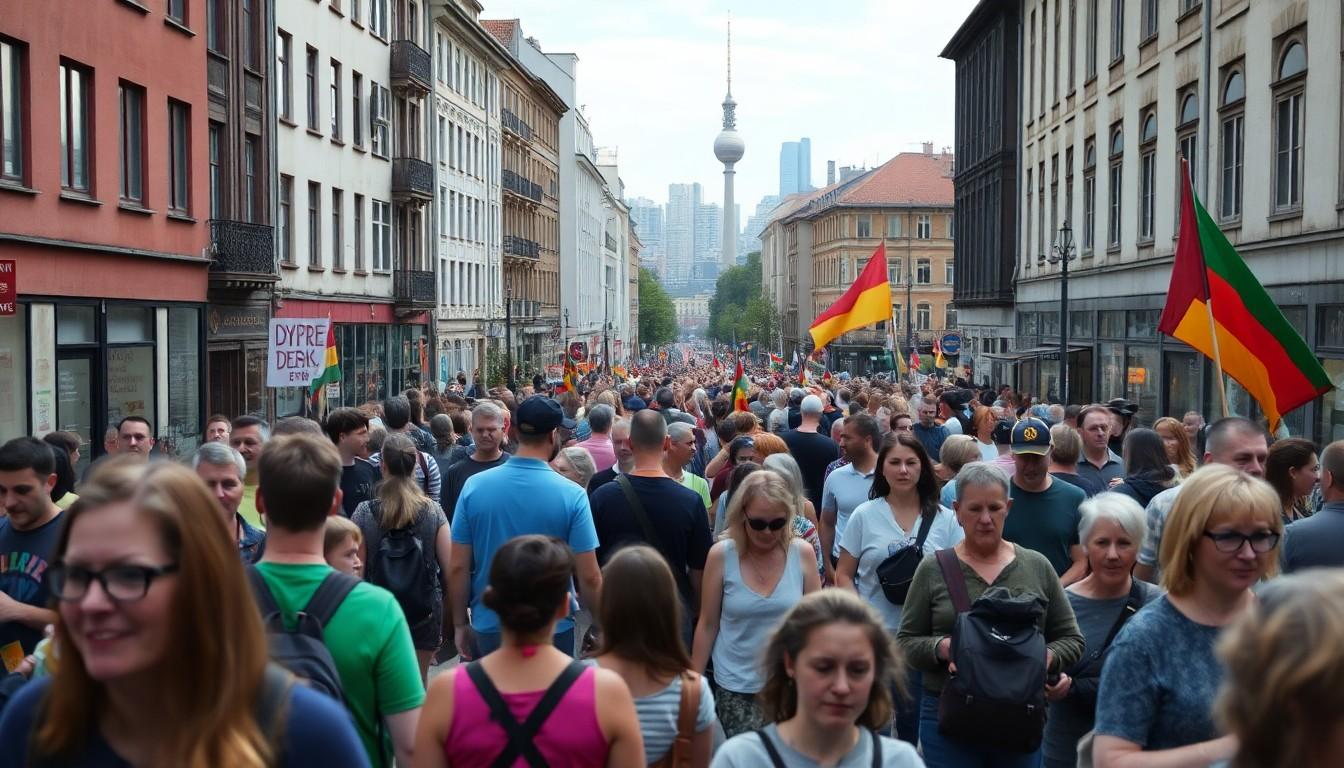
Notice the cracks: Berlin’s Pride weekend is no longer one parade but a cluster of competing events , from Dyke* Marches to Internationalist Prides , and that matters for who gets seen, heard and protected. Here’s a guide to what’s happening, why tensions have flared and how to pick which events match your politics and safety needs.
Essential Takeaways
- Multiple Prides: Berlin now hosts several concurrent Pride events , CSD, Community Dyke* March, Internationalist Queer Pride and others , each with different aims and tones.
- Lesbian visibility at stake: The Dyke* March organisers say competing drag and CSD programming risk pushing lesbian visibility into the margins.
- Political fault lines: The Israeli–Palestinian conflict has repeatedly split queer organisers, producing bans on some flags and heated public rows.
- Party vs protest: CSD leans toward celebration and voter mobilisation, while marches like IQP and Dyke* March prioritise protest and solidarity with marginalised groups.
- Practical tip: Check event rules on flags, meeting points and police presence, and consider attending with friends or community groups for safety and support.
Why this Pride weekend feels fractured , and a bit raw
Berlin’s Pride calendar used to feel straightforward: Dyke* March one evening, CSD the next. Now those rhythms are disrupted, and you can feel it in the air. The Dyke* March, created for lesbian visibility, has clashed with a newly scheduled Drag March and expanded CSD programming that overlaps in time. That overlap doesn’t just complicate logistics, it raises real questions about whose visibility wins out. If you value clear, identity-centred visibility, this matters , organisers of the Dyke* March have publicly called the timing an affront.
Backstory matters: these fights didn’t start this year. They’ve built up over successive events, with 2024’s confrontations around Palestine and Israel leaving lasting resentments. The result is a weekend where scheduling feels not just competitive but political.
The flag rows: symbols that wound and unite
Expect to see rules about flags and symbols written into event briefings. Some organisers banned national flags or certain mixed symbols because they’re seen as provocative; others insisted on allowing both Palestinian flags and Pride flags with David stars. The flips and compromises reflect deep disagreements about whether particular symbols are political protest or protective identity.
This is more than etiquette. For Jewish queer people and for those who support Palestinian solidarity, these decisions can feel like a test of whether a space is safe and inclusive. If you plan to attend, check the event pages for guidance on permitted symbolism and think about how your display might affect others.
CSD: a festival with a message, but less confrontation
CSD this year is positioning itself as a big, visible festival with a political hook: get out and vote. The focus is on mainstream visibility, partnerships and voter mobilisation ahead of the Abgeordnetenhaus election. That means stages, sponsors and a celebratory tone , which plenty of people welcome.
But that mainstreaming has costs. Some grassroots groups see CSD as de-politicised or too cosy with commercial partners, especially after last-minute sponsor withdrawals and questions about corporate and police ties. If you want a Pride that challenges power structures directly, the festival atmosphere may feel insufficient.
Where the protest Prides land: IQP, ITP and Community Dyke* March
If you want the grit and the confrontation, head to the Internationalist Queer Pride (IQP), Internationalist Trans Pride (ITP), or Community Dyke* March. These events foreground solidarity with marginalised groups, anti-racism, anti-colonialism and direct political demands. That means chants, banners, and a sharper political vocabulary than you’ll find at a typical festival parade.
Practical advice: protest prides can be loud and emotionally charged; bring water, a charged phone, basic first-aid supplies and a plan for meeting friends if crowds separate you. Groups like queer youth organisations often list safety tips and meet-up points on their sites.
Who’s organising and why it matters for safety and inclusion
Different collectives run each event, from long-established Dyke* March teams to newly formed Community Dyke* March organisers who took over when previous committees stepped back. That handover sometimes led to confusion about accountability for past incidents; new organisers have said they lack access to prior internal records and can’t be held to account for earlier decisions.
This has real-world implications: trust between Jewish queers, Palestinian-supporting queers and the wider community depends on transparent dialogue and tangible safeguards. If you’re concerned about accessibility or policing, look for organisers’ statements on security, whether police are present, and what de-escalation plans exist.
How to choose which Pride to join this year
Start with your priorities. Want a high-energy, mainstream celebration that’s family-friendly and geared toward visibility in the ballot box? CSD is your best bet. Want a politically explicit march that takes firm positions on international solidarity and systemic change? Aim for IQP, ITP or the Community Dyke* March.
Do a quick safety check: read organisers’ FAQs, note rules about flags and symbols, and plan exits and meet-up spots. Consider joining a smaller affinity group or queer youth network if you want company and extra support.
It's a small change that can make every march feel safer and more meaningful.
Source Reference Map
Story idea inspired by: [1]
Sources by paragraph: