Discover a lively, research-backed walking plan for New York’s LGBTQ landmarks, who created it, where to go, and why these spots still matter for culture and memory. This brief guide explains the map, the emotional pull of the places, and practical tips for planning a ninety-minute stroll through Greenwich Village and beyond.
Essential Takeaways
- Curated by preservationists: A team of historic preservation professionals created the NYC LGBTQ Historic Sites Project as a rigorous, research-led inventory.
- Map-friendly routes: Many milestone sites are clustered for a ninety-minute walking tour around Greenwich Village, making visits doable and vivid.
- Range of places: Listings include bars, parks, residences, performance venues, community centres, and memorials, some still operating, some preserved as plaques.
- Emotional resonance: Standing at a site often proves more powerful than reading about it; visitors report poignant, reflective moments.
- Practical resources: The project offers an illustrated map, site pages, guided tours by appointment and a how-to guide for visitors and educators.
Why preservationists mapped LGBTQ New York , and why it matters
The project began when three preservation experts decided the city’s LGBTQ past needed a durable, public record. They set out to catalogue sites from the 17th century through 2000, building an encyclopedic online resource. Visitors often notice the care in the research , each listing ties people, events and buildings together so you see the story in place. According to the site, the aim is to make history visible and accessible, not just archival.
What you can expect on a ninety-minute Greenwich Village walk
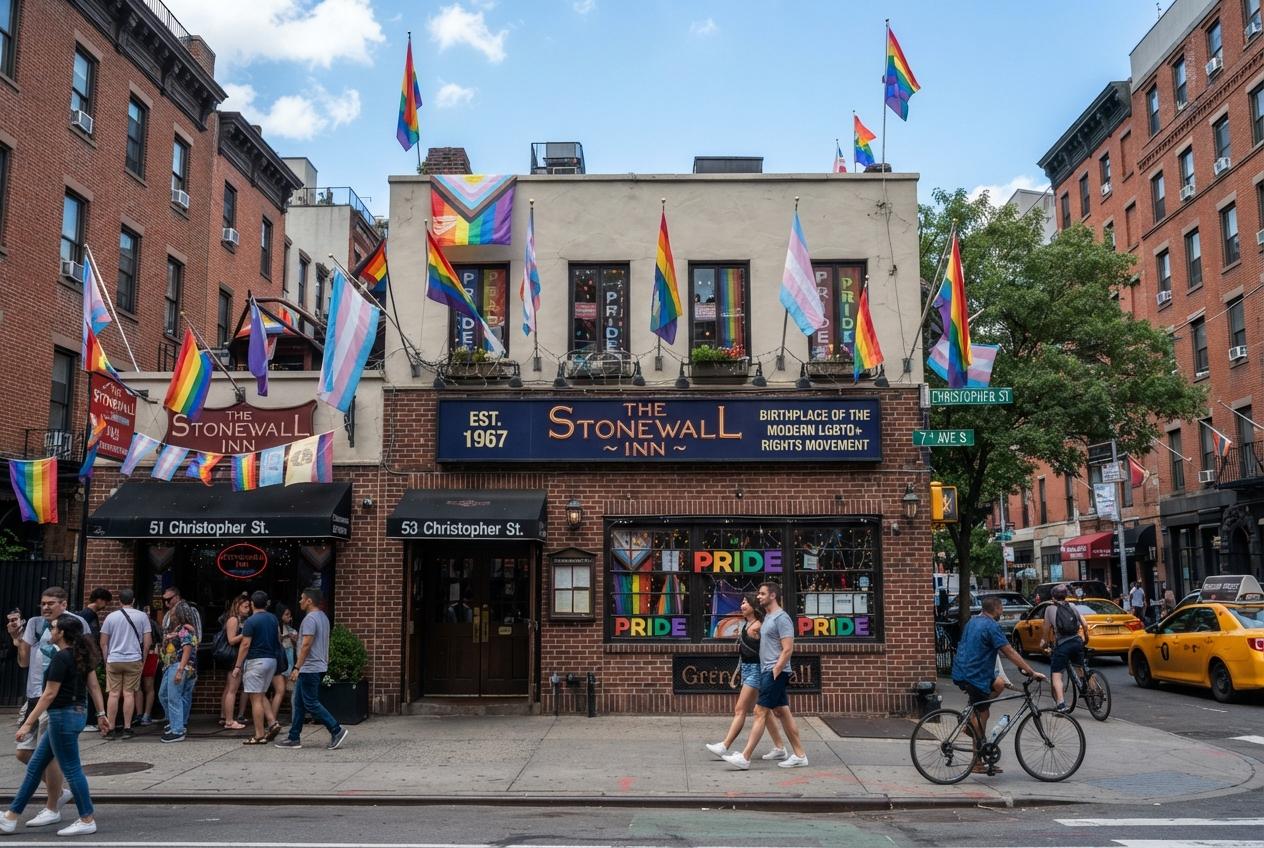
Start near the Stonewall area and you’ll hit a dense cluster of meaningful stops: bars, a park with a commemorative sculpture, plaques on writer’s residences and the AIDS Memorial a little further afield. The map is deliberately portable and illustrated, so you can keep moving without losing context. If you like tactile history, this route delivers: the feel of old brick, quiet side-streets and small plaques can be unexpectedly moving. For a calmer visit, go on a weekday morning; for more atmosphere, pick a weekend when the neighbourhood hums.
Stonewall, Christopher Street and the park , more than a photo op
Christopher Street remains a symbolic spine of modern LGBTQ history. The Stonewall Inn and the adjacent national monument visitor space sit close together, giving you both a lived-in bar and an interpretive moment next door. Christopher Park across the road offers Segal’s sculpture and small memorials; people often pause there. The project’s pages explain how these places connect to later activism and how public memory has evolved around them.
Other stops: bookshops, cafés, clubs and writer’s homes
The guide lists less obvious but fascinating locations , the former Oscar Wilde Bookshop site, longtime piano bars, and residences where writers like James Baldwin and Lorraine Hansberry lived and worked. Some venues have closed, but their stories are preserved on the site. That mix of surviving businesses and vanished hangouts gives you a layered view: you see what the neighbourhood was, what it became and how communities carved out meeting places despite hostility. It’s history told through daily life.
How to use the site and plan your visit
The NYC LGBTQ Historic Sites Project website provides individual site pages, an illustrated tour map, and a how-to guide for visitors and educators. You can download walking routes or book a guided tour by appointment when weather allows. Practical tips: wear comfortable shoes, bring a charged phone for map pages, and allow time to sit in Christopher Park or the AIDS Memorial , those pauses often make the visit more meaningful. If you’re teaching or guiding, use the site’s chronologies and primary-source references to add depth.
Closing Line
Take the map, linger at a plaque, and let the city’s quieter histories reframe what you already know.
Source Reference Map
Story idea inspired by: [1]
Sources by paragraph: