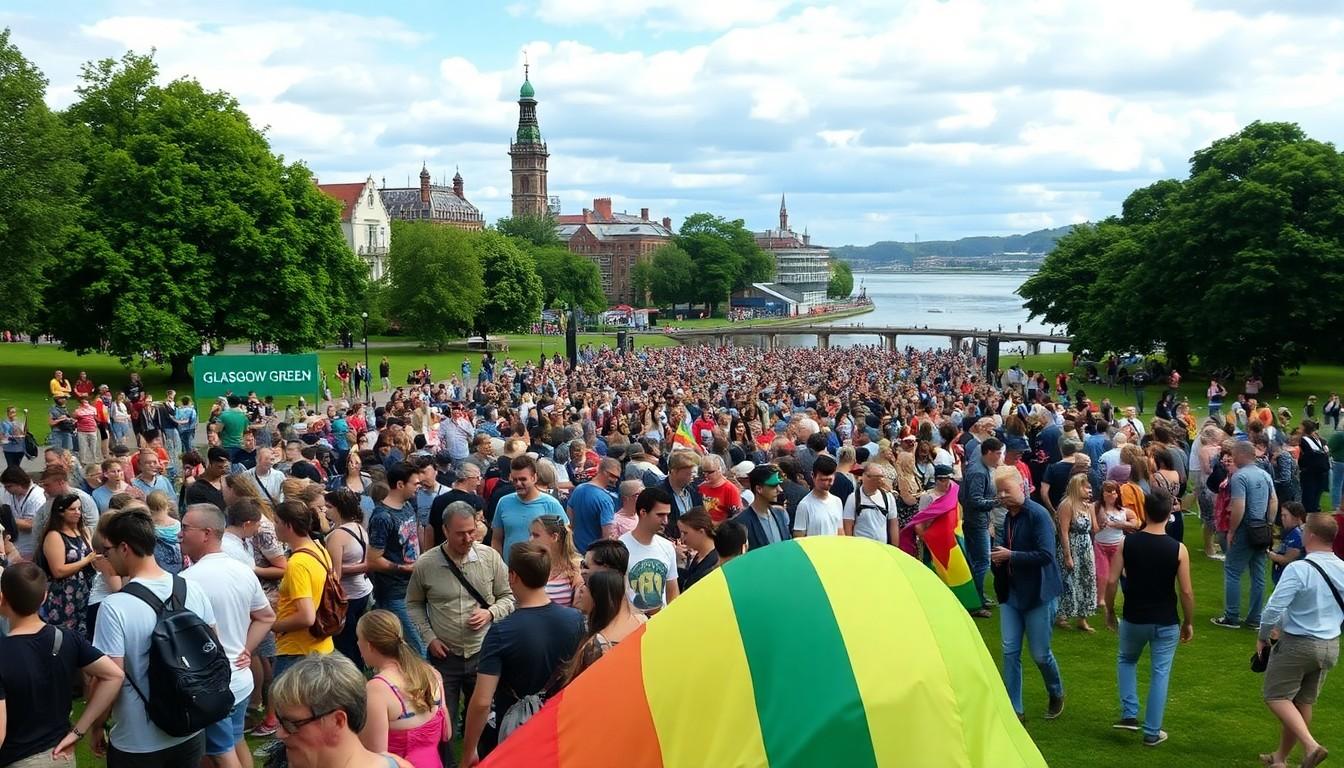
Thousands celebrated as Glasgow Pride marked its 30th year with a colourful procession from Glasgow Green along the Clyde, big-name music acts and a blend of community spirit and controversy that reminds us why Pride remains as political as it is party.
Essential Takeaways
- Mass turnout: Thousands marched from Glasgow Green into the city centre, dancing and watching performers along the route.
- Notable faces: Former first minister Nicola Sturgeon, author Val McDermid and Professor Jo Sharp were among those on the march.
- Big-name sponsors: Corporate partners included Lumo, AG Barr (Irn‑Bru) and Scottish Water, plus headline sponsor involvement.
- Music and atmosphere: Liberty X and Ultrabeat headlined the festival stage; other acts ranged from tribute performers to rising pop names.
- Tensions on the lawn: Partnership with Coca‑Cola sparked criticism and a small counter‑protest from No Pride in Genocide, highlighting ongoing debates about funding and solidarity.
A 30-year milestone with glitter and grit
Glasgow Pride marking three decades felt both celebratory and charged, a lively city party that still carries the echo of protest. The procession left Glasgow Green with a stream of banners, sequins and pop music, a vivid, noisy parade that threaded along the Clyde back to the green. Organisers have built the festival into one of Scotland’s biggest Pride gatherings, and you could feel the pride in the crowd , joyful, loud and determined.
The parade’s roots go back to a protest march in June 1996, and that history underpins many people’s sense that Pride should mix celebration with political purpose. That balance came into focus this year, as marchers cheered while activists debated which sponsors are welcome.
Who showed up , and why their presence matters
High-profile attendees gave the event extra visibility. Nicola Sturgeon was on the march in support of Time for Inclusive Education, and author Val McDermid and her partner Jo Sharp were photographed enjoying the atmosphere. Celebrity or political presence at Pride often signals mainstream backing for LGBTQ+ causes, but it also raises expectations about how organisers handle political sensitivities.
Community groups and campaigners used the platform to press for lasting change as well as a party. For many, seeing well-known supporters alongside grassroots activists underlines why Pride remains a place for both celebration and civic pressure.
Sponsors, money and the pushback
Big-brand backing helps fund the stages, security and performers, with companies such as Lumo, AG Barr and Scottish Water visible among partners. But commercial sponsorship brings its own headaches. The decision to partner with Coca‑Cola attracted criticism from Scottish Green politicians and groups like No Pride in Genocide, who argue Pride shouldn’t be a space for pinkwashing or businesses linked to contested global issues.
Organisers say major events are costly and sponsorship keeps them running; critics say who pays matters. If you’re choosing which Pride events to support, look into sponsor policies, transparency about funding, and whether organisers consult community groups about partnerships.
The music and the mood , festival vibes with a message
After the march the party atmosphere took over with headline acts including Liberty X and Ultrabeat, plus a mix of tribute and contemporary performers. Stages on Glasgow Green offered upbeat, danceable sets that kept spirits high into the evening.
Beyond the hits, smaller acts and community stalls gave the day texture , food, advocacy stands and quieter spaces for reflection. If you go next year, bring comfy shoes, sunscreen and an ear for both the playlist and the conversations happening at the margins of the festival.
What to take away , Pride as parade and platform
Glasgow Pride 2026 showed why Pride remains both celebration and platform. The turnout and the upbeat performances demonstrated broad community support, while the sponsor debate and counter‑protest reminded everyone that Pride’s origins in protest still matter. Events are getting bigger, and with that comes tougher questions about values, funding and who Pride is for.
If you’re planning to attend future Pride events, check procession routes in the organiser’s procession pack, review sponsorship statements, and decide what kind of Pride you want to support , party, protest or both.
It's a small change that can make every Pride march feel truer to its roots.
Source Reference Map
Story idea inspired by: [1]
Sources by paragraph: