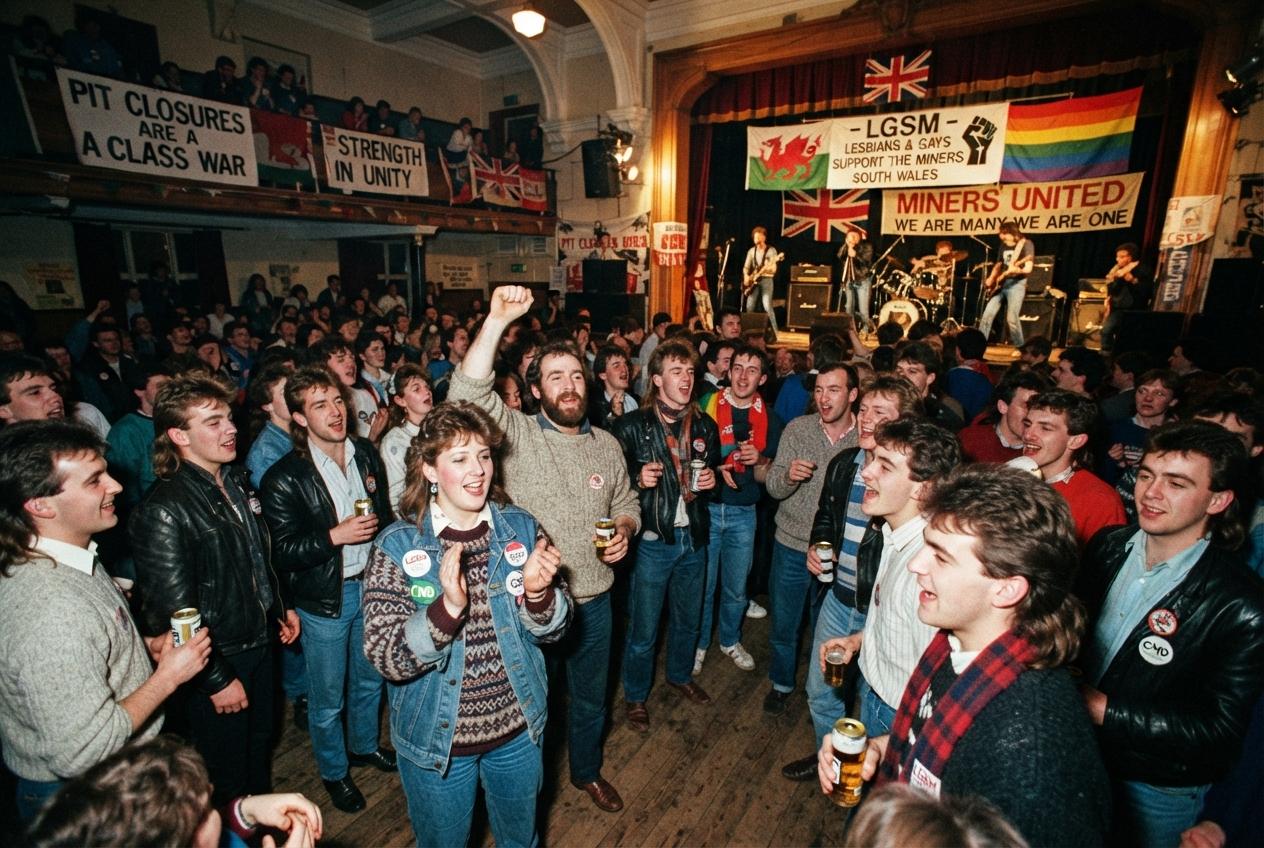
Watch how unlikely allies, miners and LGBTQ+ activists, turned headline hatred into practical support, reshaping British politics and proving solidarity can outlast stigma. This popular story from London and the Welsh valleys shows who helped whom, why it mattered then, and what it means for campaigns today.
Essential Takeaways
- Grassroots action: London-based Lesbians and Gays Support the Miners (LGSM) raised funds and travelled to support mining communities in South Wales, offering hands-on aid and companionship.
- Cultural crossover: Fundraising events such as the Pits and Perverts concert created visual, emotional bridges; the music and speeches made solidarity visible and vibrant.
- Political impact: Miners marched with LGSM at the 1985 Pride march and unions helped push through equal-rights motions at the Labour conference.
- Human cost and courage: LGSM organisers faced social stigma and the early AIDS crisis, yet prioritised mutual aid over self-preservation.
- Enduring lesson: Solidarity weakened manufactured divisions and shows how cross-community alliances can shift public opinion and policy.
How a London group ended up in the Welsh valleys
The most striking thing about LGSM is how quickly a handful of activists turned sympathy into practical, feet-on-the-ground help. According to LGSM’s own history, they collected money and personally travelled to mining communities in the Dulais valley, staying with families, handing over funds and building real relationships. These were not abstract donations; they were people sitting at kitchen tables, sharing soup and stories, which made the support feel immediate and human.
Backstory matters: the miners’ strike of 1984–85 was a national crisis, with picket-line clashes widely broadcast and whole communities pushed into poverty. Researchers and oral histories show LGSM’s visits created durable friendships that softened suspicion and opened conversations about class, sexuality and shared struggle. If you’re organising solidarity now, note the power of presence over platitudes.
Pits and Perverts: turning a slur into a rallying cry
A tabloid headline labelled the alliance with a sneer, but activists reclaimed the phrase for a fundraising concert that brought Bronski Beat and miners onto the same stage. LGSM’s site recounts how these events combined music, testimony and humour to punch through media narratives and generate both money and publicity.
It’s a useful tactic: when the story is turning you into a caricature, take control of the narrative. Host a visible event, centre the people affected, and make the emotional case for solidarity. For campaigners today, the lesson is the same, culture sells the politics; a gig or a film can move hearts faster than a policy brief.
Why miners and LGBTQ+ activists found common cause
There’s a practical logic to the partnership. Many LGSM members were themselves working class or from similar communities and recognised the strike as an attack on collective bargaining and livelihoods. Academic studies of the period highlight how proximity to shared hardship often produces empathy rather than division.
Politically, both groups were fighting a Conservative government that amplified social divisions. That dual pressure, economic and cultural, made an alliance sensible. If you’re weighing coalition politics now, this history suggests looking for overlaps in who faces institutional power, not just who seems like a natural ally.
The small victories that followed a big defeat
The miners ultimately lost the strike, and the political consequences were profound: decades of weakened union power and rising inequality followed. Yet solidarity produced tangible wins too. Within a year, coachloads of miners joined London’s 1985 Pride march and the National Union of Mineworkers helped secure Labour support for equal-rights motions, a shift noted by LGSM and contemporary accounts.
That paradox, defeat in one arena but progress in another, is worth remembering. Social change rarely runs in a straight line. For organisers, it means measuring success across multiple fronts: legal wins, shifts in public sympathy, and new alliances that last beyond a headline.
What the story teaches campaigners today
There’s a blunt lesson here about the machinery of prejudice. Historians and activists argue prejudice often needs constant reinforcement by elites and media. Meeting people in living rooms, sharing hardship and showing solidarity undercuts those manufactured divisions.
Practical tips: if you want to build durable alliances, prioritise listening over lecturing, invest in reciprocal visits, and make support visible, leave a check, but also leave time. And remember the human element: facing stigma and illness, LGSM organisers still chose to help others, which is as powerful a model now as it was then.
It's a small change that can make every act of solidarity more lasting.
Source Reference Map
Story idea inspired by: [1]
Sources by paragraph: