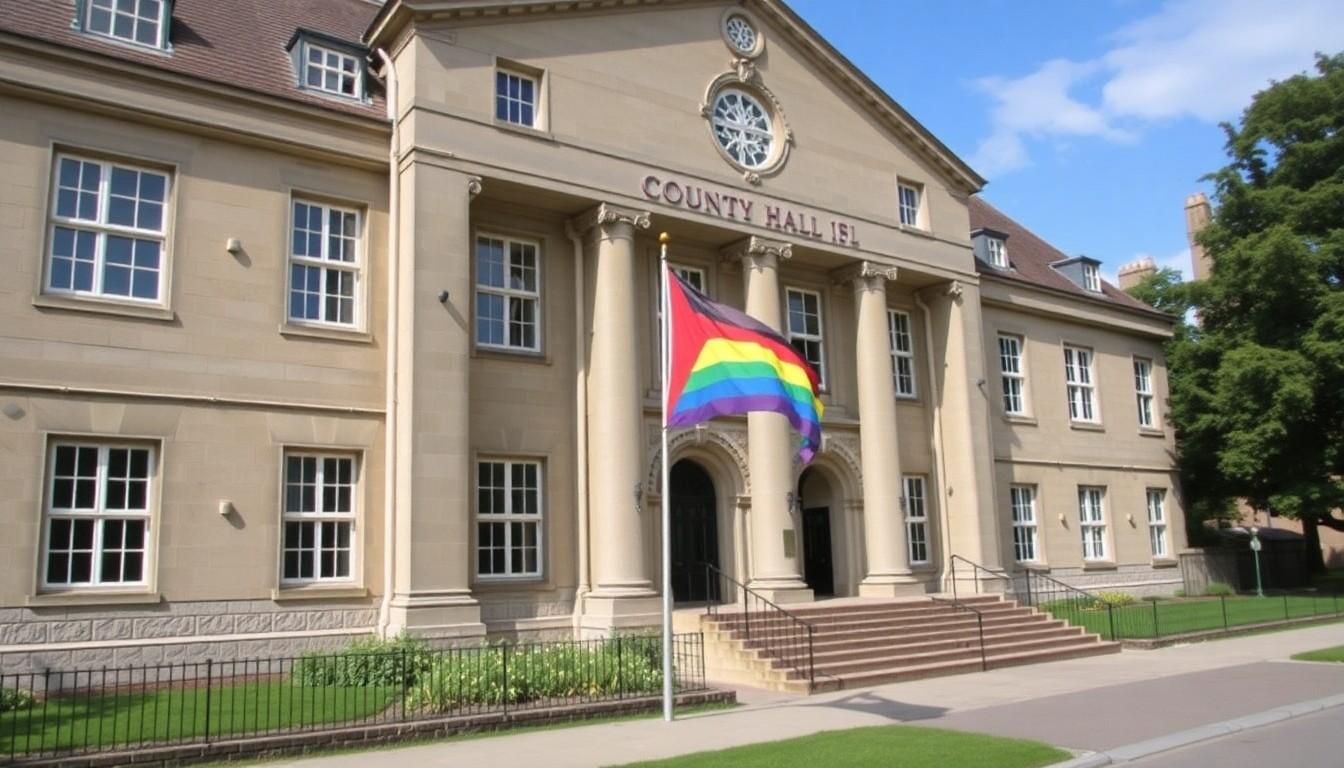
Shoppers, residents and councillors have been watching as Wiltshire Council approved an application to fly the Progress Pride flag on County Hall , a simple act with big local meaning. The decision, taken by the planning committee, highlights inclusivity debates, planning rules and how symbolic gestures can shape community conversations.
Essential Takeaways
- Committee approval: Wiltshire’s planning committee found no technical planning reason to refuse the 2.6m flag on a 10m pole for up to five days a year.
- Strong reactions: The application drew 369 objections and 163 expressions of support, signalling a highly engaged local debate.
- Who it represents: The Progress Pride design adds colours for people of colour, trans people and those living with HIV/AIDS to the classic rainbow.
- Practical checks: Councillors considered visibility and driver distraction before agreeing the flag met planning requirements.
- Local impact: Supporters argue the flag boosts safety and visibility for LGBTQ+ residents; opponents say civic flags should be unifying.
What the planning committee actually decided , and why it wasn’t a slam dunk
The planning committee approved a modest request: a 2.6-metre flag to fly on a 10-metre pole for five days a year. That’s a practical, low-impact proposal, and councillors repeatedly stressed there were no planning grounds to refuse it. Still, the meeting felt weightier because the flag’s symbolism sparked an emotive debate. Some members said they were voting on a technical application, but they couldn’t ignore the wider conversation it had provoked.
The Progress Pride flag: a small design with a big message
The Progress Pride flag layers extra colours in a chevron to acknowledge people of colour, trans people and those with HIV/AIDS, on top of the familiar rainbow. Supporters told the council visibility makes public life safer and more welcoming; trustees from local Pride groups framed the flag as practical reassurance for vulnerable residents. That visual cue matters , it signals who belongs, and why that can make a difference in everyday encounters.
Why opponents pushed back , and what they asked for instead
Opponents argued the council should fly banners that “represent everybody” and keep civic spaces neutral. Some described flying the flag as endorsing a single perspective on gender and identity. Their point was as much about unity as it was about process; they felt the council had handled the issue poorly. Those concerns fed a civic conversation about whether public buildings should take visible stances on social issues.
Planning practicalities: sightlines, safety and local rules
Councillors scrutinised the usual practicalities: pole height, flag size, and whether the bright colours could distract drivers on nearby roads. Chair Stewart Palmen and other members said these technical factors were decisive. That’s a useful reminder: most flag disputes aren’t settled by symbolism alone , planning rules and public-safety checks shape the outcome as much as sentiment does.
What this means for other town halls and communities
Wiltshire’s choice will be read as a cue elsewhere. Some councils will see a low-impact, time-limited display as an easy route to express inclusivity without changing permanent policy. Others will take note of the volume of objections and push for clearer processes or broader consultations. Either way, the decision shows how small acts of visibility can prompt practical reviews, from flag policies to how councils consult residents.
It’s a small change with a visible effect , and one that’ll keep local conversations about belonging and community alive.
Source Reference Map
Story idea inspired by: [1]
Sources by paragraph: