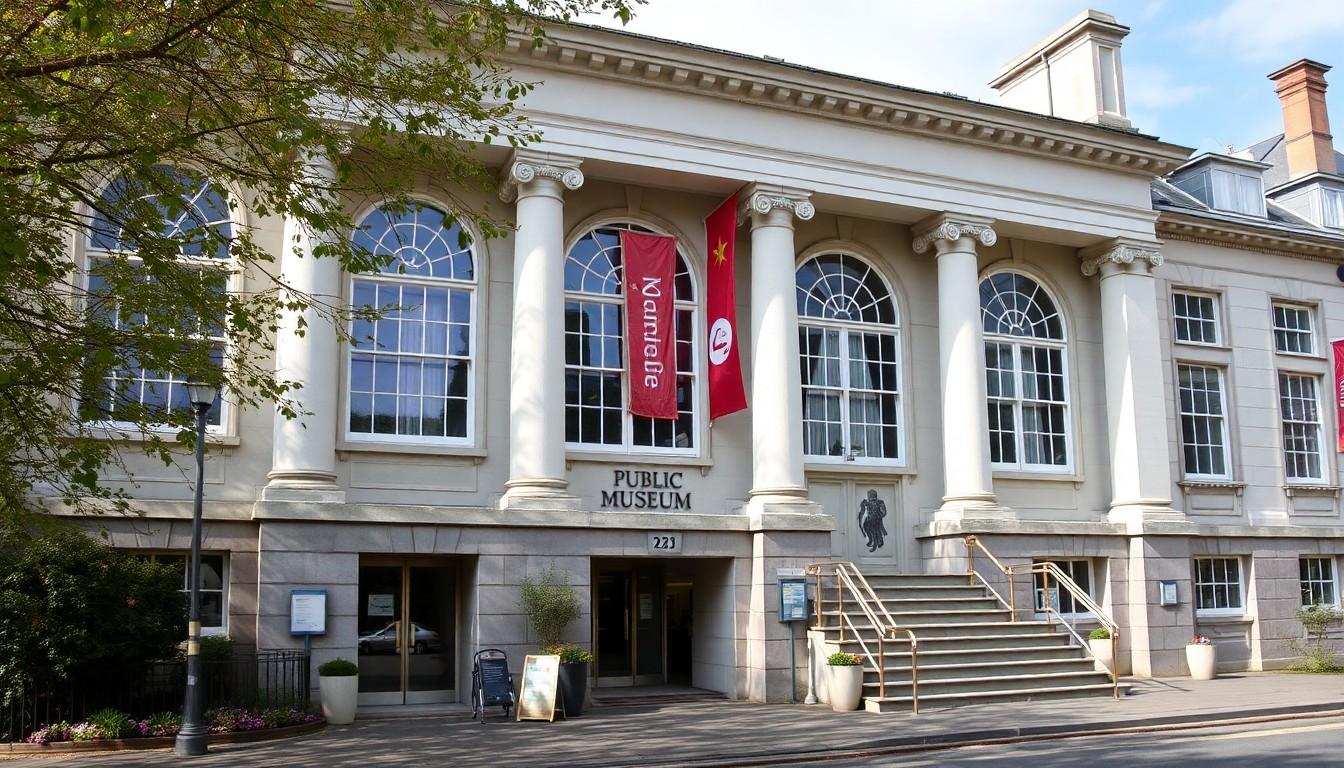
Shoppers and museum-goers are already talking: Cork is set to host Ireland’s first permanent LGBTQ exhibition, opening in August 2026 at the Cork Public Museum. The show marks 50 years since Cork’s first Gay Centre and promises local stories, school outreach and the original 1978 Pride flag on display.
Essential Takeaways
- Historic milestone: Cork Public Museum will host Ireland’s first permanent LGBTQ exhibition, opening August 2026.
- Anniversary timing: The launch coincides with 50 years since Cork’s first Gay Centre opened in 1976.
- Rich archive: The Cork LGBT Archive provides physical and digital collections, documentaries, publications and walking tours.
- Visitor reach: The museum welcomes roughly 44,500 visitors a year, including school groups, so the display will reach varied local and international audiences.
- Special artefact: The original 1978 Gilbert Baker Pride flag will be displayed as the first stop on its world tour.
Why this matters now , visibility with a quiet, powerful hum
Cork’s new permanent exhibition is a tangible correction to decades of invisibility, and you can almost feel that shift the moment you hear the plan. According to the Cork LGBT Archive, the display will make stories that were once hidden on the margins visible in a mainstream public museum setting. That matters not only symbolically but practically: seeing yourself reflected in a trusted civic space changes how communities and individuals feel included.
The exhibition was developed in partnership with the Cork Public Museum to fit the institution’s broader push for more inclusive heritage, joining recent permanent shows on Traveller and Jewish histories. This isn’t tokenism; it’s part of a pattern of museums broadening whose histories they keep and present.
What’s in the collection , archives, objects and local voices
Expect a mix of material culture and personal histories: photographs, documents, oral histories, films and ephemera gathered by volunteers since the archive launched in 2013. The Cork LGBT Archive already runs publications, documentaries and walking tours, so the exhibition will draw on a deep, lived archive rather than a few headline items.
Curators Orla Egan, Richard Keyes McDonnell and Jamie Furey have worked with volunteers and designer Darren O’Connor to shape the display. That collaborative approach means the show is likely to feel local and lived-in, not distant or clinical.
The 1978 Pride flag , a headline artefact with global reach
One headline grabber is the original Pride flag designed by Gilbert Baker in 1978, which is due to be displayed at the Cork Public Museum as the first stop on its world tour. Media outlets including SFist have highlighted the flag’s arrival, and it’s easy to see why: the banner is a cultural symbol that links Cork to broader global histories of pride and protest.
Displaying the flag adds a dramatic centrepiece, but the exhibition also promises smaller, quieter objects that tell the everyday story of living as LGBTQ+ in Cork over decades.
Schools and community impact , why a museum trip can change things
The museum gets thousands of visitors a year, and that includes school groups. Research shows many young people recognise their identity early and may feel pressure to hide it; seeing an inclusive exhibit on a school outing can be unexpectedly powerful. Orla Egan has spoken about the potential for the exhibition to reduce harassment in schools and improve mental health by making pupils and teachers more aware of local LGBTQ+ history.
Practical note for teachers: the Cork Public Museum’s outreach and the archive’s existing programmes mean guided tours and educational resources are likely to be available, making it straightforward to plan a class visit that ties into the curriculum.
How this fits into wider heritage trends , museums doing different work
Cork’s move mirrors a larger trend in museums to present a fuller civic story, including previously marginalised groups. The museum’s recent Traveller and Jewish exhibitions show a willingness to keep permanent galleries that broaden public understanding. According to local council information, the Cork Public Museum is expanding how it collects and displays diverse histories, and this exhibition is another step in that direction.
There’s also a ripple effect: when one public museum commits to long-term LGBTQ representation, it raises expectations for others across Ireland to follow.
Closing line
It’s a small change with wide reach , a museum gallery that helps ensure Cork’s LGBTQ past is seen, taught and remembered.
Source Reference Map
Story idea inspired by: [1]
Sources by paragraph: