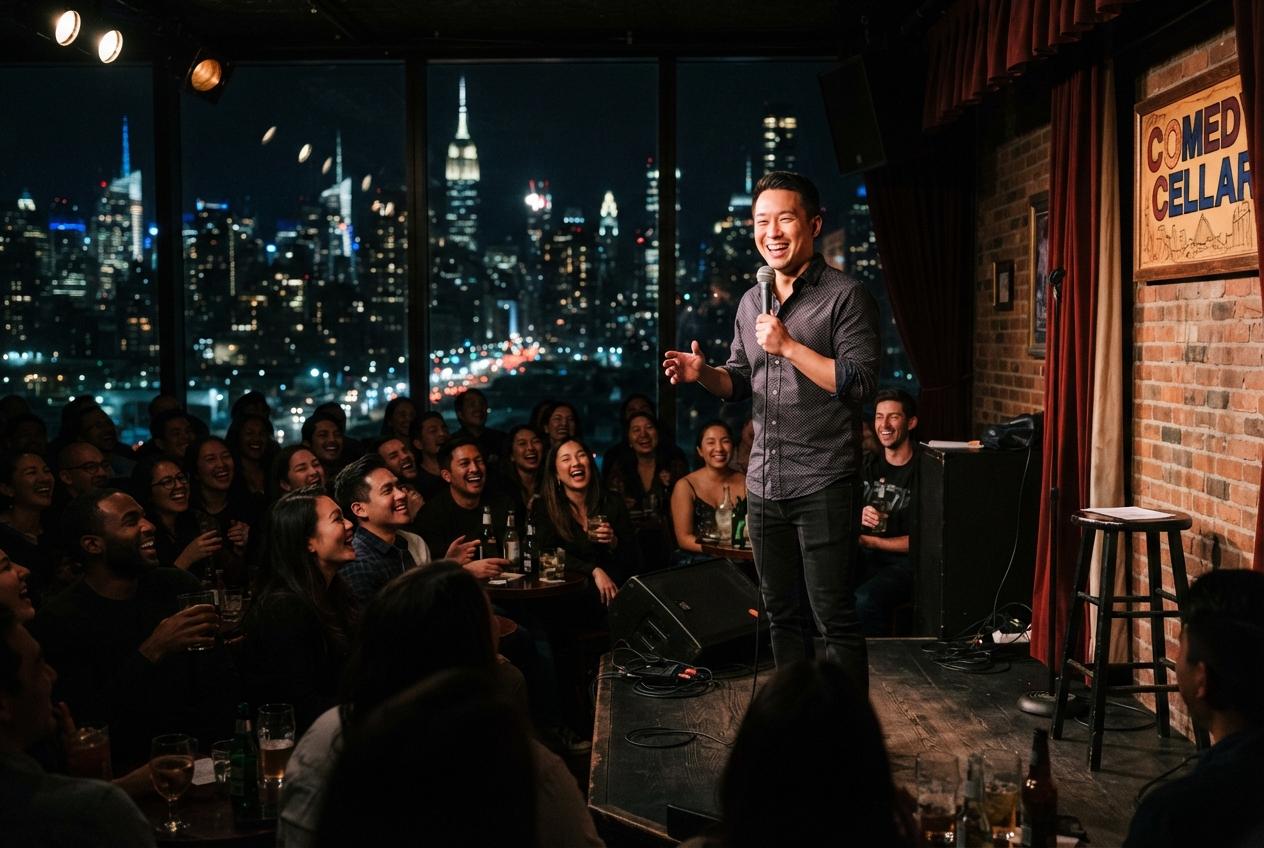
Shoppers are turning to live comedy nights as queer Asian performers carve out space, share sharp jokes and build joyful community in cities like Washington, D.C., and Brooklyn , a trend that matters because laughter has become a way to claim visibility and reshape queer cultural scenes.
Essential Takeaways
- Growing visibility: Queer Asian comedians are headlining dedicated showcases, drawing lively crowds and mixed emotions from family and friends.
- Shared material: Family expectations, interracial romance and body humour produce relatable, often riotous sets with a warm, candid tone.
- Underrepresentation persists: Performers report few peers in many local scenes; queer lineups still skew white, while many Asian spaces skew straight.
- DIY networks: Comics are creating their own nights and collectives to support each other and train new voices, with organisers sometimes juggling touring and grassroots promotion.
- Atmosphere matters: Shows feel intimate and celebratory , think loud laughs, snorts and a communal release , which helps audiences connect beyond novelty.
A magic night in D.C. that felt like a reveal
The opener at a recent Pride Comedy Special in Washington, D.C., landed with a thud of recognition: jokes about a family tombstone, an interracial boyfriend and the delicious awkwardness that follows. The audience laughed like people who’d been waiting to hear this aloud.
According to performers who took the stage, the show was less a polished manifesto and more a communal exhale. Organisers told me they wanted a lineup that reflected queer Asian variety , the sharp one-liners, the longer storytelling, the noisy physical bits , and the crowd rewarded them with raucous applause.
This isn’t just about representation on a poster. It’s the experience of seeing your contradictions and comforts reflected in comic timing, and that alone is often worth the ticket.
Why comedians say mainstream scenes still feel alien
When newcomers enter established comedy scenes, the culture shock is real. Many queer Asian comics describe venues dominated by straight white men or by Asian performers whose sets rarely touch queerness.
One comic described feeling split between scenes, never quite fitting either camp. That split shapes material , part observation, part survival , and helps explain why comics lean into family and dating stories that highlight those tensions.
If you’re choosing a night to attend, look for themed showcases or Pride events; they tend to program more varied lineups and create a safer vibe for new acts to stretch out.
The humour is intimate, sometimes raunchy, always human
Expect candour. Sets range from playful hypotheticals about top surgery to frank takes on oral sex, and the crowd tends to respond like people sharing a private joke at the bar.
That intimacy is a strength: it makes the humour hit harder because it’s grounded in lived experience. Performers say that riffing on family traditions , like arranged expectations versus modern romances , invites both laughter and relief.
If you’re a comedy booker, give comics a bit more stage time. These stories often need room to breathe; the payoff for the audience is larger, and the performers get to show real range.
DIY collectives are filling the gaps
With underrepresentation in mainstream circuits, comics aren’t waiting for invites. Several organisers and headliners are running queer Asian nights and collectives, building communities that mentor newcomers, test material and swap contacts.
Those DIY spaces do the heavy lifting of community-building: promotion, safe-stage policies, and a willingness to feature novices beside veterans. It’s grassroots, but effective , and attendees notice the supportive buzz.
If you want to support, go beyond a single show: follow organisers, share events, tip the performers and suggest venues that might host future nights.
What this means for the future of queer comedy
The rise of queer Asian lineups is a small revolution in plain clothes: it nudges broader comedy culture to be more inclusive while giving audiences stories they haven’t heard enough. As more nights pop up and performers tour, the scene will likely stop feeling like a novelty and become a steady part of queer cultural life.
For comics and fans alike, the simple next step is to keep showing up. Laughing together is how these communities map themselves.
It's a small change that can make every set feel like a homecoming.
Source Reference Map
Story idea inspired by: [1]
Sources by paragraph: