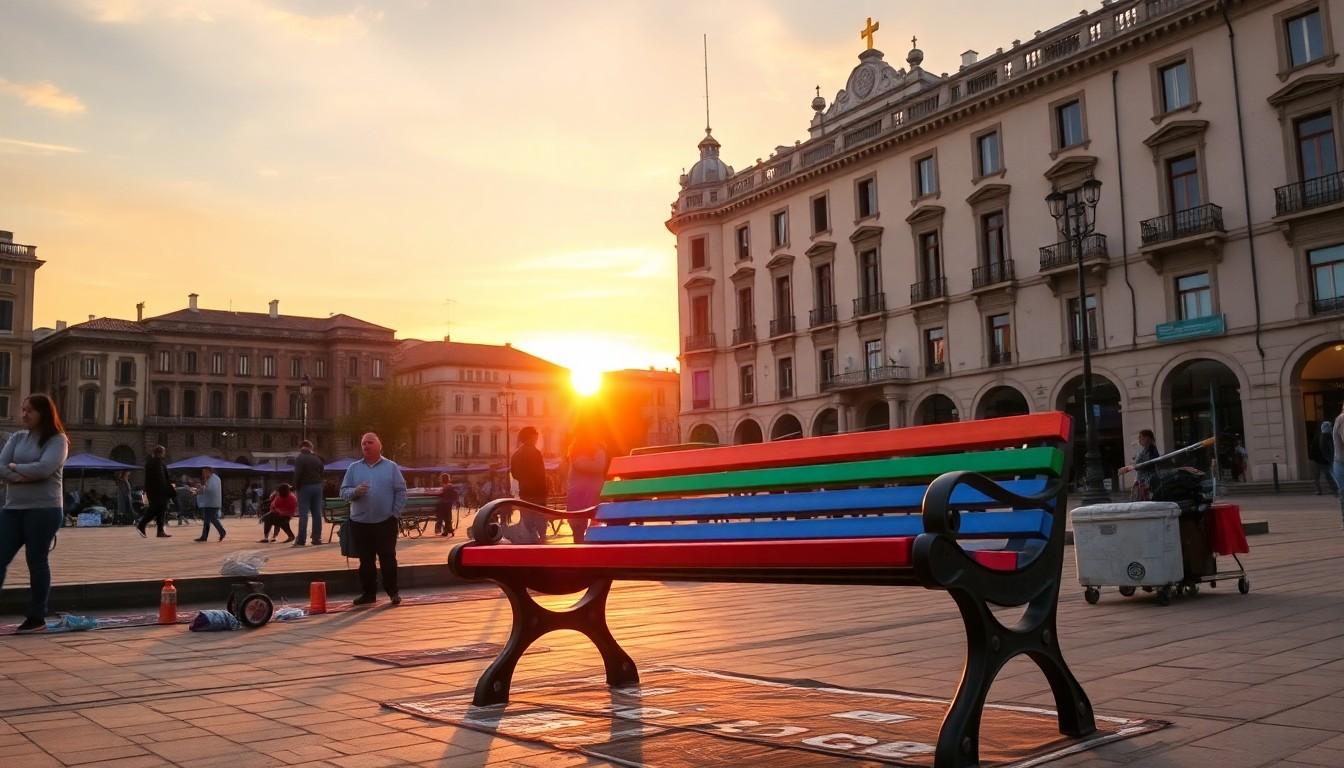
Shoppers and neighbours in Milan’s Bovisa are rallying after vandals sprayed a rainbow bench with black paint, turning damage into a neighbourhood action. Residents and QPride have organised a collective repainting to reclaim the square and spotlight why public symbols matter.
Essential Takeaways
- What happened: A rainbow-painted bench in Piazza Schiavone was defaced with black paint, reported by neighbourhood Pride group QPride.
- Community response: A public repainting is scheduled for Thursday 23 July at 19:00 to restore the bench together.
- Why it matters: Local officials say the bench symbolises inclusion and visibility for LGBTQ+ residents, and vandalism prompted solidarity.
- Practical note: Collective repainting is both restorative and deterrent , it repairs the symbol and signals communal ownership.
- Atmosphere: Expect a determined, hopeful mood , conversations, brushes, and a visible reclaiming of public space.
A splash of black, then a splash of colour , the opening hook
Seeing a familiar, colourful bench suddenly daubed in black feels sharp, like a small public betrayal you can’t ignore; that’s what happened in Piazza Schiavone, Bovisa. According to QPride, the neighbourhood Pride group, the rainbow stripes were recently covered with broad black strokes, a gesture that stirred both upset and action. Neighbours say it’s the kind of thing that makes you want to do more than scroll past.
Why a bench matters: backstory and local meaning
Public art and small civic gestures often do heavy lifting in a neighbourhood’s emotional life. Anita Pirovano, president of Municipio 9, spoke up, noting that a rainbow bench is meant to make rights visible and to remind everyone they belong. The vandalism didn’t just damage paint, it struck at a symbol of welcome , and that’s why people are responding visibly and quickly.
The community’s plan: a collective repainting and what to expect
Organisers have set a date , Thursday 23 July at 19:00 , for a group repainting session. Events like this do three things: they fix the damage, they create a public record of solidarity, and they discourage repeat attacks by showing continued neighbourhood care. If you go, bring sturdy shoes and a willingness to help; organisers will likely supply paint and brushes.
Practical tips for communities dealing with similar incidents
If your local mural or bench is targeted, start by documenting the damage and reporting it to local groups or authorities, then consider these steps: organise a communal repair event to gather allies, rotate watchful volunteers to keep the spot cared for, and use social channels to amplify the restore-in-action. Painting together sends a stronger message than replacement alone , it bonds neighbours and builds resilience.
Looking ahead: small acts, broader signals
Restoring the bench is practical, but it’s also political in the gentlest sense , a neighbourhood saying it refuses to let intolerance dictate who belongs. Events like this can spread enthusiasm for other local initiatives, from clean-ups to inclusive programming in public spaces. Expect the bench to come back brighter, with people remembering why it was there in the first place.
It’s a small repair with a big statement: reclaiming your square, one stroke at a time.
Source Reference Map
Story idea inspired by: [1]
Sources by paragraph: