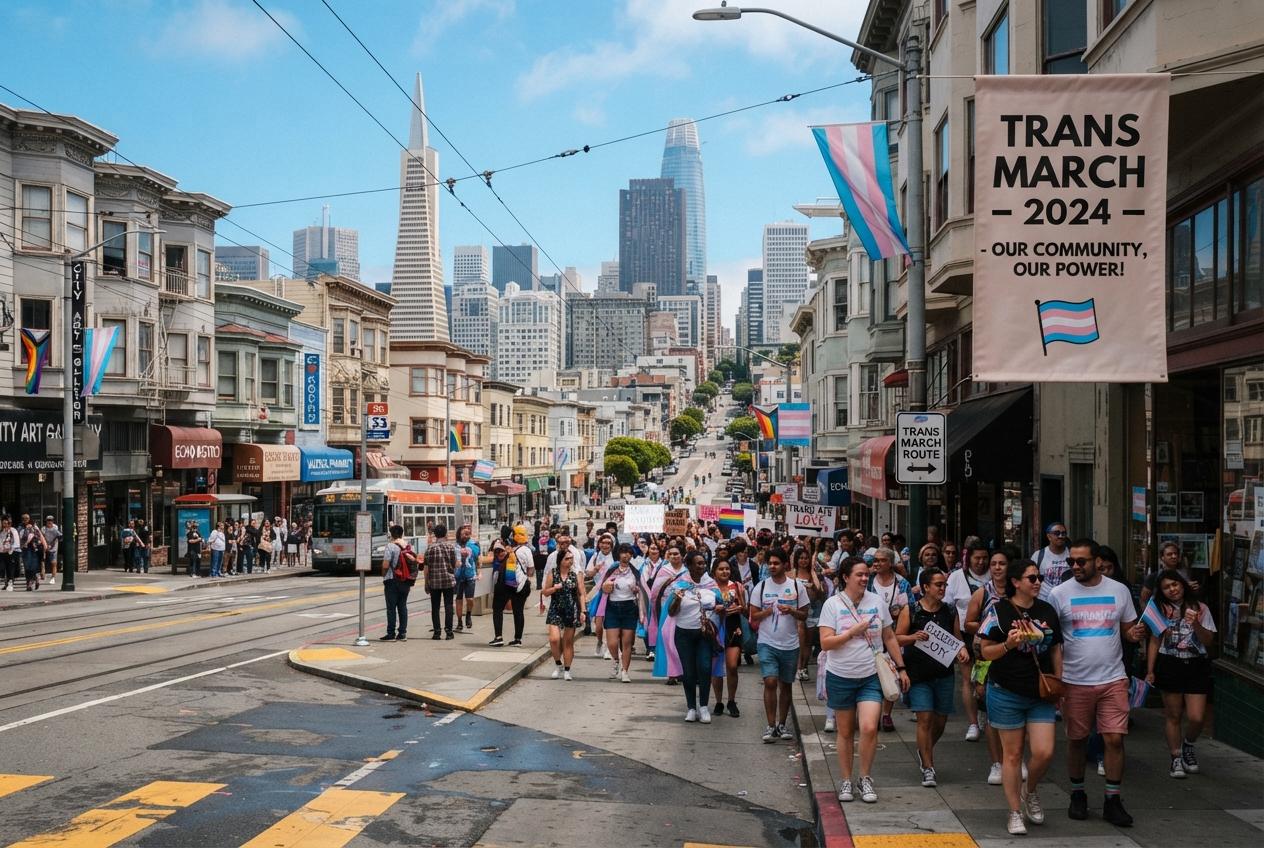
Organisers are pushing back after a chaotic Pride Weekend , dozens rallied at City Hall as trans leaders presented clear demands to Mayor Daniel Lurie, calling for dropped charges, community-led safety funding and civilian-managed street closures to prevent cars from driving into marches. This matters because it ties public safety to trust, history and the coming election.
Essential Takeaways
- Immediate demand: Organisers want all charges against Trans March participants dropped, arguing prosecutions followed an overly militarised police response.
- Community safety emphasis: The coalition calls for investment in community-led safety programs instead of expanded policing, noting services cut in recent budgets.
- Traffic control fix: They want SFMTA to fully close Market Street and hand traffic management to civilian teams during marches.
- Historical sting: Arrests and heavy-handed tactics struck a nerve at Compton’s Cafeteria site, a touchstone of trans resistance.
- Escalation promise: Leaders warned they will keep pressure through rallies and election-year political accountability if demands aren’t met.
What happened on the steps of City Hall , and why the mood was fierce
Dozens gathered in bright heat and tense purpose, chanting and testifying about a march that, for many, stopped being a celebration and became a risk. According to reporting in local outlets, organisers described police in riot gear confronting and pushing people to the ground while some officers drove squad cars into crowds, creating fear and panic. The visceral detail of people being pushed and, in at least one account, a legal liaison shoved against concrete made the anger feel immediate and personal. Community leaders say this wasn’t an isolated friction point but a symptom of long-standing mistrust, and they came to City Hall to demand concrete change rather than apologies.
The demands: drop the charges and invest in community safety
Organisers presented a three-part list to the mayor’s office: drop all charges related to the Trans March, shift funding from policing to community-based safety, and replace police-managed traffic control with civilian-run closures. They argue prosecutions and surveillance technologies do nothing to make people safer, and that recent budget choices prioritised militarised tools over services that actually help working-class trans and queer residents. The ask is blunt and practical: invest in trained community responders, harm-reduction teams and sustained funding rather than helmets and batons.
Cars, intersections and a fix that could’ve prevented panic
One thread that organisers kept returning to was the danger posed by vehicles driving into or through march lines. Speakers said SFMTA and police did not step up to close Market Street intersections, forcing the crowd to self-secure perimeters. The demand to mobilise SFMTA for full street closures and to have civilian traffic teams work with organisers is specific and fixable , it’s about blocking risks before they become crises. If the city adopts this, marches could feel calmer, less confrontational and safer for families, elders and people in fragile moments.
The politics: budget battles, protests and an election-year warning
Speakers linked recent victories , the reinstatement of funds cut from queer and trans programmes , with the tense response from state actors in the days that followed. Activists said the shows of force looked like a reaction to organisers’ successful budget push, and that political leaders now face choices in an election year. Organisers vowed to escalate if the mayor won’t meet demands, promising to attend every press conference, ribbon cutting and campaign rally to hold officials publicly accountable. It’s a strategy aimed at turning civic theatre into leverage.
Memory and mobilisation: Compton’s Cafeteria and the vow to keep fighting
The location of some arrests near Compton’s Cafeteria, where trans people famously resisted police brutality in 1966, gave the week’s events an extra charge. That history underlines why many speakers framed the current moment as more than protest theatre , it’s about survival and dignity. After the meeting with city officials, organisers said the demands were received but not accepted, and they announced another rally in July. The mood was defiant but organised: they’re asking allies to follow Trans March channels and show up.
It's a small change that could make every march feel safer: keep pressure on city leaders until community safety plans replace riot gear.
Source Reference Map
Story idea inspired by: [1]
Sources by paragraph: