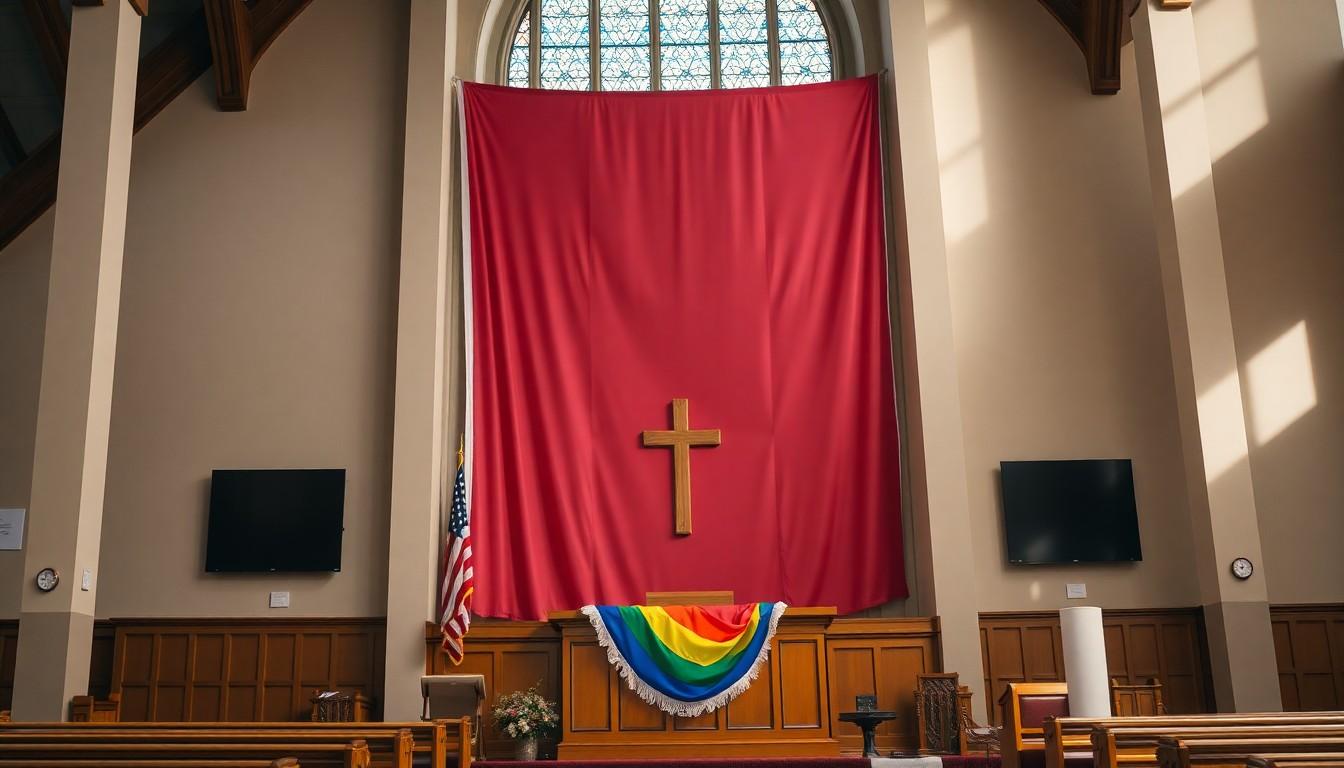
Shoppers and passersby may notice a splash of colour down Cleveland’s streets , but Pilgrim Congregational United Church of Christ’s 40‑foot pride flag is more than a spectacle. It’s a 25‑year practice that shows who’s welcome, how welcome is expressed, and why visible, evolving symbols matter for LGBTQ+ inclusion.
Essential Takeaways
- Historic tradition: Pilgrim Congregational UCC has carried a donated 40‑foot pride flag in Cleveland Pride for roughly 25 years, signalling long‑standing support.
- Updated to include more people: In 2024 the flag was revised to the Progress chevron colours, adding brown, black, pink, white and blue to centre trans and people of colour.
- Community labour and love: About 20 people carry the flag each year; sewing and mending by church members make it a literal fabric of the congregation.
- Visible worship witness: The congregation drapes the long flag over the pulpit and balcony during Pride worship to amplify inclusion inside the sanctuary.
- Invitation to others: The flag has become a shared role for neighbouring churches, creating a collaborative presence at Pride marches.
A flag that feels like a hug: the opening hook
There’s something tactile about a 40‑foot flag , the soft drag on your arms, the whoosh of fabric in a city breeze , and it’s exactly that sensory presence Pilgrim Congregational UCC has used to say “you belong.” According to the church’s pastor, Rev. George Graham, carrying the flag through downtown began as a deliberate, theatrical statement at a time when few congregations showed up for Pride. The visual impact is immediate, but the gesture is rooted in decades of witness.
How a donated banner grew into a congregational symbol
The flag arrived as a gift about 25 years ago from a local group and quickly became woven into Pilgrim’s public ministry. Nanci Adams, an avid sewer and quilter in the congregation, updated the massive banner in 2024 to include the progress chevron , a change that reflected shifts in how communities name and prioritise inclusion. The revamp was practical and symbolic: fabric work extended the flag’s message and tied a beloved member’s handiwork into the congregation’s story.
Why updating the colours matters: centring trans and people of colour
Adding brown, black, pink, white and blue wasn’t just aesthetic; it’s about who the congregation is consciously centring. The Progress chevron is meant to make trans people and communities of colour more visible within Pride symbolism. Pilgrim put that updated banner over its pulpit during a special Pride service, a move Pastor Graham described as intentional centreing inside worship. That kind of visual theology tells worshippers and visitors who the church is choosing to honour.
Sewing, stewardship and the power of personal stories
The story deepens when you learn about the people behind the stitches. Adams, who updated the flag at age 83, died last year, but parts of her fabric work live on: scraps were made into a rainbow stole that Graham wore at a wedding he officiated for a same‑sex couple. That full‑circle moment illustrates how acts of care , sewing, carrying, draping , become spiritual testimony in a community. It’s a reminder that visible welcome often depends on quiet, steady labour.
A tradition that invites others and builds bridges
What started as one church’s statement has become a shared invitation. Pilgrim still gathers around 20 people to carry the flag, but in recent years members from other congregations join, and several local churches now march in Cleveland Pride as a sign of solidarity. The flag’s size makes room , literally and figuratively , for collaboration, and the practice suggests a simple truth: large symbols can create small opportunities for connection.
Practical tips if your church wants a visible welcome
If your congregation is inspired, start small and be intentional. Choose symbols that reflect whom you want to centre, ask community members to help design or maintain them, and consider how items are used in worship as well as parade work. Make space for intergenerational involvement , sewing, carrying or draping can be meaningful roles for many ages. And talk about the why: visible gestures carry weight only when backed by consistent pastoral and practical support.
It’s a small change that can make every welcome feel spectacular.
Source Reference Map
Story idea inspired by: [1]
Sources by paragraph: