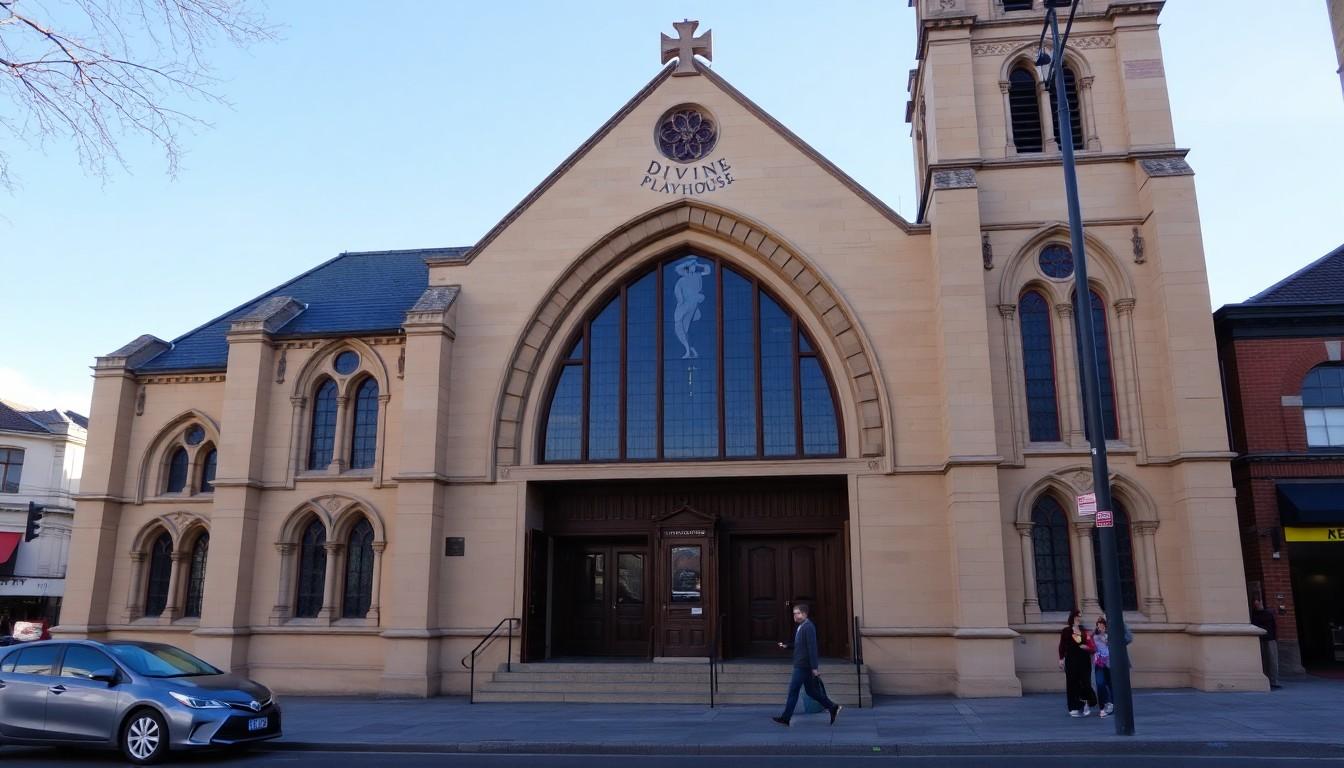
Shoppers, worshippers and night‑life lovers have been drawn into a culture clash after a deconsecrated Sydney church reopened as an arts venue hosting LGBTQ+ events , and was swiftly told by its landlord to stop “engaging in offensive trade”. Here’s what unfolded, who’s involved and what it means for public art, faith and free expression.
Essential Takeaways
- Venue ordered to stop: A landlord issued a breach notice to the organisers behind the Divine Playhouse, citing insults to sincerely held Christian beliefs and demanding events cease within 48 hours.
- Protest drew attention: About 70 supporters from Christian groups rallied outside, praying the Rosary and calling for a suspension of a $100,000 Create NSW grant.
- Name change and cancellations: The space briefly switched from Unholy Playhouse to Divine Playhouse before opening night, and weekend events were subsequently cancelled amid uncertainty.
- Artists and industry voices pushed back: Night‑time economy advocates warned this raises worrying free‑speech and artistic‑freedom questions.
- Visual shock factor: Images from the opening, including a performer in a pig costume offering fries as “communion”, sparked much of the backlash.
How a 150‑year‑old former church became ground zero for a culture clash
A weathered, 150‑year‑old building in central Sydney that stopped being a church in the 1930s was repurposed as a pop‑up arts venue, and the choice of theme quickly proved combustible. The organisers marketed bold, provocative performances that leaned into irreverence, and that aesthetic collided with members of Sydney’s Christian community who viewed the opening night as deliberately mocking. It’s a vivid reminder that location and history still carry emotional weight when art plays with religious imagery.
Who protested, and what did they want?
Two Christian groups , Fit for the Kingdom and the Prodigal Sons , led a peaceful demonstration outside the venue, praying and calling on the state to review public funding for the project. They weren’t just offended by one act; they argued the whole concept of staging sacrilegious performances in an ex‑church was insensitive to worshippers whose families have connections to the building. Their demand to halt a $100,000 grant from Create NSW shows they were targeting not only the show but the public support that made it possible.
The landlord’s response and the legal tangle
The next day the landlord served a notice alleging the venue had insulted the sincerely held religious beliefs of millions of Christians and ordered organisers to stop “engaging in offensive trade”. That move forced the cancellation of planned events and left the venue’s future uncertain , and Instagram accounts linked to the project were taken down amid complaint volumes. Industry voices, including hospitality and nightlife leaders, have pointed out the slippery slope here: landlords and third parties stepping in to police taste raises questions about who decides what is permitted in rented cultural spaces.
Free expression versus community offence , how do you balance them?
People on both sides insist they’re not trying to silence the other. The venue’s backers argue queer artists need room to create confronting work without being shut down, while protesters say there are plenty of alternative venues and it was inappropriate to stage this content in a former place of worship. This row cuts to the heart of broader debates about artistic licence, public funding and moral boundaries. Practically, event organisers might now weigh venue history more carefully and consider community consultation to avoid escalation.
What this means for artists, funders and venue owners going forward
Arts agencies and funders could face increased scrutiny over the projects they back, so transparency about content and context may become more common. Venue owners will likely tighten contracts and community‑impact clauses, while artists may either self‑censor in sensitive locations or choose to double down on provocation in neutral spaces. For audiences, the episode is a reminder that public art rarely exists in a vacuum , place, past and public sentiment all shape how a show is received.
It's a small conflict with big implications for how we stage and fund daring work in shared civic spaces.
Source Reference Map
Story idea inspired by: [1]
Sources by paragraph: