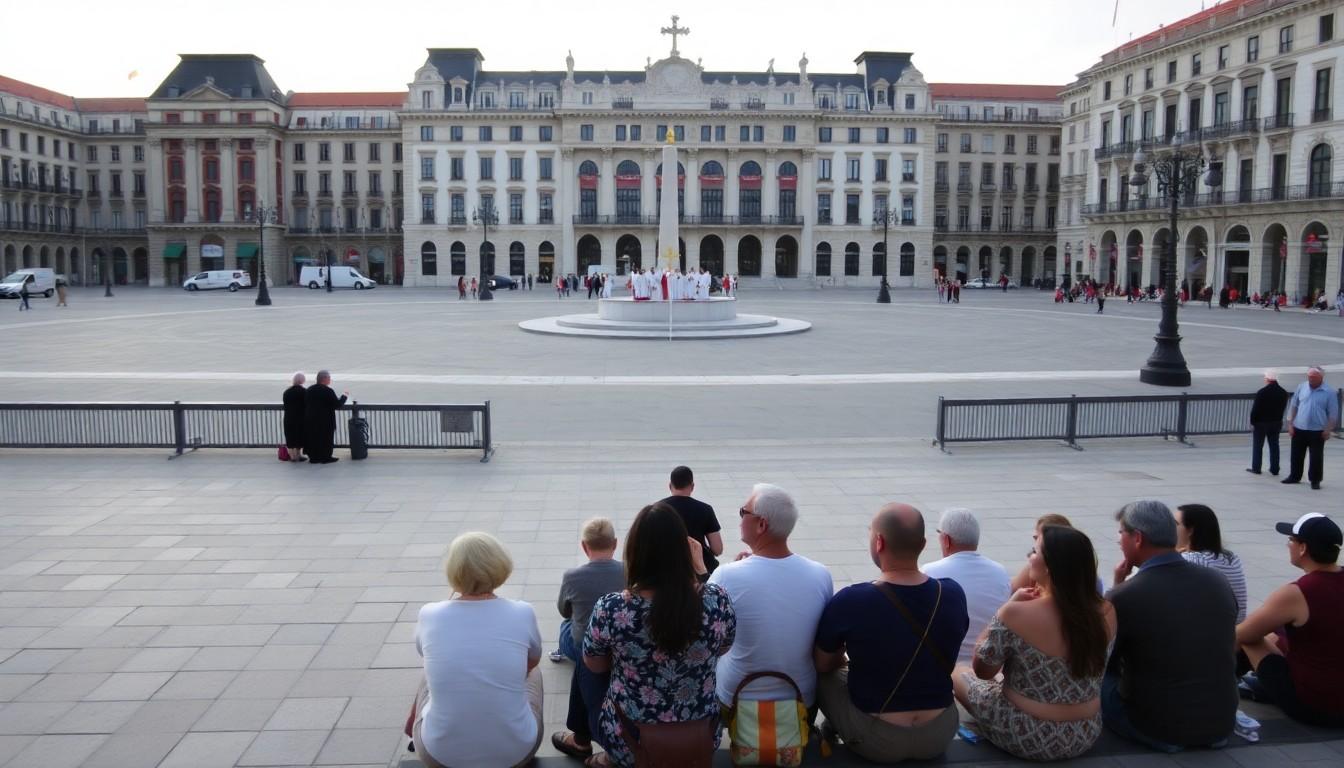
Shoppers of headlines have noticed a surprising scene: LGBT Catholics took part in a high-profile Madrid gathering with Pope Leo XIV, invited by the Archdiocese of Madrid, and the moment has sparked debate about inclusion, liturgy and what the Church’s public face now looks like.
Essential Takeaways
- Who attended: A women’s delegation from CRISMHOM (Christians of Madrid Homosexuals) joined the “Weaving Networks” event in Madrid and participated in the Mass.
- What they asked for: CRISMHOM called for recognition “as first-class Christians” and access to marriage “without distinction,” a stance that contrasts with current Church teaching.
- The setting: The Mass was an open-air, widely attended event in Madrid that also featured artists, athletes and public figures, creating a colourful, public atmosphere.
- Tone and symbols: Photos of the gathering show visible rainbow imagery among attendees, signalling a clear public statement of identity.
- Church position: The Catechism and recent Vatican remarks continue to emphasise traditional teachings on marriage and celibacy for those with same-sex attraction, creating tension with activist demands.
What actually happened in Madrid and why it felt different
A large, public Mass in Madrid drew crowds and many civic figures, and the Archdiocese’s outreach meant groups not usually visible at such events were present. According to reporting on the event, organisers intended to “weave networks” between the Church and contemporary sectors like culture and sport, so it wasn’t just a purely clerical gathering. The presence of a CRISMHOM delegation , waving rainbow colours , made the encounter feel less formal and more like a public conversation, which is why it’s caught people’s attention.
CRISMHOM’s demands , inclusion, marriage, visibility
Members of CRISMHOM used the occasion to press for full inclusion in parish life and access to marriage without distinction. That demand is an honest restatement of what many LGBT Catholics and groups have been asking for across countries: to be recognised not as peripheral but as full participants. At the same time, that call sits uneasily with established Church texts and teaching, so the request is likely to keep generating debate rather than immediate change.
How Church teaching and pastoral outreach are pulling in different directions
The conflict here is familiar: pastoral outreach and dialogue initiatives increasingly bring diverse people into visible encounters, while doctrine and the Catechism keep explaining traditional understandings of marriage and sexual morality. That tension , visible at this Madrid event , isn’t new, but the optics of a rainbow flag at a papal Mass make the arguments feel more immediate. For many Catholics, the practical question now is how to balance welcome and fidelity to longstanding teachings.
Why the optics matter: public liturgy and social messaging
Public liturgies are not neutral; they send a message. When an archdiocese intentionally invites groups from outside the usual roster of Church partners, it signals a willingness to engage. Yet symbols such as flags and public demands for sacramental changes amplify the sense that the Church’s public posture may be shifting. Observers should watch how diocesan leaders, Vatican spokespeople and parish priests respond in coming weeks, because local practice often sets the tone for wider discussion.
Practical takeaways for parishioners and curious readers
If you’re following this as a lay Catholic, a journalist, or simply someone curious about religion in public life, there are practical points to keep in mind. First, invitations and attendance do not equal doctrinal change; dialogue is a step, not a conclusion. Second, public events are a classroom for the Church’s pastoral instincts , they show who the Church wants to listen to. Third, parish-level conversations about hospitality, pastoral care and catechesis will be where most people see real effects.
It's a small change in setting, but it may have a big effect on how Catholics discuss inclusion going forward.
Source Reference Map
Story idea inspired by: [1]
Sources by paragraph: