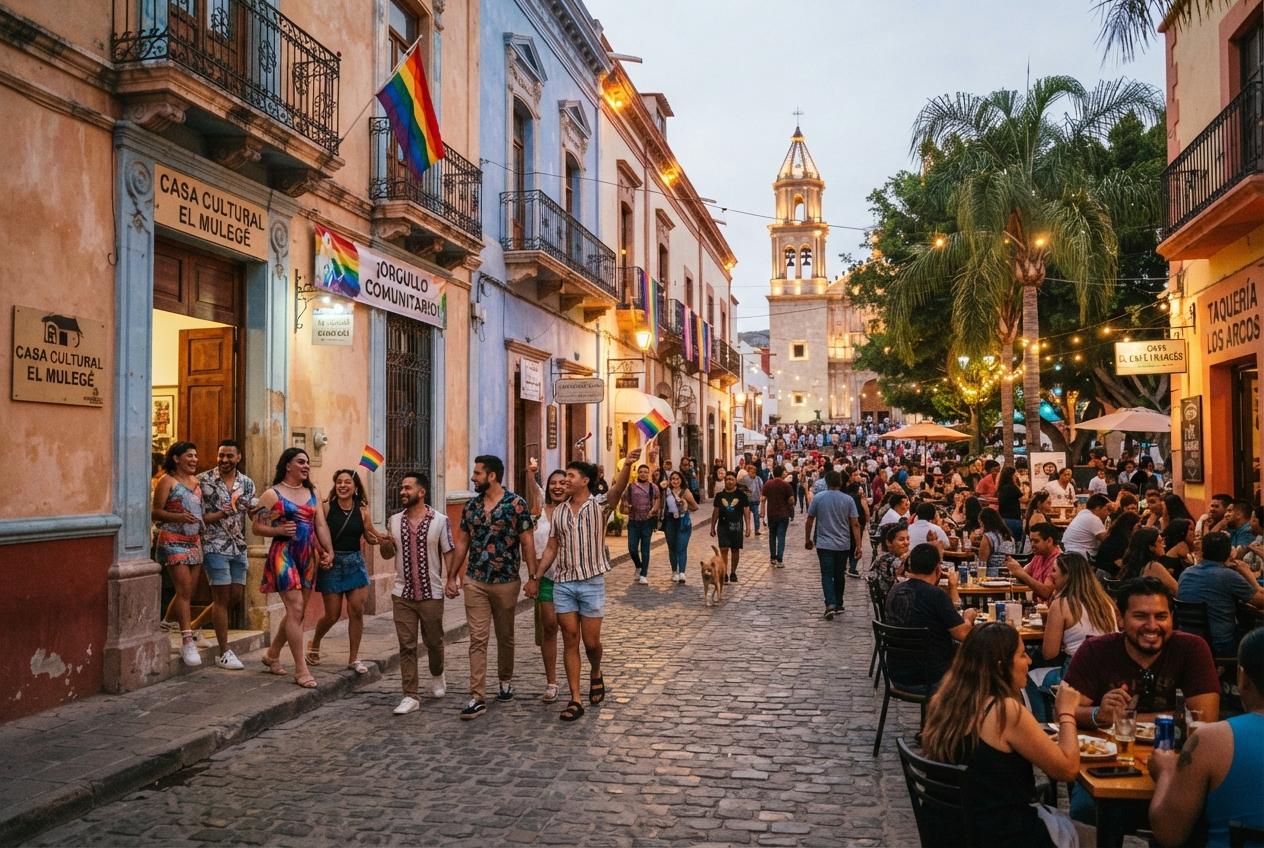
Discover Santa Rosalia , a mellow, gay-friendly Pueblo Mágico on Baja California Sur’s Sea of Cortez where Gustave Eiffel’s church, mesquite-fired bakeries and a surprising queer-friendly past make for an unforgettable, off‑the‑beaten‑path getaway. Here’s what to see, taste and know before you go.
Essential Takeaways
- Historic French roots: Santa Rosalia was built around a late-19th-century French mining company community, leaving visible architecture and cultural traces.
- Eiffel-designed church: The Iglesia de Santa Bárbara is a disassembled Eiffel pavilion reassembled in town , striking, metallic and photogenic.
- Warm local LGBTQ presence: Generations of openness mean openly queer locals in leadership, small Pride events and welcoming cafés and bars.
- Food and smell: Panadería El Boleo’s mesquite ovens fill the morning air with warm, yeasty aromas; local seafood spots serve fresh ceviche and “chocolate” clams.
- Slow, seaside pace: Expect dusty streets, friendly faces, undeveloped coves and easy access from Loreto for a relaxed Baja escape.
Why Santa Rosalia feels different , and pleasantly so
Walk into Santa Rosalia and the first thing you notice is the mix of salt air, baking bread and a faint industrial aftertaste from the mine , oddly comforting, like a town that knows its own story. The place grew quickly around Compagnie Boleo’s mining operation in the late 1800s, a French-run enclave that imported engineers, managers and a European sensibility to a remote Baja peninsula. That history still sets the tone: wooden porches, turn‑of‑the‑century hotels and a civic pride that’s refreshingly unpretentious. If you crave travel with texture , layers of scent, craft and community , this is your kind of stop.
The Eiffel church and other historical must-sees
The Iglesia de Santa Bárbara is the town’s headline act , a corrugated, embossed-steel structure originally shown at the 1889 Paris exposition and later shipped to Baja. It’s theatrical, a metallic flaring against the desert sky, and every visitor seems to stop and stare. Nearby, the El Boleo Mining Museum lays out the industrial backstory with tools, archive photos and miniature locomotives, so you can see how a company town became a living Mexican community. According to regional guides and local tourism pages, these sites are compact enough to visit in a half-day, making them ideal for slow sightseeing between beach walks.
How Santa Rosalia became unexpectedly gay-friendly
The town’s queer-friendly reputation isn’t a recent marketing ploy; locals trace it to the early French management of the mine, when men in visible positions of power quietly included gay and effeminate figures. Because the company provided essential jobs and stability, the local populace learned to accept these personalities without the kinds of social penalties found elsewhere. Today, community leaders, teachers and cultural organisers are openly LGBTQ, and the town hosts a small but proud Pride parade. Talk to residents and you’ll find a candid, human explanation: a community that grew used to difference and then kept it.
Where to eat, drink and linger like a local
Start mornings at Panadería El Boleo, where mesquite-fired ovens produce baguettes, conchas and guava empanadas that draw queues from dawn. The bakery’s fourth‑generation family operation is as much a social hub as a food stop. For seafood, grab a table at an open-air marisquería and try aguachile or the local “chocolate” clams , fresh, citrusy and ideal with a cold cerveza. For nightlife, there are no strictly queer clubs, but places like El Quinto Patio draw a mixed crowd and feel permissive and lively. Small cafés like Déjà Vu fly queer flags online and offer a friendly third‑space vibe for daytime hangs.
Practical tips: getting there, where to stay and what to pack
Santa Rosalia sits about a two-hour drive north from Loreto International Airport, making it an easy extension to a Baja itinerary. Accommodation ranges from the preserved Hotél Frances , with its vintage porches and courtyard pool , to modest guesthouses. Bring sun protection and comfortable shoes for dusty streets, and pack an extra layer for breezy evenings by the sea. If you’re a slow traveller, allow a couple of relaxed days: beaches near town are undeveloped and perfect for spotting sea lions or watching whale migrations in season. Finally, respect local customs: despite the town’s openness, this is still a tight-knit Mexican community where courtesy goes a long way.
It's a small, sunny discovery that rewards curiosity: a town where history, hospitality and a quietly proud queer presence meet by the sea.
Source Reference Map
Story idea inspired by: [1]
Sources by paragraph: