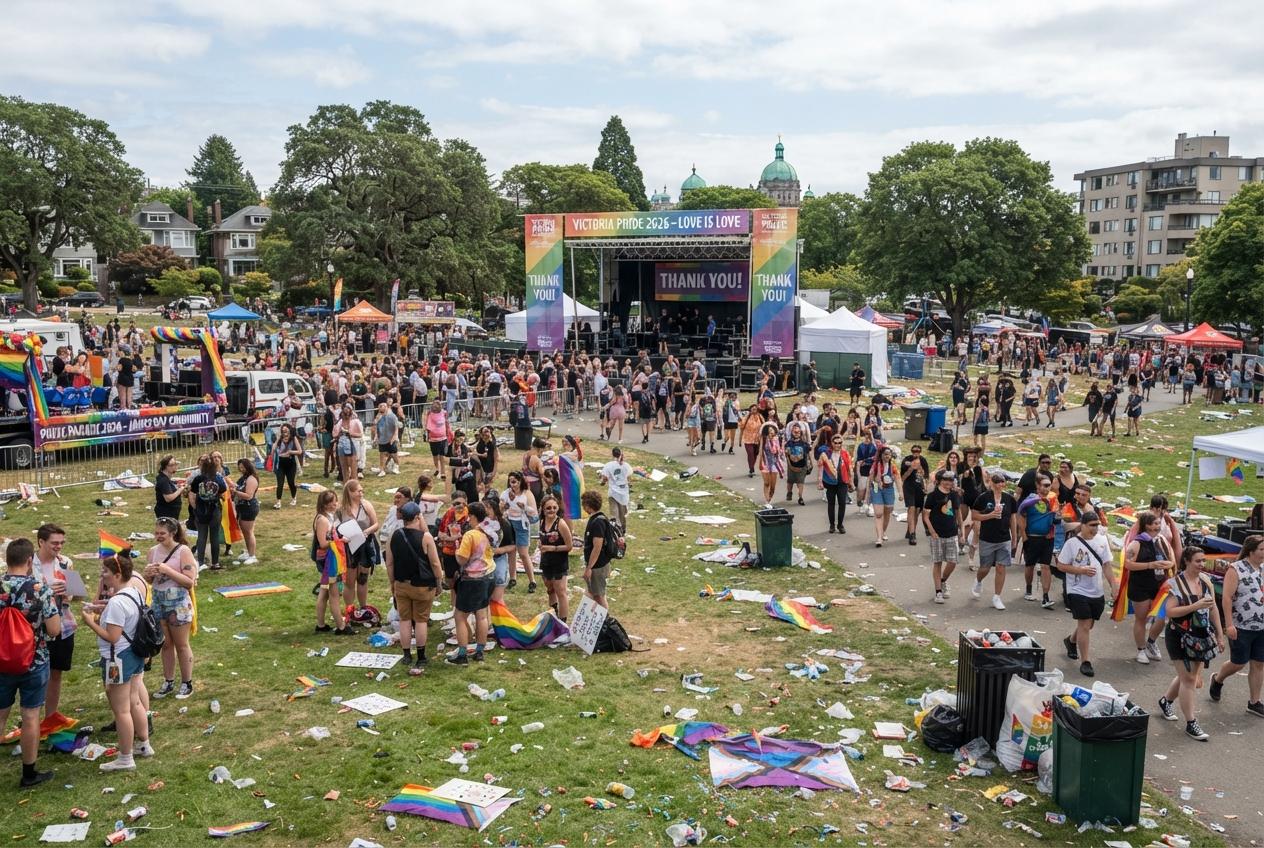
Bursting with colour and community spirit, Victoria’s Pride parade drew more than 80,000 people on July 12, 2026 , a joyful, family-friendly celebration that wound through downtown to MacDonald Park and kicked off a festival with live music, drag and 130+ vendors. Here’s what made this year stand out and why it mattered.
Essential Takeaways
- Huge turnout: Organisers and photographers reported more than 80,000 spectators lining the 2.4 km route, creating a buzzing, packed atmosphere.
- Big parade presence: Over 140 entries and hundreds of marchers filled the street, giving the crowd a steady stream of floats, banners and performers.
- Festival after-party: The free Pride Festival at MacDonald Park featured live drag, music and 130+ vendors , easy to wander, family-friendly and lively.
- Local leaders joined in: City and regional politicians were visible among attendees, signalling civic support while keeping the mood celebratory.
- Sunny timing: The parade’s sunny morning helped turn out a wide cross-section of the city, from families to long-time activists.
What the numbers tell us , and how that feels on the street
More than 80,000 people is a headline number, but the real story is the sensory one: packed sidewalks, cheering, music and the constant flash of rainbow flags and colourful costumes. According to event listings and parade previews, the route ran from Johnson and Government through downtown to MacDonald Park, a compact 2.4-kilometre loop that keeps the action concentrated and bumper-to-bumper.
Organisers say large turnouts like this reflect both local enthusiasm and wider attention on Pride season. For visitors, the experience is immediate , tight crowds, close-up performances and a carnival-like hum , so go early if you want a front-row spot or bring a picnic blanket for chill viewing near the finish.
Floats, entries and community groups , diversity on display
With more than 140 entries, the parade had something for everyone: arts groups, unions, local businesses, activist contingents and plenty of community-run floats. That mix helps keep the event both celebratory and civic , a place for protest, solidarity and pure fun.
If you’re planning to march next year, the Pride Society’s parade pages lay out entry rules and deadlines, and they tend to fill quickly. For spectators, spotting your favourite groups is half the fun; organisers usually publish an order-of-appearance so you can time your arrival.
Festival at MacDonald Park , the all-ages party after the march
Finish-line energy spilled into MacDonald Park, where a free Pride Festival staged live drag, music and more than 130 vendors. It’s designed to be family-friendly, so expect everything from craft stalls and community booths to louder performance stages.
Practical tip: festivals can get busy quickly, so scope the vendor map early, pick a meeting spot with good sightlines and keep hydrated , especially on a sunny July day.
Civic support and local faces , why politicians showing up matters
Local leaders were present among the crowds, a reminder that Pride has a civic dimension. Their attendance signals municipal support while the event itself remains grassroots and community-led. That balance matters to many attendees who want recognition without the parade being co-opted.
Observers note the tone in Victoria tends to be welcoming and pragmatic; officials often use the occasion to listen and to publicly back local services for 2SLGBTQ+ people.
Why this year felt different , momentum, timing and tourism
Timing matters. The parade followed weeks of global sporting colour, and many locals chose rainbow over national kits , a small but visible cultural choice. With tourism bodies highlighting Victoria as a Pride destination, the event also feeds summer visitor itineraries, giving local businesses a lively weekend.
Looking ahead, organisers are likely to build on this momentum: more programming, clearer accessibility info and continued outreach to new neighbourhoods. If you care about access, watch the Pride Society’s festival and FAQ pages for transport, accessibility and volunteer slots.
It's a small change that can make every celebration safer and more inclusive.
Source Reference Map
Story idea inspired by: [1]
Sources by paragraph: