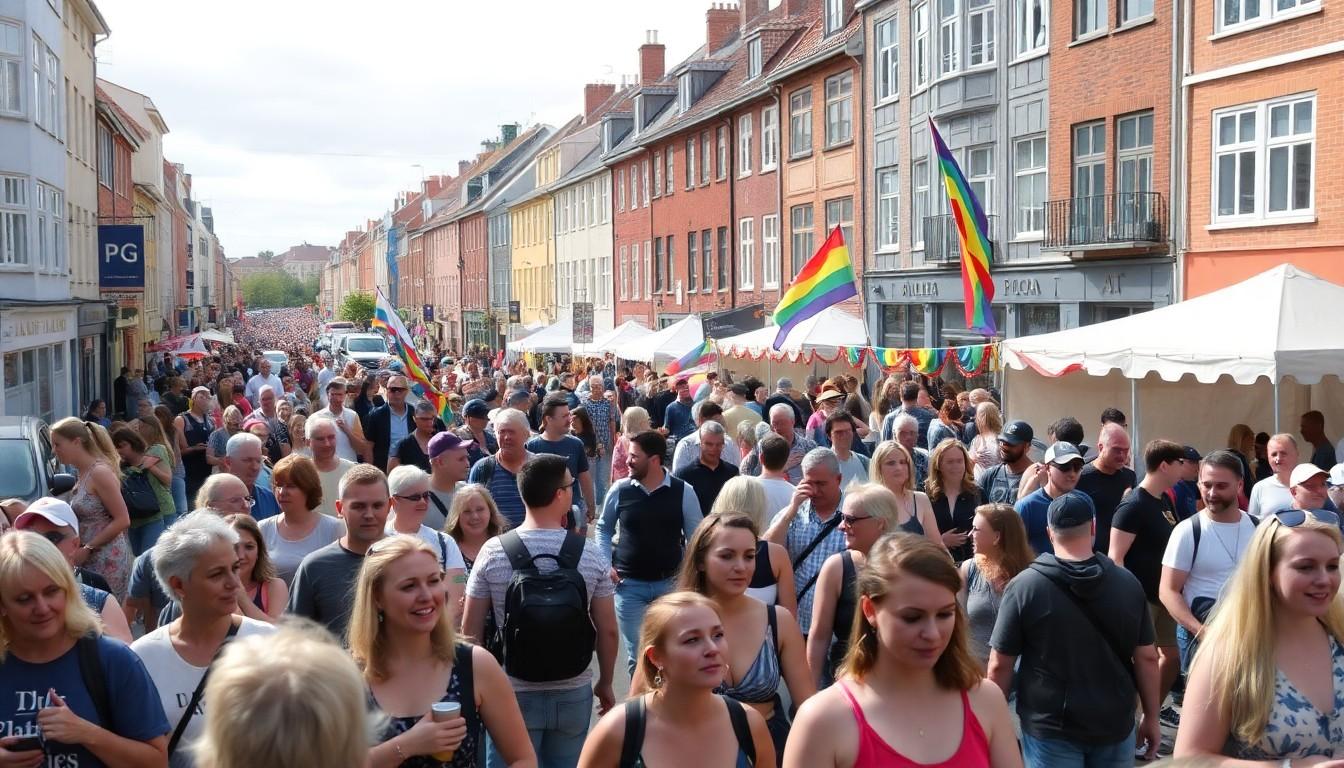
Shoppers and residents are turning out in force: Aalborg’s Pride has grown from three friends’ idea into a colourful, political street festival that draws thousands, celebrates LGBT+ life and reminds us why visibility in smaller Danish cities still matters.
Essential Takeaways
- Grassroots start: Three friends launched Aalborg Pride after seeing parades in Aarhus and Copenhagen, and the event quickly swelled from a few hundred hopefuls to thousands.
- Big turnout: Today Aalborg Pride routinely attracts around 5,000–10,000 participants, with a mix of locals and visitors, music, and visual spectacle.
- More than a party: The day combines a march with concerts, debates, drag shows and family-friendly activities in Karolinelund.
- Safety and progress: Organisers stress Pride remains a form of protest as well as celebration , safety measures and visibility remain essential.
- Regional gap: While Aalborg’s scene has grown (Mangfoldighedens Hus, Regnbuecaféen), smaller North Jutland towns often lack the same resources and openness.
From a spark of envy to a city-wide celebration
It began with a simple thought: if Aarhus and Copenhagen could do it, why not Aalborg? Three friends decided to try, picturing a modest crowd, but the response surprised them , what they expected to be a few hundred quickly ballooned. The festival now fills streets and parks with an unmistakable burst of colour, music and an upbeat, communal hum. It's civic theatre that feels both joyful and purposeful, and walking the route you can practically feel the buzz in the air.
Pride as protest: why the march still matters
Pride in Aalborg is loud and proud because the underlying fight hasn’t vanished. The movement's roots go back to 1969 in the US, and organisers here are clear: visibility is political. According to local voices, the parade isn’t just a celebration but a demand for space, safety and acceptance. That duality, party and protest, gives the day a sharper edge; it’s a festival with a mission, and when you join the procession you’re part of a long, living history of claiming public space.
Inside the day: music, debates and family moments
After the march through the city, the party continues in Karolinelund with live concerts, drag shows and panels that dig into pressing issues. Organisers deliberately welcome families and children, aiming to normalise diversity across generations. That mix of spectacle and substance is what makes Aalborg Pride feel inclusive: you can dance to a headline act, then catch a debate on rights, or bring the kids to see the flags and costumes without it feeling like proselytising.
Safety, visibility and the realities outside the city
Even as the event grows, organisers talk openly about precautions. There are more eyes on attendees now, and extra measures are taken so participants feel safe walking home at night. That’s important because outside Aalborg, life can look different; small towns in North Jutland still offer fewer visible supports and social spaces. For many, Pride is a reminder that progress is uneven, celebration in the city can coexist with ongoing challenges in regional communities.
What the growth says about Denmark , and what still needs fixing
Denmark overall enjoys a reputation for LGBT+ friendliness, reflected in national laws and services, but lived experience varies. Aalborg’s development , from nothing to an annual highlight that attracts thousands , shows how community action fills gaps and builds culture. Yet recent government attention to hate crime prevention underlines that policy and pride must go hand in hand. In short, parties are powerful, but they work best alongside sustained political and social efforts.
It's a small change that can make every march safer and every celebration more meaningful.
Source Reference Map
Story idea inspired by: [1]
Sources by paragraph: