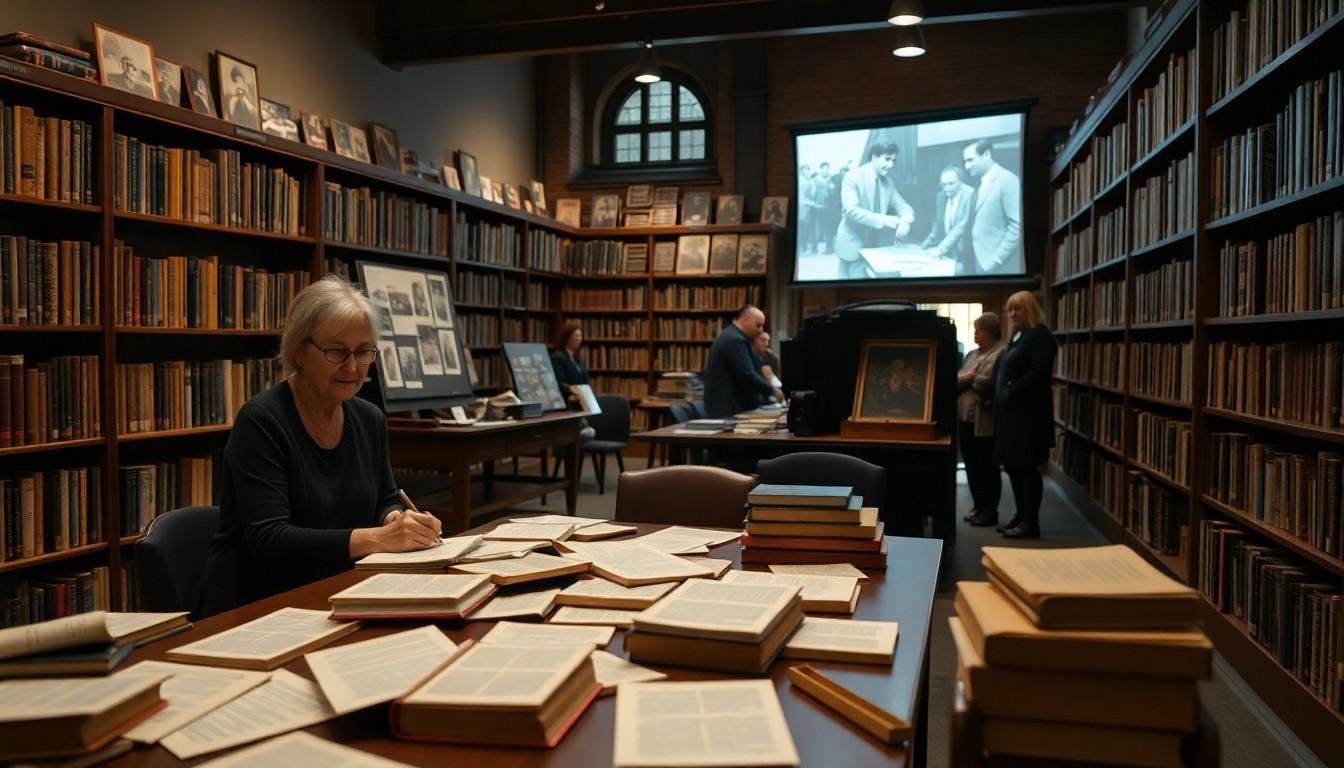
Celebrate, reflect and get hands-on this Queer History Month , visitors are invited to the National Library in Wellington on 1 August to explore 40 years of Homosexual Law Reform collections, watch archival footage, and craft blackout poems that respond to Aotearoa’s queer past and present.
Essential Takeaways
- Free and open: The event runs 10am–1pm at the National Library, Wellington, and has no entry fee.
- Curated collections: Explore items from the National Library, Alexander Turnbull Library, Archives New Zealand, Ngā Taonga Sound & Vision and Kawe Mahara Queer Archives Aotearoa , expect ephemera, audio-visual taonga and books.
- Hands-on creativity: Blackout poetry workshops use found text from Papers Past, guided by Blackout Poetry Aotearoa and supported by poet Chris Tse.
- Screenings included: Two screenings (10:30am and 12:30pm) of Thin Edge of the Wedge present media from 1985–86 and include Q&A; content may be confronting.
- Community-focus: The day forms part of Queer History Month Pūmahara Ia Te Wā and features collaborative programming and locally made banner artwork by Sam Orchard.
Why this National Library event matters now
There’s a particular hush and warmth when you stand beside an old flyer or watch grainy footage of a protest; the material hits you physically. The 40th anniversary of Homosexual Law Reform in Aotearoa has prompted a wave of public programming, and the National Library’s Through the collections event makes those primary sources available to everyone. According to the National Library’s listings, the showcase bundles archival voices with contemporary responses, which helps stitch past struggles to present conversations.
What you’ll see and hear in the gallery
Expect a tactile mix: pamphlets that smell faintly of old paper, photographs with markers of handwritten notes, and audiovisual clips that land with an immediate, sometimes uneasy, realism. The National Library is pulling items from several partner institutions, so the display offers multiple angles on the reform movement. If you’re a keen reader of social history, it’s a neat way to trace how messages were made and shared before the internet age.
Make your own response with blackout poetry
Make time to try blackout poetry in the programme rooms. Using repurposed clippings from Papers Past, participants will be invited to select words, block others out, and form new poems , an intimate, reflective practice that turns archival language into personal testimony. Blackout Poetry Aotearoa leads the activity with support from Chris Tse, former New Zealand Poet Laureate, so there’s both craft guidance and a local poetic lens. Tip: bring a quiet, focussed mood and a notebook; the activity is gentle but can stir strong feelings.
Watch Thin Edge of the Wedge , what to expect
The screening sessions at 10:30am and 12:30pm show media from 1985–86 that accompanied the Homosexual Law Reform Bill’s passage. Presented with an introduction and time for questions, the 72-minute film helps contextualise the media environment of the time. Organisers note some material may be challenging, so parents and those sensitive to archival broadcast rhetoric should take care. It’s a raw, instructive look at how public debate was framed and how far attitudes , and media practices , have shifted.
Who’s behind the day and where it slots in the wider programme
This event is part of Queer History Month Pūmahara Ia Te Wā, produced in partnership with Ngā Taonga Sound & Vision, Archives New Zealand, Kawe Mahara Queer Archives Aotearoa and Blackout Poetry Aotearoa. Banner art by Sam Orchard gives the space a local, contemporary face. The wider 40 Years of Love initiative and related talks around the country offer more chances to hear activists reflect and for communities to mark the milestone together.
It’s a small, quiet way to remember and respond , bring curiosity, a soft pen, and an open ear.
Source Reference Map
Story idea inspired by: [1]
Sources by paragraph: