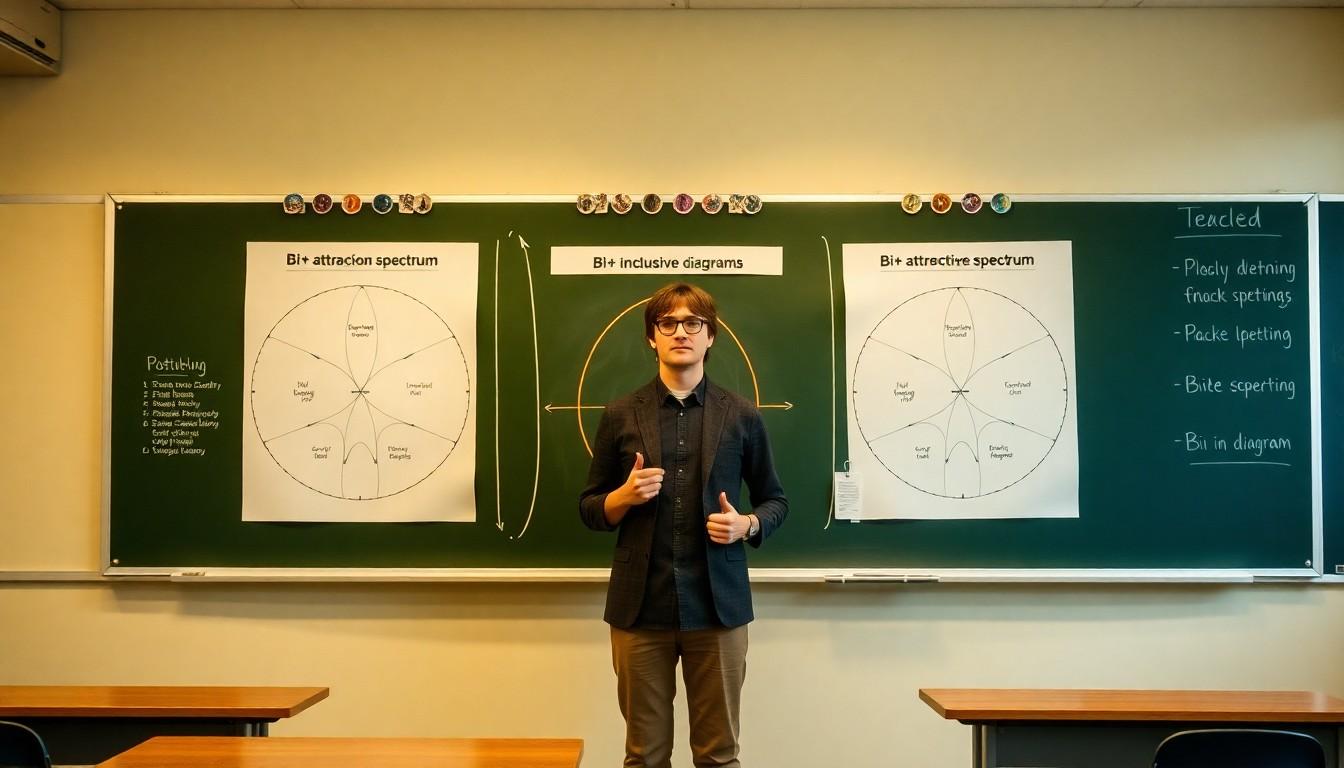
Spotlight bisexuality: educators are updating lessons to reflect the spectrum of attraction, why it matters for inclusion, and simple classroom moves that make bi+ young people feel seen and safe. This matters for teachers, parents and school-based health staff who want clearer language, better resources and less erasure.
Essential Takeaways
- Prevalence: Bisexuality is the most common LGBTQ+ identity; sizeable shares of young adults identify as bi+ and many bi+ people are parents.
- Visibility gap: Bi+ people are less likely to be out than gay or lesbian peers, and representation on TV has declined.
- Erasure harms: Common myths and binary thinking contribute to poorer health and social outcomes for bi+ people.
- Practical classroom steps: Teach attraction as a spectrum, know LGBTQ+ icons, spot bi+ erasure, and signpost bi-specific resources.
Opening the conversation: bisexuality is wider than most lessons admit
Bisexuality commonly means attraction to two or more genders, but the label also sits inside a larger bi+ universe that includes pansexual, polysexual and omnisexual identities, among others. That broader language helps students who feel attraction outside the straight-gay frame, and it lets teachers use terms that match lived experience, not stereotypes. According to Pew Research, bisexuality is the most common identity within LGBTQ+ communities, so leaving it out of lessons risks sidelining more young people than you realise. Practical start: use “bi+” and explain the spread of terms early on so students hear inclusive language from the outset.
Why bi+ youth are often invisible , and why that matters
Research shows bi+ people are less likely to be out than gay or lesbian peers, and media tracking from GLAAD finds a drop in bi+ characters on TV. That combination of lower visibility and shrinking representation feeds bisexual erasure , when identities are denied, overlooked or mischaracterised , which in turn affects mental health, access to care and students’ trust in the school environment. Teachers don’t need to be experts to help; simply normalising bi+ identities in lesson context and resources reduces stigma and signals safety.
Swap binaries for spectrums: how to teach attraction without forcing a label
One easy classroom move is to talk about attraction as a spectrum rather than a binary choice of “gay” or “straight.” Explain that attraction can vary by intensity, type and time, and that some people use “sexually fluid” to describe changes in their feelings. This approach helps students whose attractions shift or who don’t yet have a fixed label. Tip for practice: use hypothetical scenarios or anonymous questions to let students explore ideas without pressure to identify.
Spotting and interrupting bi+ erasure in real time
Bi+ erasure shows up in everyday ways , assuming everyone is gay or straight, insisting someone’s current partner determines their orientation, or repeating myths about fidelity and STI risk. Learn common signs so you can gently correct classmates and reframe lessons when erasure appears. For instance, if a student says “they’re just confused,” try: “Many people are confident in being bi+; confusion isn’t the default.” Small interventions like that validate students and shift classroom culture.
Practical resources and lesson-ready moves teachers can use tomorrow
Stock a small list of bi-specific resources for students and families, including local support groups and trusted online hubs, so you can signpost help quickly. Bring LGBTQ+ icons into syllabuses , artists, activists and public figures who are bi+ , to counter the idea that bisexuality is rare or new. And when designing activities, offer pronoun and orientation options that don’t force choices on students; simple anonymous polls or reflection prompts work well. If you need research to justify changes, Pew and GLAAD data provide credible backing for curriculum updates.
It's a small shift in language and resources that can make every lesson feel more inclusive and help bi+ young people feel recognised.
Source Reference Map
Story idea inspired by: [1]
Sources by paragraph: