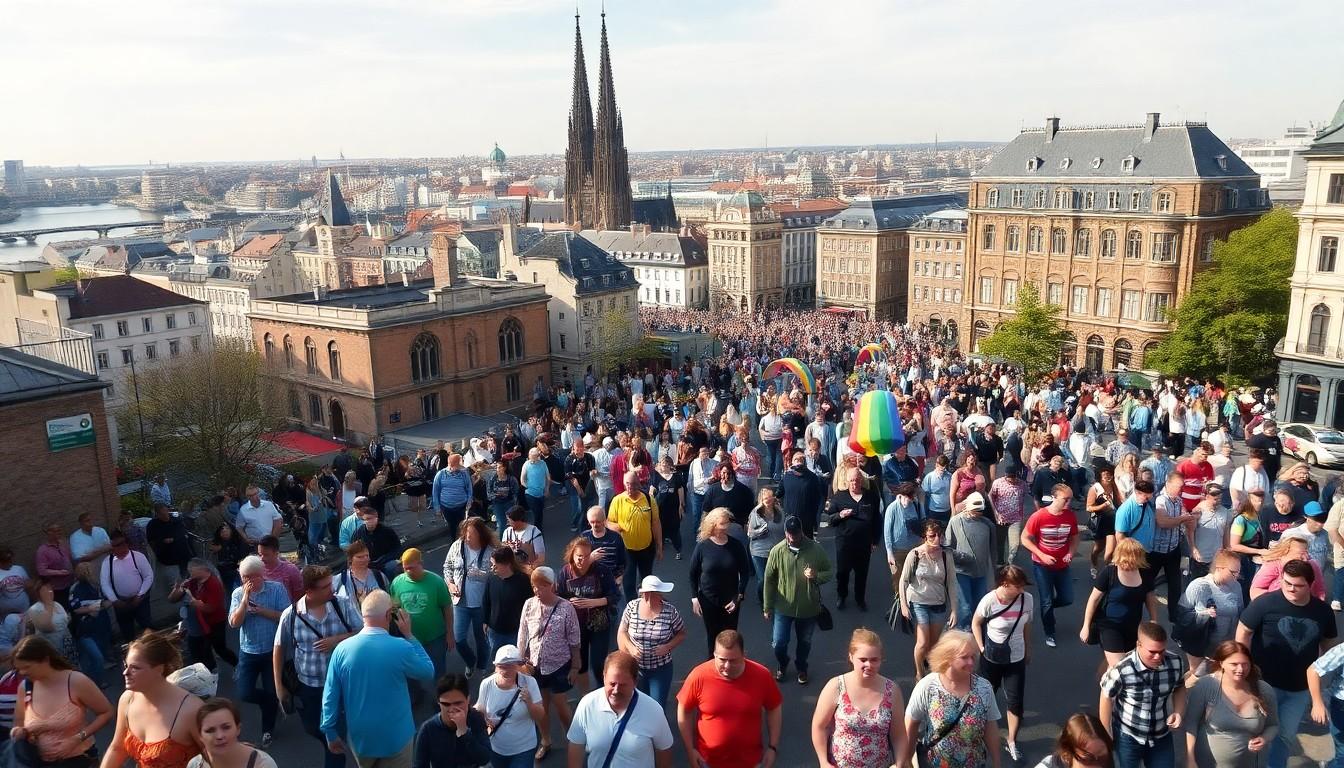
Shoppers and spectators turned out in force as Cologne’s CSD parade rolled through the city at midday, drawing around 60,000 participants from roughly 250 groups and organisers who expect up to a million onlookers , a vivid, loud reminder of why Pride still matters.
Essential Takeaways
- Scale: About 60,000 marchers from 250 groups took part in Cologne’s CSD parade, with organisers expecting large crowds along the route.
- Political urgency: Senior politicians attended; NRW Interior Minister Herbert Reul and figures such as Claudia Roth and Karl Lauterbach framed the march as a defence of rights.
- Public mood: Participants described a harsher social climate for LGBTQ+ people, making the parade feel both celebratory and urgent.
- History in mind: The event explicitly recalled the 1969 Stonewall uprisings as the movement’s origin story and moral anchor.
- Practical note: The city prepared with traffic measures and official coordination to manage the large crowds and festivities.
A parade that felt both festive and necessary
The opening image was unmistakable: colour, music and a steady swell of people with a bright, slightly salty tang of street food and sweat in the air. According to local coverage, the parade began at midday and quickly filled the central arteries of Cologne, creating a festival atmosphere while carrying a clear political message. Organisers estimated about 60,000 participants and warned the city could host up to a million visitors along the route, so it wasn’t just a party , it was a mass statement.
WDR and municipal announcements made clear Cologne treated the day as a major public-order and cultural event, with traffic plans and official press briefings in place. For people watching from the kerb, it was easy to enjoy the spectacle and still feel the seriousness beneath the glitter.
Politicians turned up , and used the platform
This year’s CSD attracted heavyweight voices. NRW Interior Minister Herbert Reul said he attended out of concern over rising intolerance, stressing the police’s role in protecting all citizens regardless of lifestyle. Claudia Roth framed the parade as “the largest demonstration for democracy” in Germany that day, aimed at countering a far-right party conference elsewhere. Ex-health minister Karl Lauterbach warned that queer rights were under pressure and visibility mattered now more than ever.
Their presence gave the event an extra current of urgency. Local and national leaders using Pride to underline civil-rights concerns isn’t new, but this felt pointed: politicians were visibly linking street celebration to concrete threats in the wider political landscape.
Why the mood felt tougher this year
Participants and reporters noted a “harsher wind” for LGBTQ+ people in everyday life , a shorthand for growing hostility and legislative debates that feel exclusionary. That sense of pressure was why many grouped the parade with defence rather than only celebration. Organisers and attendees used the platform to remind passers-by that Pride emerged from protest, not merely parties, recalling the 1969 Stonewall uprisings in New York as a moral origin story.
For anyone planning to attend future Pride events, this shift matters: crowd safety, clear routes and visible support from officials can’t be taken for granted. Stay aware, march with friends, and consider flags and signs that make your stance visible without putting you at unnecessary risk.
City logistics and how Cologne handled the crush
Cologne’s authorities published traffic and event notices well in advance and coordinated street closures and public-transport adjustments to keep things moving. The municipality’s event pages and local press outlined the route, the timing, and practical restrictions so residents and visitors could plan around it.
If you’re heading to large-scale Pride events, check municipal information beforehand, allow extra travel time, and use public transport where possible , organisers often run special S-Bahn or tram services for major parades.
Looking ahead: Pride as celebration and civic safeguard
Cologne’s CSD showed Pride still does two jobs at once , it’s a joyful public ritual and a civic alarm bell. The sizeable turnout, the attendance of senior politicians and the explicit references to democratic threats made it feel like a turning point in public visibility and political debate.
So whether you marched, cheered from the pavement or watched the news feed, the message was clear: Pride remains the place to be seen and to stand up.
It's a small change that can make every march safer and every voice louder.
Source Reference Map
Story idea inspired by: [1]
Sources by paragraph: