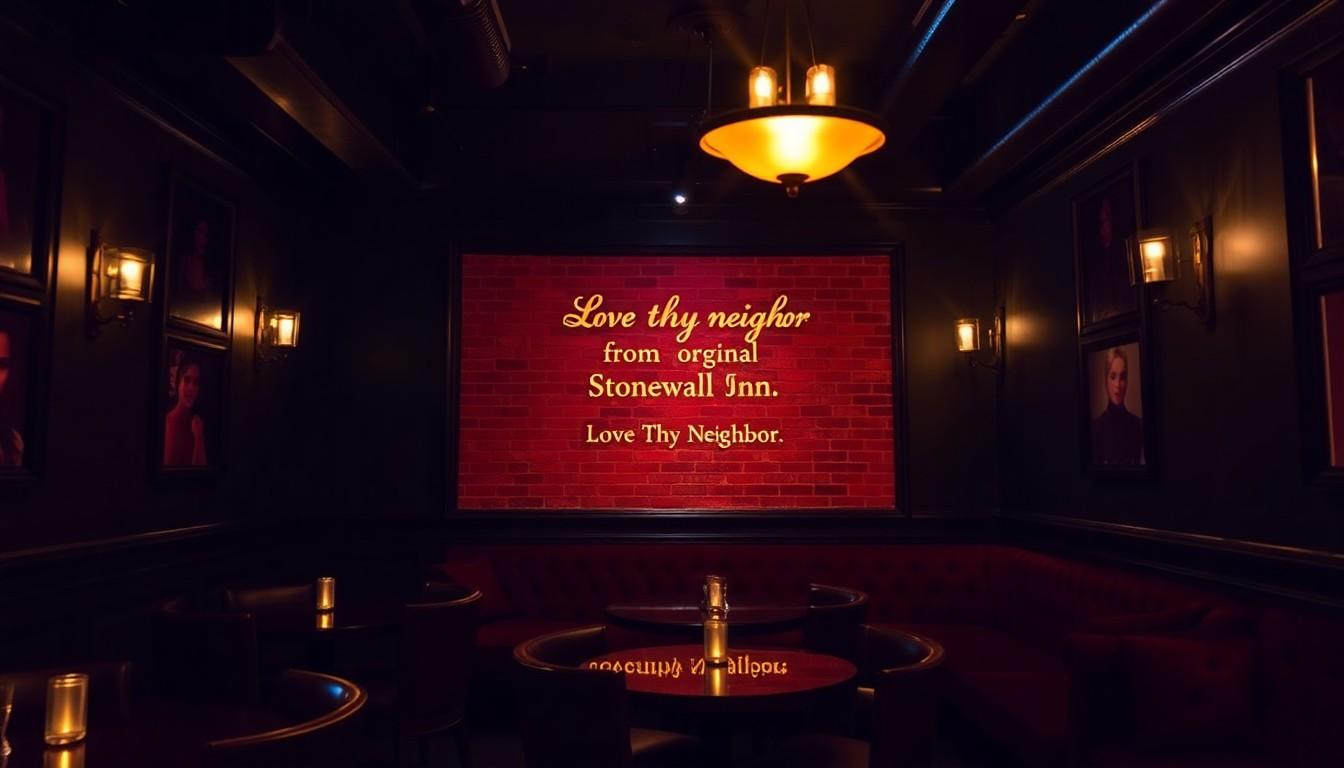
Shoppers and bar-goers are flocking to a new West Village spot designed to honour history and hospitality: Love Thy Neighbor, a sculptural cocktail bar next to The Stonewall Inn that celebrates the queer community through curved spaces, archival fragments and inventive drinks , opened ahead of Pride.
Essential Takeaways
- Historic nods: A gold-etched Marsha P. Johnson quote is set into a floor panel and an original Stonewall Inn brick sits in a bar niche, grounding the space in place and memory.
- Design ethos: The studio used a “no straight lines” principle to shape intimate, cavern-like interiors with warm beige tones and sculpted banquettes.
- Sensory details: Cove lighting and focused spotlights give a soft, theatrical glow; plastered mirrors and contoured basins add tactile, bronze-hued accents in the bathroom.
- Food and drink: Cocktails blend Japanese bartending precision with playful ingredients like wasabi gin and house cola; small Asian-influenced plates are served on handmade ceramics.
- Capacity and feel: The cosy space holds about 40 guests, encouraging mingling and chosen-family gatherings in a relaxed, rounded setting.
A bold, tactile homage to the Stonewall moment
The strongest thing about Love Thy Neighbor is how it feels underfoot and around you: the concrete slab that bears Marsha P. Johnson’s gold lettering almost stops you in your tracks. Designers have tucked in modest but potent reminders of 1969 , including a single brick from the original Stonewall Inn , so history sits alongside hospitality rather than being an afterthought. According to coverage, those details are deliberate touchstones for a bar that wants to honour queer struggles while offering a bright, convivial future.
No straight lines: design that speaks queer
Wild Form Design Studio leaned into an explicit brief: no straight lines. The result is a series of curving walls and partitions that make the whole room feel like a warm grotto. Banquettes in soft beige, slanting backlit shelves and a rounded bar counter continue the free-form language, and the lighting strategy , spotlights for tables, cove lighting around edges , gives everything a soft, intimate glow. It’s a clear example of architecture and interiors reading as social choreography: curved edges invite closeness and slow conversation.
Details that read as craft and ceremony
Look closely and the place rewards you. A recessed mirror carved into thick plaster, a long contoured basin, and bronze-toned ceiling-mounted faucets in the bathroom all feel thoughtfully made rather than merely styled. Behind the bar, bottles rest on slanted shelves that echo the room’s flowing lines, and glassware is chosen to make each drink a small performance. The visual language signals care , and helps the bar feel like a salon where presentation matters as much as flavour.
Cocktails with a precision-driven twist
The drinks programme riffs on Japanese bartending techniques: clarification, infusion and carbonation are used to create unexpected elements such as wasabi gin or a house-made cola. Presentation in delicate glassware and shareable, Asian-influenced snacks on hand-crafted ceramics emphasise ritual and conviviality. According to reporting, the team behind the bar have Tokyo experience, which explains the meticulous approach , and why the menu reads like a curated tasting rather than a run-of-the-mill cocktail list.
Why queer spaces like this still matter
Opening ahead of Pride, Love Thy Neighbor arrives at a fraught moment: many queer venues face social, urban and economic pressures, and transgender communities are under particular threat in parts of the US and UK. The new bar’s explicit celebration of chosen family and belonging is therefore more than branding; it’s a stance. Designers and hospitality operators are increasingly urged to consider safety and inclusivity as part of their remit, and small, well-placed interventions like this can help keep community spaces visible and valued.
It's a small change that can make every visit feel like belonging.
Source Reference Map
Story idea inspired by: [1]
Sources by paragraph: