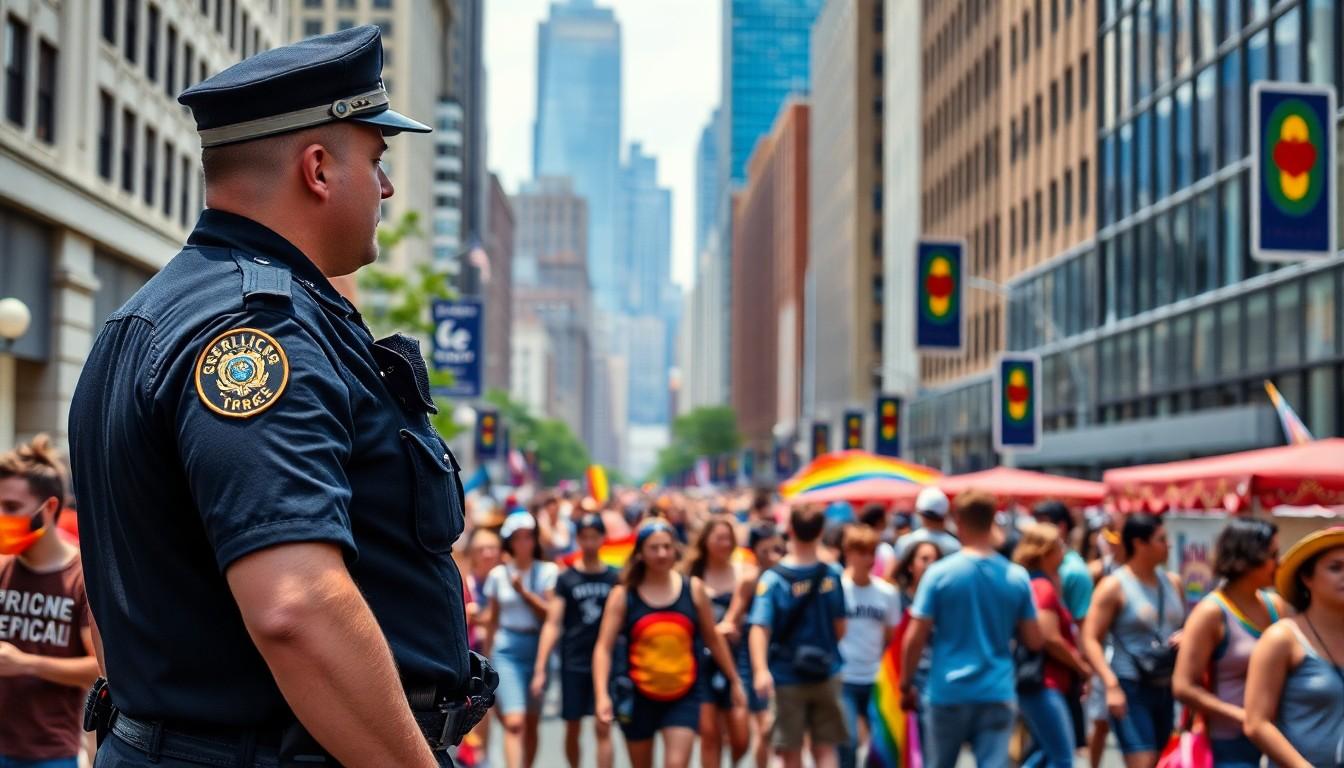
Survey the scene: new research finds LGBTQ+ views on police at Pride are mixed, with almost half supportive but deep divides by age, gender identity and socioeconomic status , useful context for organisers, allies and anyone planning to march or marshal this summer.
Essential Takeaways
- Nearly half support: 48% of LGBTQ+ adults in the US say police should participate in Pride, while 19% oppose and 33% are unsure.
- Support varies by identity: Gay and lesbian respondents are most likely to be in favour (about 60%), compared with bisexual (42%), queer (44%) and transgender/nonbinary (37%) respondents.
- Younger people more sceptical: Only 33% of LGBTQ+ adults aged 18–29 support police participation, and they’re two to three times more likely to oppose it than older groups.
- Socioeconomic split: Those with higher socioeconomic status are most supportive (60%) and least opposed (14%); lower-SES respondents show less support.
- Not a simple yes/no: Views don’t track by race or ethnicity much, signalling that attitudes are shaped more by identity, age and lived policing experiences.
A divided community: the headline numbers and the feeling on the ground
Startlingly, the new national survey captures a real emotional texture , nearly half of LGBTQ+ adults welcome police presence at Pride, but a substantial portion are ambivalent or opposed, producing a tense mix of relief, hope and distrust. According to the Williams Institute at UCLA School of Law, 48% support police participation, 19% oppose it, and a striking 33% aren’t sure. That “unsure” group often reflects people balancing a desire for safety with memories of harm.
The finding matters for organisers who want Pride to feel both celebratory and secure. For many attendees a uniformed officer offers reassurance; for others the sight of police brings back traumatic encounters, particularly for trans, nonbinary and lower-income community members.
Who’s comfortable with police at Pride , and who isn’t
Digging into identity, the survey shows that gay and lesbian respondents are the likeliest to back police involvement , roughly six in ten , while support drops among bisexual, queer and especially transgender or nonbinary people. This split echoes long-running tensions in LGBTQ+ history: some see police participation as recognition and progress, others see it as erasure or “pinkwashing” that glosses over ongoing police violence.
Organisers should note this isn’t only about politics; it’s personal. People with more positive experiences of police tend to welcome their presence, and those who’ve been criminalised, profiled or harmed are understandably opposed. That’s a crucial human detail when negotiating parade protocols.
Young people are driving the pushback , here’s why it matters
Age is one of the clearest fault lines. Just one-third of LGBTQ+ people aged 18–29 support police at Pride, compared with 53–64% among older adults. Younger people are two to three times more likely to oppose police presence, reflecting both broader generational scepticism of institutions and younger activists’ focus on abolitionist or reformist approaches.
For Pride committees and volunteers, this trend should shift planning conversations. If your parade aims to centre youth and emerging community leaders, rethink police involvement or offer alternatives , trained community marshals, harm-reduction teams, and clear accountability measures can reassure younger attendees.
Socioeconomic status shapes whether police feel protective or threatening
The Williams Institute’s data show that socioeconomic status affects attitudes: those with high SES strongly favour police participation (about 60%), while lower-SES respondents are much less likely to do so. That pattern mirrors real differences in policing experiences , people with fewer resources often face harsher or more frequent police contact.
Practically, that suggests Pride safety plans should consider income and marginalisation. Offering free legal support booths, trauma-informed volunteers, and discreet reporting channels helps those who may feel most at risk without excluding those who want a formal police presence.
What organisers and allies can do now
So what’s a sensible, compassionate approach? First, listen: run community consultations that reach transgender, nonbinary, younger, and lower-income people. Second, offer options: if police are present, clearly define roles, limit uniformed officers in marching contingents, and ensure accountability measures are public. Third, build alternatives: trained community security, medical and mental-health volunteers, and anonymous incident reporting give people choices about how they feel safe.
According to the Williams Institute research, these debates aren’t going away any time soon. A thoughtful, inclusive plan that acknowledges both progress and pain will make Pride safer and more welcoming for the widest possible circle.
It's a small but meaningful set of decisions that can make every Pride both festive and respectful.
Source Reference Map
Story idea inspired by: [1]
Sources by paragraph: