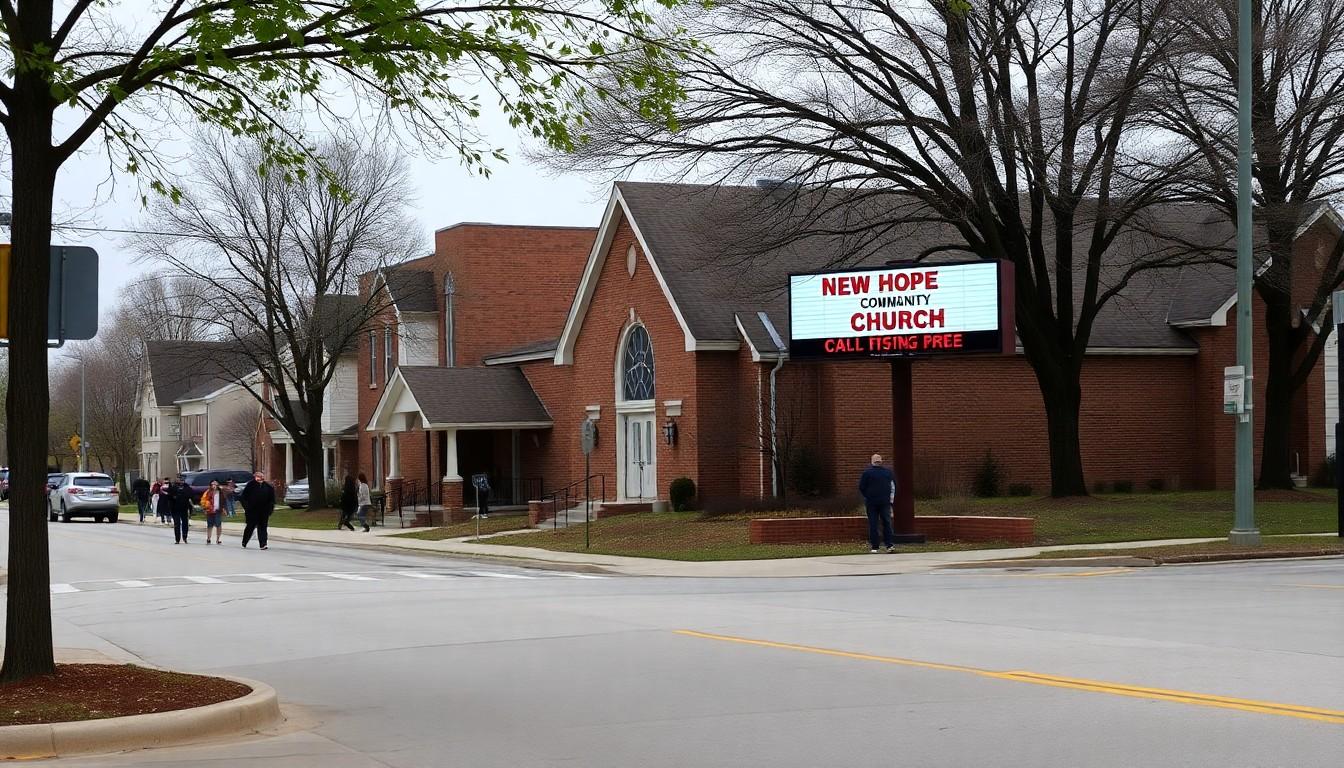
Shoppers of news and neighbours alike noticed a crowd gathering outside New Hope Community Church in Palatine last Friday, as dozens of LGBTQ+ advocates rallied against the church's electronic sign. The protest, organised by a local pride group, highlights a growing tug-of-war over public messaging, free speech and community values.
Essential Takeaways
- What occurred: A group of around dozens protested outside New Hope Community Church over June messages displayed on its electronic sign. The scene was colourful, loud and visibly emotional.
- Who organised it: The demonstration was linked to the Northwest Suburban Pride Network, a local activist group founded by a Democratic state official and active in suburban civic life.
- What the sign said: Messages such as "God invented marriage" and "Ditch pride, embrace humility" prompted the protest and accusations the church's signage targeted LGBTQ+ residents.
- Church response: Pastor James Pittman Jr. defended the sign as a conscience-driven, First Amendment expression intended to challenge culture and call people to faith.
- Civic context: Local officials, including the mayor, were contacted previously and affirmed the church’s right to keep the sign under legal protections.
A bright sign, a louder reaction , the opening scene
The protest had a visual punch: rainbow flags, handmade placards and a crowd gathered outside the church’s property. According to coverage in local media, the demonstrators framed the action as a stand against messaging they saw as hurtful during Pride Month. The atmosphere mixed indignation with hopeful outreach, and you could tell feelings ran high on both sides.
Who’s behind the protest and why their role matters
The rally was organised by the Northwest Suburban Pride Network, a group started by Austin Mejdrich, who also has ties to local and state government circles. That connection added a layer of civic resonance to the event, since organisers are not just activists but people plugged into municipal and state networks. Reporters noted the organisation positioned the protest as inclusive and family-friendly, aiming to pressure the church to change its public messaging.
The church’s position: conscience, culture and constitutional cover
Pastor James Pittman Jr. said New Hope uses its sign to challenge cultural ideas and to invite people toward repentance, describing the messaging as part of the church’s evangelical mission. He also pointed out that town officials reviewed complaints earlier in the year and ruled the signage legal. For the congregation , roughly a hundred members by local accounts , the sign represents core beliefs, not a targeted campaign according to church leaders.
Where law, community standards and emotion collide
This dispute sits at the intersection of free speech, public property norms and community values. Municipal leaders in Palatine were reportedly asked to force the church to remove the sign but declined, citing legal protection. Observers will recognise this as part of a broader pattern: faith communities asserting expressive rights, while activists press institutions to consider the impact of public-facing messages on minority groups.
Practical takeaways for nearby communities
If you live near a church, school or business with a digital or roadside sign, expect debates like this to recur. Simple steps help: document messages you find concerning, contact local officials to understand sign codes, and consider mediated conversations between stakeholders before tensions escalate. Events like the Palatine protest show how quickly local disputes can draw regional attention.
It's a local spat with wider echoes , a reminder that public words still matter.
Source Reference Map
Story idea inspired by: [1]
Sources by paragraph: