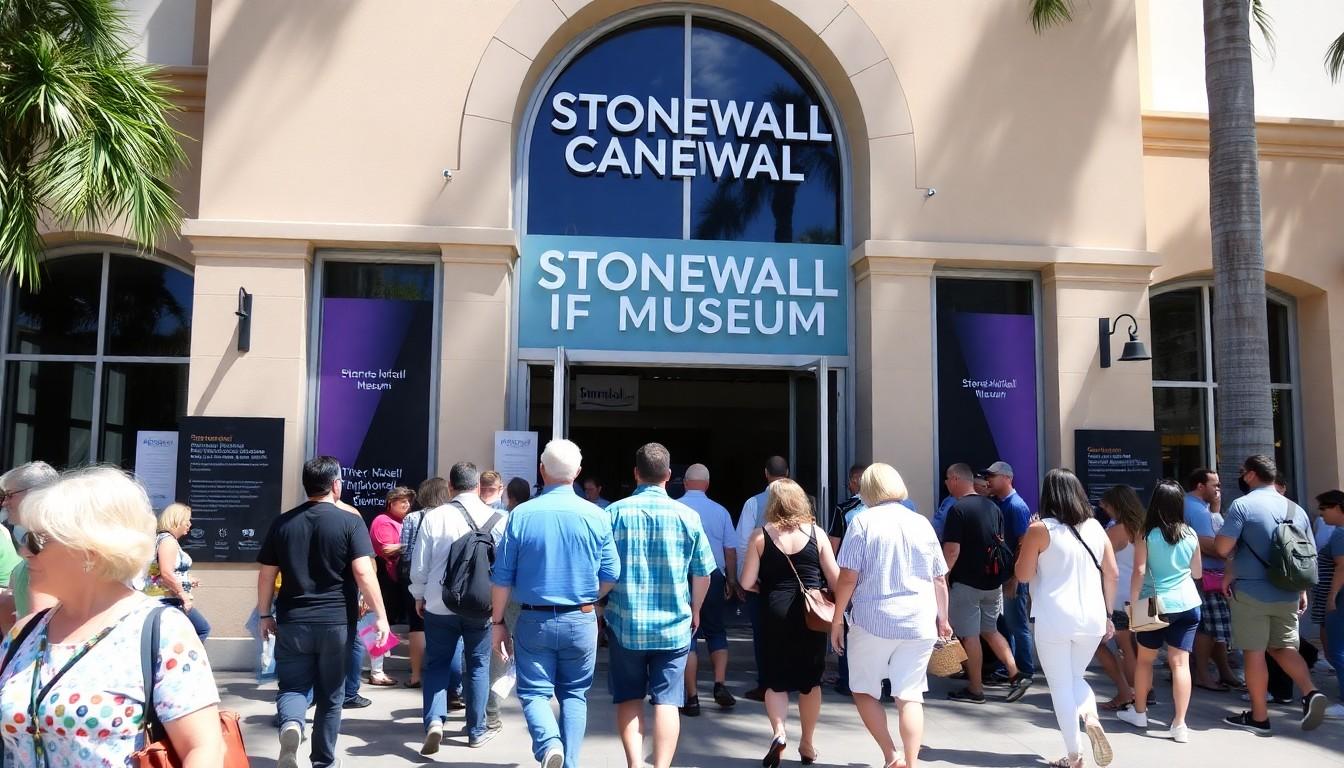
Watch communities, police and leaders come together in Fort Lauderdale as Stonewall National Museum’s annual reenactment brings the 1969 uprising to life , a visual reminder of how far the LGBTQ+ movement has come and why remembering matters now more than ever.
Essential Takeaways
- Historic recreation: The museum staged its third annual Stonewall Uprising reenactment in Fort Lauderdale, recreating the June 28, 1969 moment that sparked modern LGBTQ+ activism.
- Unexpected solidarity: Local police officers stood alongside LGBTQ+ leaders, a striking contrast to the original clashes and a powerful image of changed relationships.
- Community leaders honoured: Kal Gajraj and Rickelle Williams took part as symbolic grand marshals, throwing the first ceremonial bricks after a parade cancellation.
- Living archive: Stonewall National Museum holds millions of records and continues to connect past struggles with present activism through exhibits and programs.
A vivid reminder: history made tactile and immediate
The reenactment felt immediate , a bright, noisy reminder that the Stonewall story wasn’t some distant textbook note but a lived, often painful turning point. Robert Kesten, president and CEO of Stonewall National Museum, said the goal is to protect history by immersing people in it, and the event’s sensory punch , voices, faces, ceremonial bricks , did exactly that. According to the museum, making history tangible helps younger generations grasp why Pride began and why it still matters.
How a violent past became a community moment
The original Stonewall clashes were sparked by police raids and years of systemic harassment, a catalyst for an organised movement that National Geographic and History note reshaped rights and visibility across the United States. The Fort Lauderdale reenactment deliberately re-creates that moment while inviting reflection on the past. That juxtaposition , reenacting a police raid while standing with uniformed officers today , makes the historical arc feel both startling and hopeful.
Police in the crowd: what the new image means
Seeing officers participate in a commemoration of the uprising creates a powerful visual contrast to the 1969 street fights. Kesten described the sight as “wonderful” given the history, but he also refused to sugar-coat current anxieties people feel amid new anti-LGBTQ+ bills. The presence of law enforcement at a remembrance event signals local relationship-building in some places, while the broader political context reminds attendees that solidarity at a community level doesn’t erase larger legal battles.
Grand marshals, cancelled parades and community pivots
When severe weather forced Wilton Manors’ Pride parade to cancel, Stonewall National Museum stepped in and asked Kal Gajraj and Rickelle Williams to serve as symbolic leaders for the reenactment. That quick pivot underscores how grassroots organisations and museums often keep community rhythms going under pressure. For visitors, seeing familiar faces honoured for inclusion work adds a personal, contemporary layer to the historical narrative.
Why the museum’s archive matters in turbulent times
Founded more than 50 years ago, Stonewall National Museum houses one of the nation’s largest LGBTQ+ archival collections , millions of pages of records, photos and ephemera that document activism, culture and everyday life. When History and Wikipedia chart the Stonewall timeline, they show how documentation shaped later advocacy; preserving those materials means activists and historians can map victories and setbacks. For organisers and visitors alike, the archives are both a resource and a rallying point.
It's a small but powerful reminder that remembering the past helps shape how we respond to the present.
Source Reference Map
Story idea inspired by: [1]
Sources by paragraph: