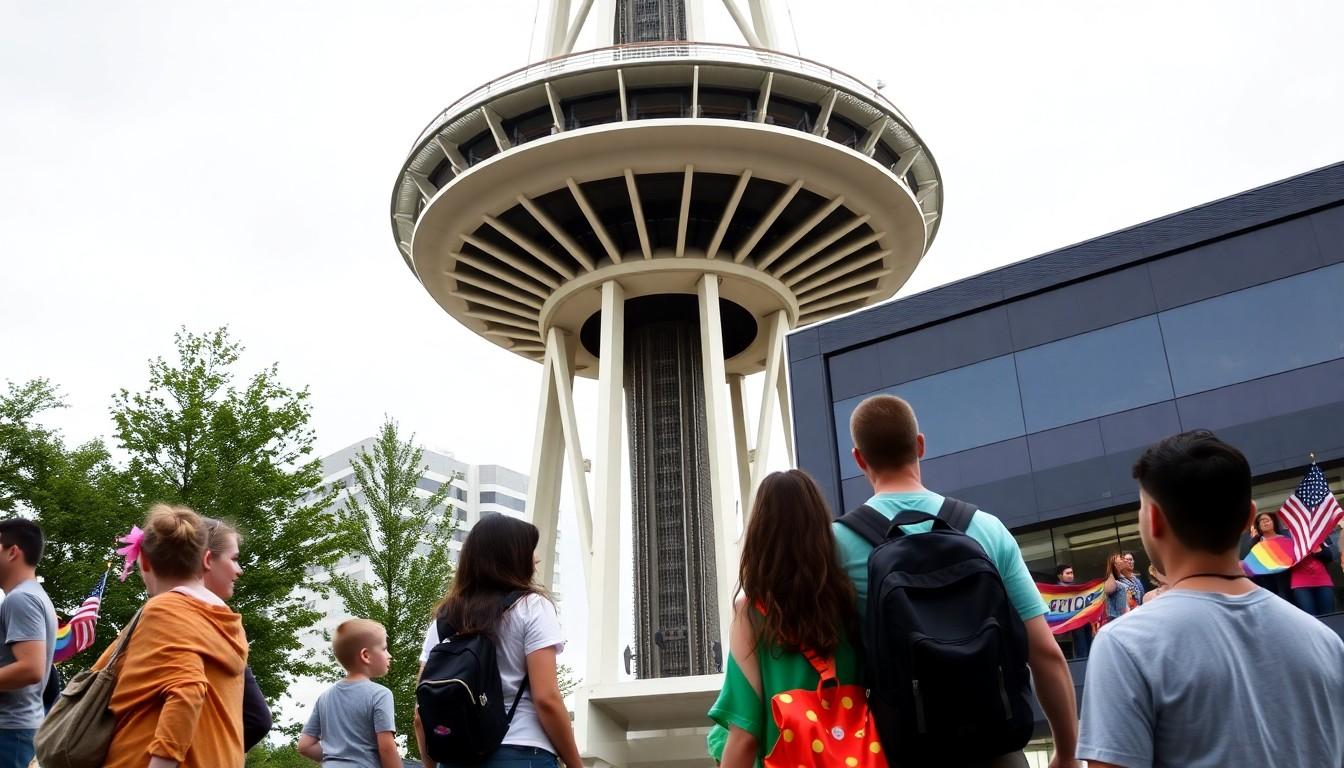
Watchful eyes turned to Seattle over the weekend as crowds swelled for Pride and a handful of widely shared videos showing partially or fully unclothed participants sparked a national debate about public decency, parental concerns, and how cities manage large, family‑friendly events.
Essential Takeaways
- Large turnout: Seattle’s Pride drew hundreds of thousands, with organisers emphasising inclusion and a festive atmosphere.
- Viral footage: Short clips showing unclothed participants circulated widely online, prompting heated discussion.
- No major enforcement: Police say they prioritised public safety; officials reported no arrests or formal complaints tied to the videos.
- Legal nuance: Local practice treats nudity through the lens of public safety and state law rather than automatic criminalisation.
- Mixed reactions: Families, political commentators and LGBTQ+ advocates remain sharply divided over what’s appropriate at public celebrations.
What happened in Seattle , and why people noticed
Crowds filled downtown Seattle for one of the city’s biggest annual events, complete with floats, music and a bright, buzzy atmosphere that felt celebratory and communal. Amid the procession, a handful of short videos showing participants with little or no clothing , including footage near a water fountain where children were present , spread fast on social platforms, and that’s what focused attention. According to local reportage, police concentrated on crowd safety and traffic control rather than treating nudity as an immediate enforcement issue. For many viewers the images felt jarring; for others they were a small, familiar part of Pride’s history of body‑positive expression.
How the law and local custom shape responses
Seattle’s approach to public nudity isn’t a simple yes‑or‑no. Municipal practice and state statutes can create a grey area: enforcement tends to hinge on context, public safety concerns and whether conduct crosses into indecent exposure as defined by law. Legal guides and local reporting note that nudity at public festivities has occurred before , for instance, at other Pacific Northwest celebrations , and authorities typically evaluate each incident individually. That matters because organisers, police and politicians often prefer flexible discretion at large events, rather than heavy‑handed crackdowns that could inflame tensions.
Why parents and organisers are talking about standards now
The viral clips rekindled a familiar tension: Pride’s decades‑old commitment to visibility and bodily autonomy versus many parents’ expectation that family‑aimed, publicly funded events remain suitable for children. Some families said they felt uncomfortable and want clearer guardrails; LGBTQ+ groups and supporters countered that the videos represent a tiny slice of a community event that’s otherwise peaceful and inclusive. Organisers emphasised the parade’s broader mission, and city officials highlighted that the day passed with no significant safety incidents , but public sentiment is varied, and organisers will likely face renewed calls to clarify policies.
What this could mean for future events and permits
When footage like this circulates, policy conversations often follow. Expect renewed scrutiny of permitting rules, risk assessments and event guidelines for city property. Municipal leaders may be asked to spell out expectations for participant conduct or to add safeguards intended to reassure families, from clearer signage to separate family zones. At the same time, lawmakers and advocacy groups might push for statutory clarification so enforcement decisions aren’t left to ad hoc judgement calls during busy festival days.
Practical tips for parents and attendees
If you’re planning to attend large public festivals, a few simple moves make the day easier. Check event maps and family‑friendly programming ahead of time, pick vantage points away from main performance zones if you want a calmer spot, and set a simple boundary with children about what to expect at large public gatherings. If something on the day makes you uncomfortable, event staff and deployed officers are the first port of call; organisers usually want to keep events welcoming and will respond to specific concerns.
It's a small change in planning that can make a big difference to how families experience public celebrations.
Source Reference Map
Story idea inspired by: [1]
Sources by paragraph: