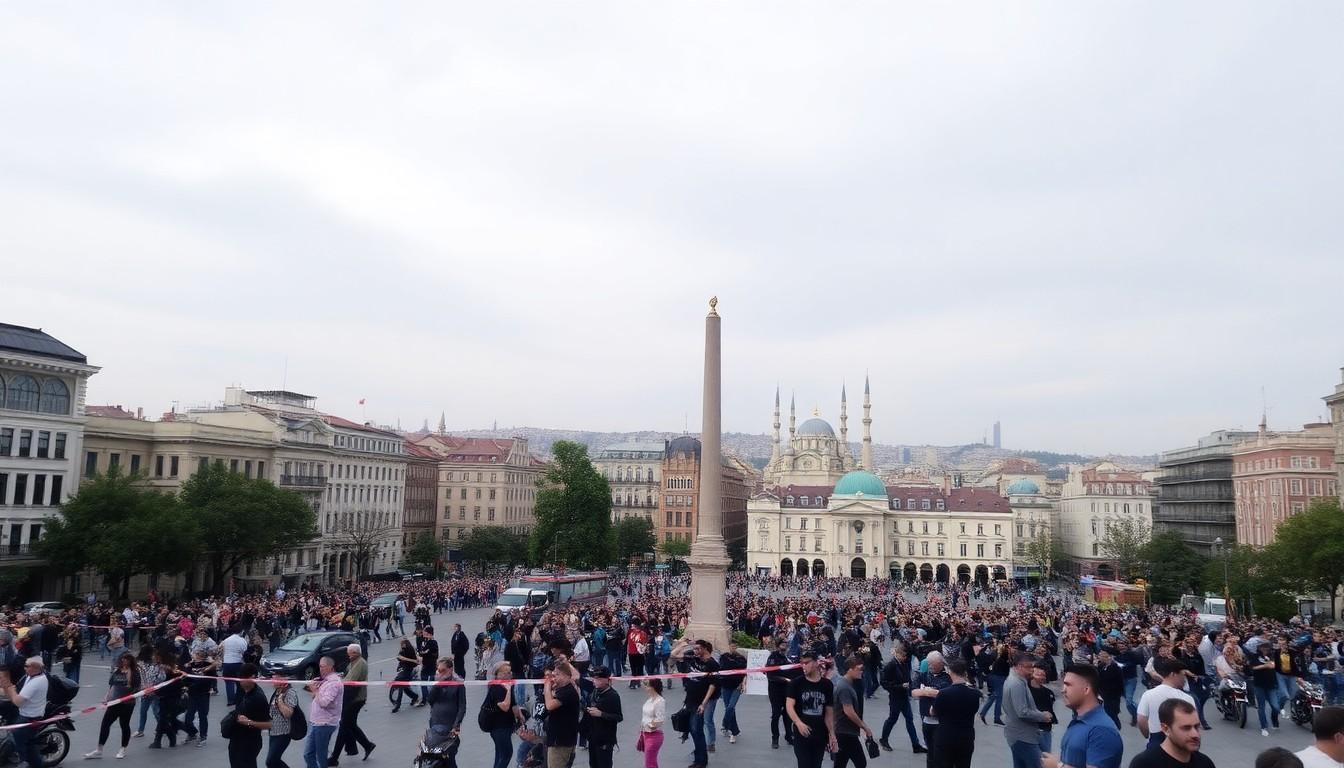
Watchers and supporters are noticing a stark change: Istanbul’s once-massive Pride has been banned for over a decade, yet people still take to the streets , and face detention. This piece explains who marched, how authorities responded in Istanbul, and why Pride there remains a political, risky act that matters globally.
Essential Takeaways
- Mass detentions: Police detained at least 50 people during Pride-related gatherings in Istanbul on 28 June; arrests included working journalists who identified themselves.
- Heavy policing: Authorities sealed Taksim Square, closed metro sections and used barriers and riot police to prevent a central march.
- Historical shift: Istanbul Pride grew from a handful in 2003 to more than 100,000 in 2014, before an abrupt ban in 2015 that remains in force.
- Legal context: Same-sex activity isn’t criminalised in Turkey, but legal protections are scarce and official rhetoric has become hostile.
- Why it matters: When Pride is risky, marching becomes a form of civic resistance , and a reminder that rights can be reversed.
What unfolded in Istanbul , a tense, dispersed defiance
On 28 June, small groups marched in neighbourhoods across Istanbul despite an official ban and heavy police presence. The mood was nervous and defiant, not celebratory; marchers chanted resilience while facing barriers and officers in riot gear. Reuters and other outlets recorded the scenes of people being stopped and loaded into vans, a stark reminder that Pride can still be dangerous here.
Journalists covering the events were not immune. The Turkish Journalists’ Union reported that a credentialed reporter was detained after identifying herself. That kind of targeting changes the shape of reporting and the risks for anyone documenting dissent.
How Istanbul went from huge parades to prohibited marches
Istanbul Pride’s rise was rapid and public. Beginning in 2003 with only a few dozen participants, the event swelled until 2014 when it attracted over 100,000 people and felt like a citywide event. Then, in 2015, the governor revoked the permit hours before the march, citing security concerns. That single decision effectively ended legal, large-scale Pride in the city and set a precedent for annual bans.
Since the ban, celebrations have fragmented into smaller, riskier actions. The contrast between those carnival years and today’s tense gatherings shows how quickly civic space can shrink , even where activity was once routine and visible.
The legal and political backdrop , not illegal but not protected
It helps to be precise: same-sex intimacy has been decriminalised in Turkey for a long time, yet there are almost no comprehensive legal protections for LGBTQIA+ people. Political rhetoric has hardened, with senior officials characterising LGBTQIA+ identities as threats to traditional family values. International watchdogs have taken note; ILGA-Europe’s recent rankings place Turkey near the bottom among European countries for queer rights.
That combination , formal legality without safeguards, plus hostile official messaging , creates an environment where Pride becomes both a protest and a safety risk. For many marchers, the act of turning up is a statement about visibility and refusal.
Why small, dispersed marches still matter
When marching is risky, every procession is a political act rather than a parade. People who turn out in Istanbul are making a point: rights are not guaranteed by history alone. Observers elsewhere should notice, because the rollback of public space for Pride is a bellwether for wider restrictions.
There’s also a practical side. Smaller, localised gatherings can be safer tactically, but they also make it harder to attract international attention and protection. Supporters abroad can help by amplifying reports, supporting independent journalists, and refusing to treat repression as background noise.
What supporters and visitors should know , practical steps
If you’re watching from afar, share reliable coverage and back independent press. If you plan to travel to Turkey and want to support queer communities, research local NGOs, respect safety advice from on-the-ground groups, and avoid drawing attention in volatile situations. For journalists, carry press ID, make contingency plans, and brief sources about potential risks.
Above all, remember that Pride takes different forms in different places. In Istanbul, it’s a statement of persistence; elsewhere it may be a party. Both matter, but they’re not the same thing.
It's a small change that can make every march safer and every voice louder.
Source Reference Map
Story idea inspired by: [1]
Sources by paragraph: