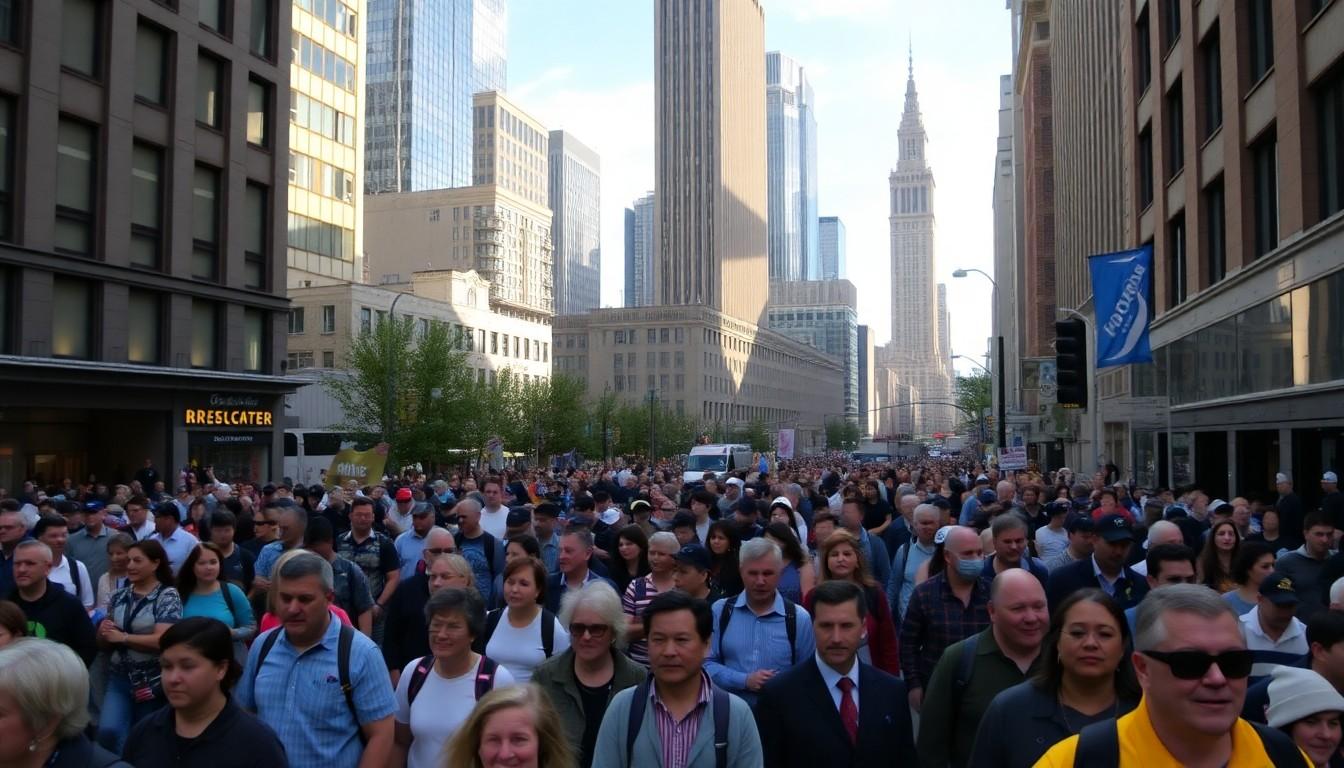
Thousands turned out in Lower Manhattan for the Reclaim Pride Coalition’s annual Queer Liberation March, a grassroots, anti-corporate Pride demonstration focused on trans and immigrant rights , and the energy felt like a blunt reminder that Pride began as protest, not product.
- Large turnout: Thousands marched from Union Square down Broadway to Foley Square, creating a lively, vocal street presence.
- No police or corporate floats: The march enforces a ban on police and corporate participation, relying on volunteer marshals and community safety measures.
- Theme with a purpose: This year’s focus , “Breaking the Chains of War and Oppression for Trans and Immigrant Rights” , tied trans justice to immigration issues in a clear, visual way.
- Grassroots sounds and sights: The Rude Mechanical Orchestra, ACT UP banners, historical portraits and refugee flags added a raw, proud texture to the day.
- Emotional payoff: For many, the march was both a political act and a personal milestone , the first Pride as their authentic selves, a public refusal to be erased.
A march that looked and felt like protest, not a party
You could hear the difference in the chants, and see it in the signs , this was resistance with joy threaded through. The crowd’s singers, drummers and the Rude Mechanical Orchestra gave the procession a rough-hewn, communal soundtrack that felt immediate and urgent rather than polished. Organisers kept corporate banners off the route, which made space for grassroots groups and individuals to be the visible face of Pride.
Organisers started the gathering with a rally in Union Square before moving down Broadway into Foley Square, and volunteer marshals physically stopped traffic and steered the flow. That hands-held approach gave the march a human scale and a sense of shared responsibility for safety , something that participants kept pointing to as meaningful.
Why trans and immigrant rights were front and centre
This year’s theme explicitly linked the struggles of trans people and immigrants, which many attendees said reflected their lived experience. Speakers and marchers noted how legal and social attacks on queer communities often overlap with immigration policy and xenophobia, and flags and banners made those ties plain. For people directly affected , including Haitian and Palestinian participants , the march was both protest and solidarity.
Many participants referenced recent rulings and policy shifts that have threatened immigrant protections, making the march feel urgent. The emphasis on mutual support changed the tone from celebration to defence: chants like “Free Them All” and calls to close detention centres cut through the day with a hard-edge purpose.
What it means that police and corporations were excluded
Banishing police and corporate sponsorships from the route isn’t new for this march, but it still shapes everything that happens there. The absence of police presence creates a different safety conversation , volunteer marshals, not uniformed officers, manage the crowd , which some find more empowering and others find tense. Corporations, meanwhile, are kept off the bill to avoid turning protest into marketing.
That stance also influences who attends and how groups present themselves. You saw housing and health activists shoulder-to-shoulder with queer organisers, ACT UP banners waving near the Judson Memorial Church’s portraits of queer saints, and long-form political messages rather than brand slogans.
Personal stories that gave the day its heart
Amid the larger political beat, there were intimate moments that made the event memorable. People spoke about firsts , the first Pride as their true self, the first time marching for both trans and immigrant rights. Those small, fierce victories are the reason many show up, and you could feel the relief and defiance in the crowd.
For some, the march is an annual habit that keeps renewing hope; for others it’s a conversion point into public activism. Either way, the human stories underline why grassroots events still matter: they create visible, collective evidence that resistance is alive.
How to take part, safely and meaningfully
If you’re thinking of joining a future Queer Liberation March, arrive knowing it will be loud and grassroots. Wear comfortable shoes, bring water, and expect creative, homemade signage rather than corporate freebies. If you’re nervous about safety, volunteer marshals and community organisers are there to guide you, and joining a local group beforehand can make the experience less intimidating.
Most importantly, go with a purpose , whether to support trans and immigrant rights, to honour the protest roots of Pride, or simply to be present with others who won’t be silenced. The march rewards participation more than perfection.
It's a small change that can make every Pride feel more like protest and less like a corporate pageant.
Source Reference Map
Story idea inspired by: [1]
Sources by paragraph: