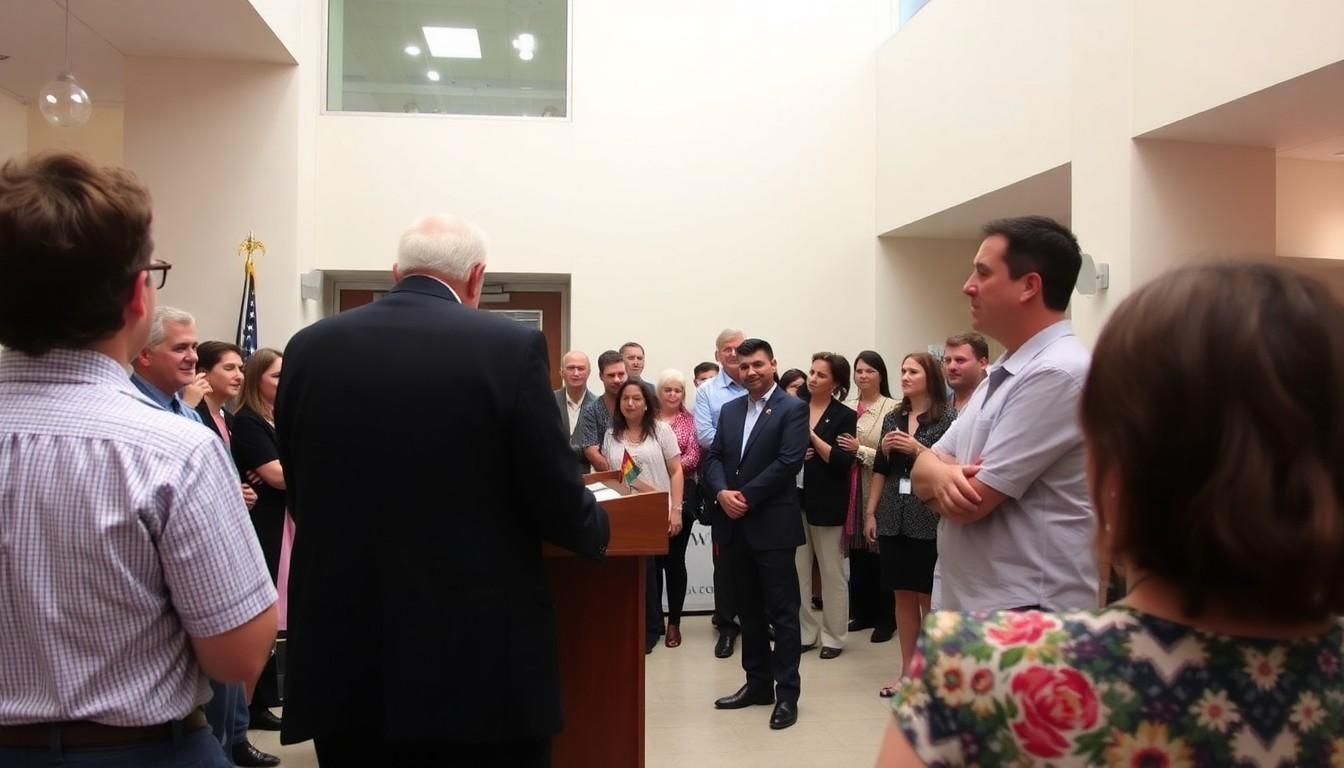
Watch leaders and scholars celebrate queer joy and education at the Point Foundation graduation, stars, scholars and supporters gathered in Los Angeles to underline why scholarships, mentorship and authentic connection change lives.
- Big names, real moments: Celebrities like Michelle Visage and actor Zane Phillips gave personal, heartfelt speeches that felt warm and candid.
- Scholarship impact: Point Foundation has grown from eight scholars to awarding over 1,000 scholarships this year, with a record 1,250 planned for the upcoming academic year.
- Passion for learning: Graduates and speakers emphasised loving the learning process, students who engage deeply tend to thrive, even with tools like ChatGPT nearby.
- Community-first vibe: The event underlined that mentorship, leadership development and peer networks provide the emotional support students need to succeed.
- Practical outcomes: Scholars pursue diverse paths, business, media design, museum education and advocacy, with clear plans to strengthen institutions and expand access.
A bright night in LA that felt like a homecoming
The room at The London West Hollywood hummed with relief and celebration, a warm place where achievements were loudly cheered and honest stories landed with laughs and applause. Zane Phillips opened up about his own college pivot, sharing how leaving a hometown where coming out wasn't an option unlocked both identity and opportunity. His narration, funny, frank and quietly fierce, reminded everyone why graduation ceremonies still matter: they mark freedom as much as academic milestones.
Point Foundation’s ceremony felt less like a glossy awards show and more like a community reunion; Michelle Visage’s remarks about choosing “messy, loud, unapologetic authenticity” landed as a howl of recognition for many in the room. According to coverage in Out, the tone was personal and immediate, and that intimacy helped underline the wider stakes for LGBTQ+ students.
Scholarships that scale , and change futures
Point Foundation’s trajectory is striking. What began in 2001 with a single class of eight scholars has expanded into the nation’s largest scholarship-granting organisation for LGBTQ+ and ally students. This academic year it awarded over 1,000 scholarships and awards, and the charity is poised to hit a record 1,250 next year. Those numbers aren’t just stats; they translate into tuition paid, internships secured, and mentors connected.
The diversity of academic aims among recipients is telling: MBAs focused on nonprofit sustainability, PhD-track media scholars exploring inclusive storytelling, and business students working to build stronger community organisations. Each scholarship is tied to a clear plan for impact, and that practical orientation signals that Point’s investment pays forward in civic and cultural terms.
Why learning the process matters in the AI age
Speakers at the event acknowledged a contemporary tension: students now have powerful tools in their pockets, from ChatGPT to endless online resources. Phillips argued that education’s challenge today is to inspire a love of the process itself, curiosity, iteration and resilience, skills that AI can’t replace. His point landed as both pragmatic and hopeful: queer culture, forged under pressure and friction, teaches tenacity and creative problem-solving.
That framing matters for educators and parents. If institutions focus on cultivating passion rather than policing shortcuts, students are more likely to use AI as an aid, not a crutch. It’s a small but important shift in how we think about assessing learning and mentoring emerging leaders.
Beyond money: mentorship, leadership, and community
Point Foundation doesn’t just give checks; it pairs financial support with mentorship, leadership development, and a community that believes in each scholar. That ecosystem is what helps recipients move from student to leader. Stories shared at the graduation illustrated how mentorship provides practical career help and the softer stuff, confidence, belonging and a sense that someone has your back.
For families and donors considering support, that mix is key. Funding tuition helps today; investing in mentorship and network-building changes trajectories for decades. Point’s model suggests that scholarship programmes with wraparound services produce graduates who are ready to lead in a range of sectors.
What graduates plan to build next
Graduands are taking those opportunities seriously. Examples from Point’s cohort include an MBA candidate aiming to shore up mission-driven organisations, a media designer focused on using immersive tools to create inclusive learning spaces, and a business student planning to strengthen advocacy infrastructure. Each path points back to one idea: education can be a lever for systemic change when guided by people who understand community needs.
The graduation made clear that the goal isn’t just individual success; it’s building a chain of leadership across industries that can make institutions more equitable. As speakers urged, supporting these students is an investment in a more inclusive future.
It's the sort of gathering that leaves you uplifted, proof that scholarships, community and the courage to be yourself can move more than a diploma.
Source Reference Map
Story idea inspired by: [1]
Sources by paragraph: