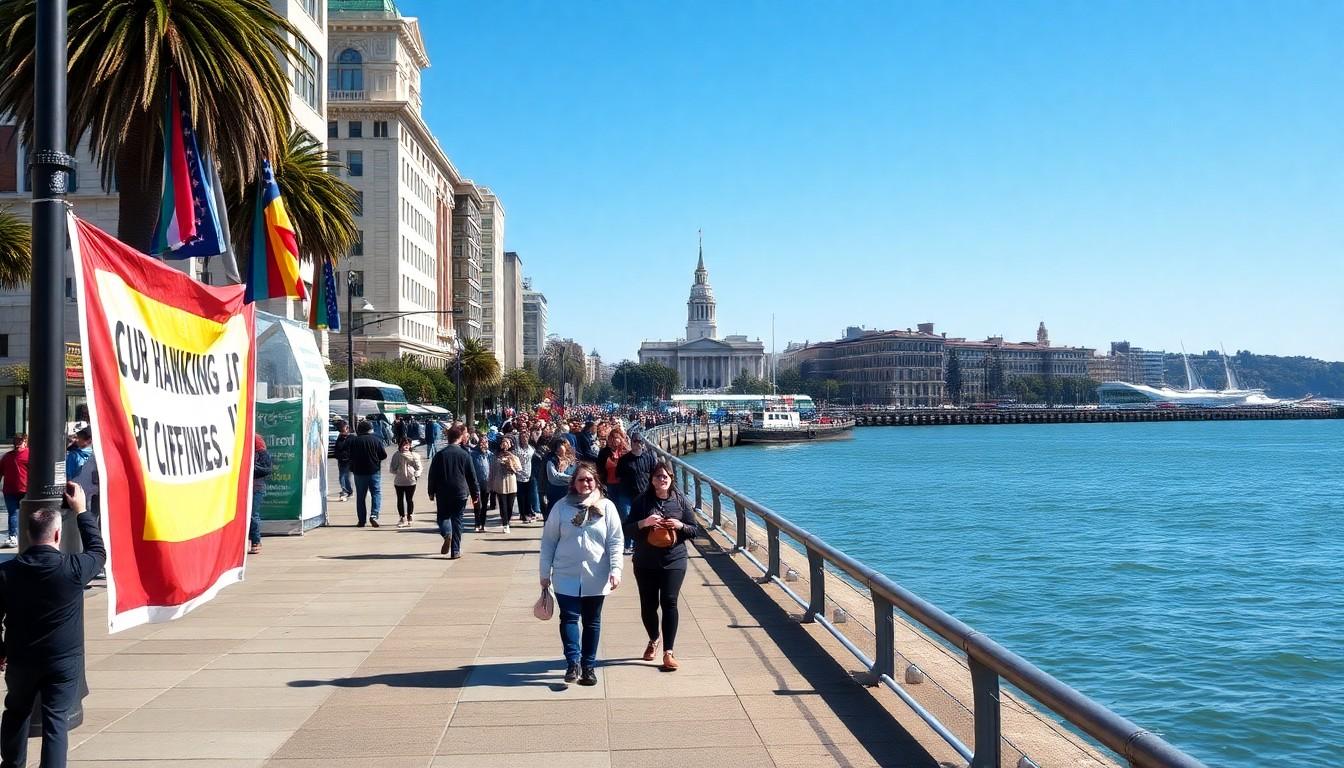
Shoppers and marchers alike turned their attention to a new, heartening addition to San Francisco Pride: the first-ever Trans Ally March and Rally drew about 1,000 people from the Embarcadero to Civic Center, showing who stands with trans neighbours and why that visibility matters.
- Who showed up: Organisers estimated roughly 1,000 participants, including volunteers and safety monitors, creating a calm, determined crowd.
- Unified message: Solidarity and policy were both on the signs , from “gender-affirming care for all” to pleas for funding transgender youth and housing programmes.
- Organisers: Indivisible SF led the event in partnership with local groups including the SF Trans March and People’s March, bringing national-style activism into Pride weekend.
- Mood and look: The march felt purposeful and community-led, with handmade signs, trans pride flags, and a steady, hopeful rhythm.
- Practical angle: If you missed it, expect the event to return and to increasingly shape Pride weekend scheduling and advocacy priorities.
A clear new voice in Pride weekend
The Trans Ally March began at the Embarcadero and wound toward Civic Center, a route that gave the crowd space to breathe and to be seen. The atmosphere was less raucous festival and more steady, intentional solidarity , you could hear the cadence of chants and see the small, personal gestures like signs taped with trans flags.
Indivisible SF, best known for its anti-Trump demonstrations, organised the march with a coalition of local activists and groups. According to organisers’ messaging, this was as much about public witness as it was about policy: calling on the city to back the Transgender District and fund youth and housing services felt like a natural step from visibility to tangible support.
Why this matters now
The timing of the march , slotted between the Trans March and the Dyke March during Pride weekend , underlines a shift in how queer communities are using big public moments. Instead of separate, siloed events, there's a sense of moving toward coordinated action that mixes celebration with concrete demands.
People carried signs urging due process, protection for gender-affirming care, and basic dignity. A few placards referenced recent local controversies , a reminder that Pride is still a place to contest public narratives and hold institutions to account. It felt like a communal nudge: visibility alone isn’t enough without policy and funding.
How organisers tied activism to practical goals
Indivisible SF’s platform, shared publicly online, goes beyond the march itself. They’re urging San Francisco officials to fully fund transgender programmes, protect access to care and sports, and ensure accurate identity documents. That policy focus is a useful template for other cities where demonstrative support needs to translate into budgets and services.
For marchers and allies, that means next steps are straightforward: contact your local representatives, support trans-led organisations financially, and show up at community meetings. The march showed solidarity in person , now the ask is to make that solidarity visible in civic processes.
What attendees said and how it felt on the ground
Voices on the march mixed long-time activists and newer allies. Connie Jeung-Mills, a veteran organiser, put it plainly: “We the people means all of us,” a line that captures why the march aimed to be explicitly ally-focused. There was a gentle, resolute quality to the crowd , aged activists standing beside young people, homemade signs beside professionally printed banners.
Small moments stuck with people: someone’s sign that read “Love all thy neighbors” and referenced a recent baseball-game kerfuffle reminded everyone how local incidents ripple into community conversations. These details make the march feel rooted, not performative.
What this could mean for future Pride weekends
If this inaugural Trans Ally March is anything to go by, expect Pride programming to keep evolving from parades and parties into more coordinated advocacy. Coalition-led events like this one can shape public priorities and help ensure that celebratory visibility is matched by funding and legal protections.
For allies wanting to be useful, the practical advice is simple: listen to trans-led organisations, give financially, and push for local policy support. The march was a demonstration of presence; the work going forward will be about persistence.
It's a small change that can make every march mean more than a march.
Source Reference Map
Story idea inspired by: [1]
Sources by paragraph: