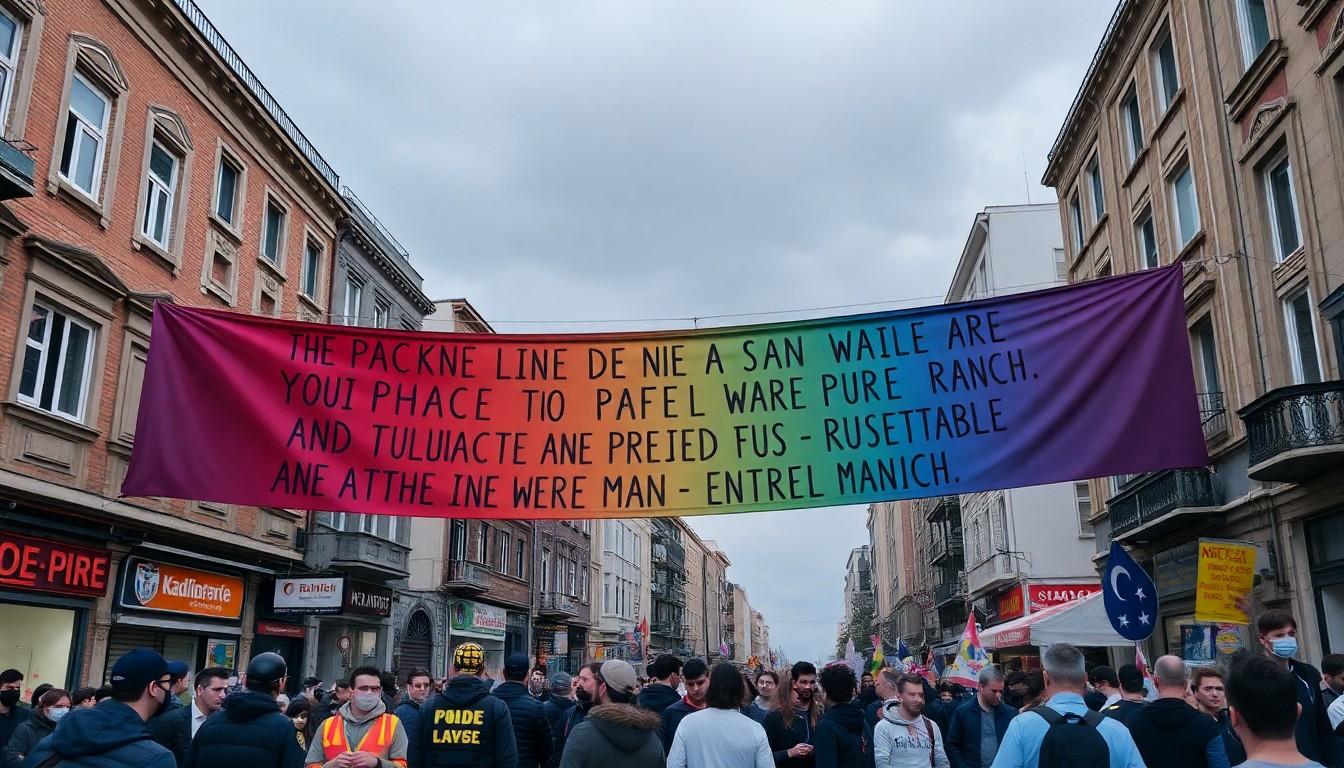
Shoppers, residents and marchers watched as Istanbul’s 24th Pride defied bans and tight controls , a vivid, tense day in Kadıköy showing why Pride still matters and how organisers and journalists adapt to keep the story alive.
Essential Takeaways
- Large turnout despite bans: Activists gathered in Caferağa and across Kadıköy after authorities banned weekend events, keeping Pride visible in neighbourhood streets.
- Dozens detained then released: At least 50–65 people, including journalists, were detained during dispersals and released after giving testimony, many reporting rough treatment.
- Tactics to avoid crackdowns: Demonstrators split into smaller groups and moved through side streets, unfurling banners and chanting to stay one step ahead of police.
- Online censorship coincided: Social media accounts of queer groups and individual activists were targeted during Pride month, limiting digital organising and coverage.
- Political visibility: MPs from DEM and TİP joined the march, adding political weight and public attention to the event.
A defiant day in Kadıköy , sensory scene and the first clashes
The march began around midday in the Caferağa neighbourhood, bright flags and shouted slogans cutting through the summer air as people tried to claim a public space. According to reporting from regional outlets, police moved quickly to surround and disperse groups, and several people were detained, some reporting mistreatment. Observers said the sound of chants , "Where are you, my love?" , kept rising even as officers closed in.
Backstory: Pride in Turkey has faced bans for a decade, so organisers now expect barriers and plan for mobility. This year, local authorities in Kadıköy and Beyoğlu expressly forbade weekend events, a move that shaped both how people gathered and how police responded. For readers, it’s a reminder that visible protest in Turkey often means improvisation and resilience.
How activists and journalists adapted on the ground
When a heavy police presence gathered in one area, other groups simply emerged from side streets and continued the demonstrations, keeping the day alive. Journalists covering the march were among those detained, prompting swift condemnation from press unions. The detained were reportedly released the same night after giving testimony, but the incident underlined the real risks reporters face covering civic action.
Practical tip: If you’re covering or attending a demonstration in a restricted environment, plan exit routes, carry ID and emergency contacts, and make sure someone off-site knows your location. Journalists should coordinate with unions or legal aid groups in advance.
Police tactics and the limits of visibility
Authorities used dispersal and detentions to fragment the event, a pattern seen during previous Pride activities in Turkey. Crowds were pushed into smaller clusters, yet the march’s members countered by shifting location and tone , mixing chants with symbolic banners and theatrical moments to keep attention. This cat-and-mouse dynamic speaks to a broader trend where street-level protest adapts when public squares are restricted.
Context: International reporting noted similar numbers of detentions and a repeat of the tactic of redirecting police attention with decoy movements, a strategy activists have used to protect larger groups and highlight state pressure.
Digital squeeze: social media takedowns and online censorship
The Pride month saw a parallel battle online, with authorities reportedly banning social accounts belonging to queer groups, media outlets and activists. That made organising and broadcasting events harder, so people relied more on on-the-ground networks and instant messaging to communicate.
Why it matters: When offline protests meet online censorship, movements lose amplification. Supporters outside Turkey who want to help can follow established NGOs and press outlets, share verified updates, and back digital-security efforts.
Political presence and what it signals
Two MPs , Özgül Saki of the pro-Kurdish People’s Equality and Democracy (DEM) Party and Sera Kadıgil of the Workers’ Party of Turkey (TİP) , joined the crowd, adding an official, political face to the march. Their participation points to a continued, if contested, parliamentary engagement with LGBT+ rights and public visibility.
Reaction: Political allies on the streets lend moral and media weight, but the core of the day was grassroots , people willing to risk detention to keep the tradition of Pride alive.
It's a small change that can make every march safer and every voice harder to silence.
Source Reference Map
Story idea inspired by: [1]
Sources by paragraph: