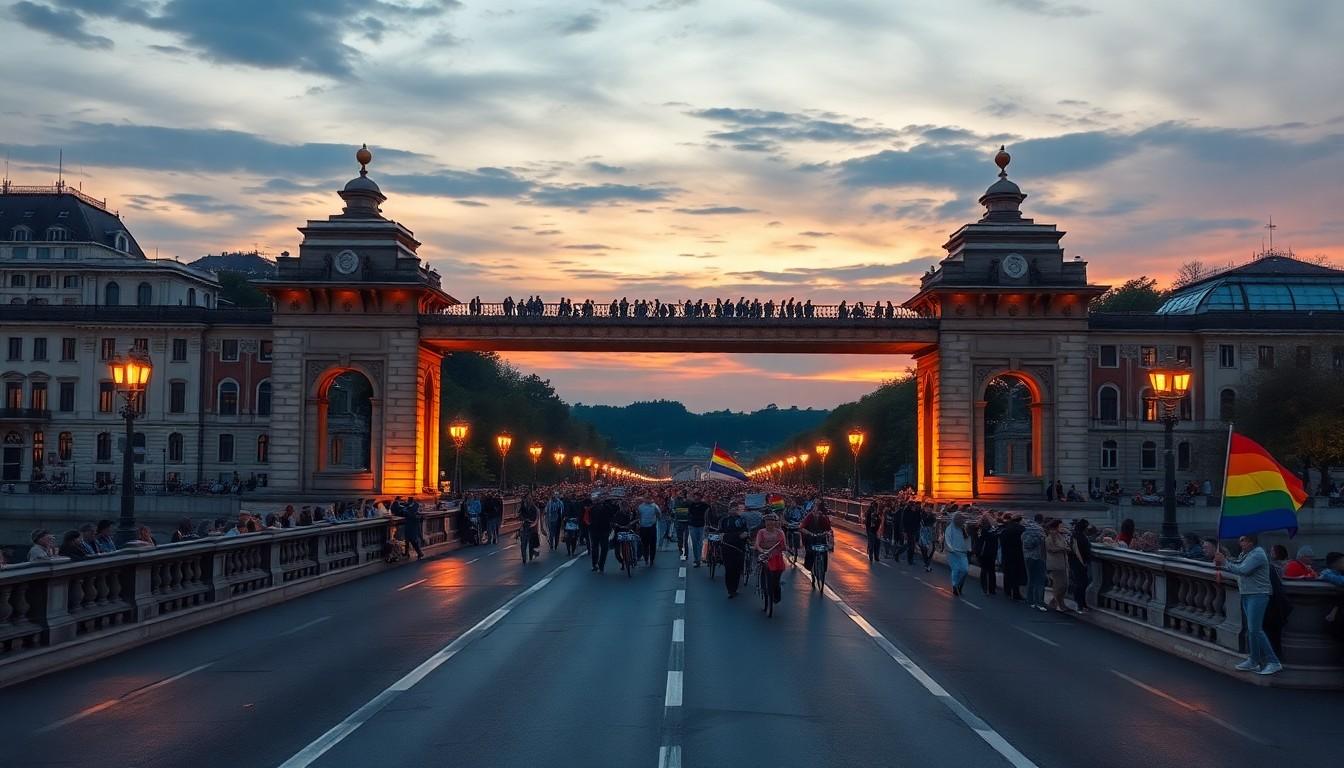
Bursting into the streets in searing heat, tens of thousands poured through central Budapest for the 31st Pride , the first major march since Viktor Orbán’s government fell , a vivid sign that visibility, politics and hope are now entwined in Hungary’s public life.
Essential Takeaways
- Huge turnout: Tens of thousands attended Budapest Pride, signalling broad public support and a celebratory atmosphere.
- First since government change: This was the first Pride march after Orbán’s 16‑year rule ended, and many attendees said the mood felt lighter.
- Heat and logistics: Temperatures topped 100°F so organisers handed out water and city fountains were opened to keep people safe.
- Legal limbo: The new government hasn’t yet repealed anti‑LGBTQ+ laws from the Orbán era, but police authorised and protected the march.
- European pressure: The EU’s top court has already found Orbán‑era restrictions unlawful, adding legal momentum for rights reforms.
A different kind of jubilation on Budapest’s streets
The march rolled out from the Opera House and flowed over the Erzsébet Bridge with music, flags and a distinctly lighter mood than in previous years. Organisers handed out water and the city opened fountains as a heat wave baked the capital, giving the event a sweaty, joyful feel rather than a tense one. According to local reporting, people said they felt safer and more relaxed now that Orbán is out of office, and older participants were more visible among the crowds.
Why the timing matters: politics meets Pride
This Pride came just weeks after a new prime minister, Péter Magyar, took office, ending 16 years of Orbán’s nationalist‑populist rule. The change in government didn’t instantly rewrite laws, but it shifted the political temperatures , and street visibility , almost overnight. With police approving and securing the route, the march became an early, symbolic test of whether new leaders will tolerate or even embrace public LGBTQ+ life.
Laws still cast a long shadow
Even as Pride swelled, the legal situation remains unsettled. The Orbán era left a raft of restrictions , including bans on LGBTQ+ content for minors and limits on family rights , that have not been fully scrapped. EU rulings, however, are pushing back: the bloc’s top court has judged parts of that legislation to breach EU law, a decision that gives campaigners a strong lever as parliamentary debates begin over adoption and family rights.
The role of last year’s mass turnout
Last year’s defiant parade , held despite a government ban and drawing hundreds of thousands , was widely seen as a turning point. That massive turnout dented Orbán’s prestige and helped set the scene for the election upset this spring. Activists and commentators say last year’s visibility proved the movement’s resilience and forced the issue into mainstream politics, turning street protest into a factor in national change.
Practical signs of cautious optimism
People I spoke to at the march expressed hope rather than triumphalism. Some welcomed parliamentary talks about adoption and the status of same‑sex couples; others stressed patience, noting legal rollbacks take time. For families and allies planning to attend future events, organisers recommend staying hydrated in the summer heat, checking permitted routes with local authorities, and joining registered groups for added safety.
It's a small, sun‑soaked step, but one that hints at bigger changes ahead for Hungary’s LGBTQ+ community.
Source Reference Map
Story idea inspired by: [1]
Sources by paragraph: