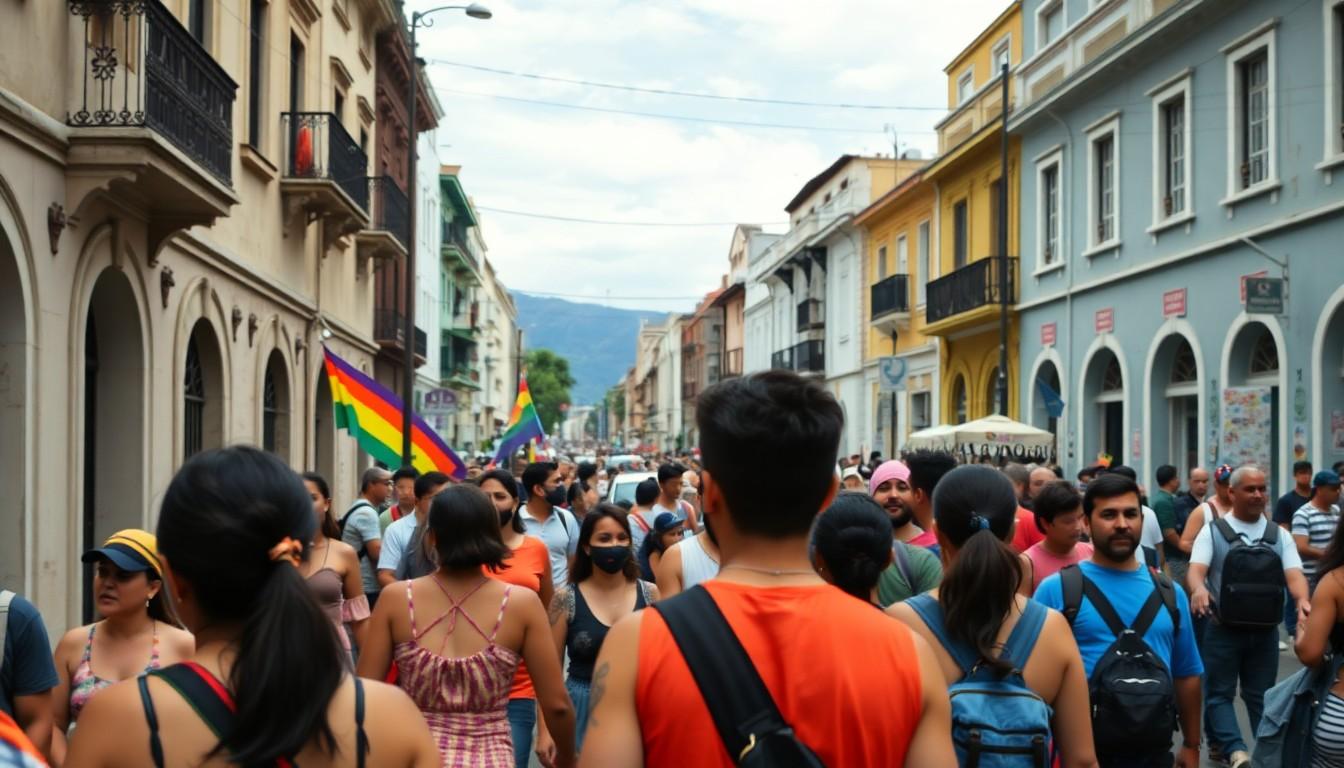
Shoppers, neighbours and families joined a multicoloured wave through Quito this weekend as marchers demanded LGBTIQ+ rights, an end to violence and greater respect; the lively parade , with health stalls, music and huge flags , mattered because discrimination remains a daily reality for many Ecuadorians.
Essential takeaways
- Mass turnout: Thousands filled Quito’s streets for Pride, starting at Plataforma Gubernamental Norte and ending at the city’s main convention centre with concerts and a fair.
- Services on hand: Organisers set up sexual and reproductive health booths and information points for people facing violence , practical help amid celebration.
- Stark stats: More than half of LGBTIQ+ adults in Ecuador report lifetime discrimination, per national census figures, underscoring why visibility matters.
- Voices and mood: Marchers combined festivity with protest , bold costumes, banners and music, plus heartfelt speeches from activists including trans leaders.
A city dressed in colour , what happened on the ground
Quito looked, sounded and felt different for a day, awash in rainbow flags, music and chanting; the sensory mix was joyful and loud. Organisers from Orgullo Quito coordinated a route that began at a government hub and threaded through central streets to a convention centre, where concerts and a second fair kept energy high. According to local reporting, stalls offered health services and guidance for people who’ve experienced violence, which made the event useful as well as celebratory.
The march wasn’t just a party; it was staged as a form of protest and outreach. Coordinators told EFE the goal is to make Quito visibly inclusive and to sensitise the wider public. That combination , festival plus support services , is now common in larger Pride events globally and here it helped keep vulnerable people at the centre.
Why visibility still matters in Ecuador
The figures are blunt: national data show roughly 53.5% of LGBTIQ+ adults have faced discrimination or violence during their lives. That kind of statistic shapes the tone of the march , there’s relief in community, but also anger and urgency. Organisers said the events aim to chip away at entrenched prejudice, including opposition driven by religious fundamentalism.
Speakers at the march described how stigma can have devastating consequences, including mental health crises. That’s why the presence of outreach services and clear messaging about resources matters. For parents, partners or allies watching from the sidelines, the march makes an otherwise hidden reality visible.
The people leading the charge , activism and personal stories
Among the crowd were seasoned activists and new faces. Trans activists were especially prominent, reminding onlookers that battles for recognition and safety have been long and personal. One activist sent “blessings” even to those who oppose them , a line that captures the mix of resilience and empathy many marchers bring.
Local campaigning groups have been building momentum for years. Events like this are often the result of sustained organising: outreach, permits, volunteer coordination and partnerships with health providers. That groundwork shows , the march ran with a sense of purpose rather than chaos.
How Quito’s Pride links to other cities and future steps
Guayaquil staged its own major march on the same day, slated to finish with a festival at the Palacio de Cristal, showing this wasn’t just a Quito moment but a national one. The synchronised activity suggests a broader push for visibility across Ecuador’s cities, not just the capital.
Looking ahead, organisers hope these public displays will translate into policy wins and social shifts. That’s a long game: visibility opens conversations, but legal protections, education and community services need follow-through. Expect next year’s events to push those asks harder.
Tips if you want to join or support Pride safely
If you’re planning to attend a march or volunteer: wear comfortable shoes, carry water, and plan a meeting point with friends in case phones die. Support the community by donating to local organisations that provide sexual health, counselling and legal aid. If you're an ally, listen first , signs and slogans carry stories worth learning.
It’s a small change that can make every march mean more.
Source Reference Map
Story idea inspired by: [1]
Sources by paragraph: