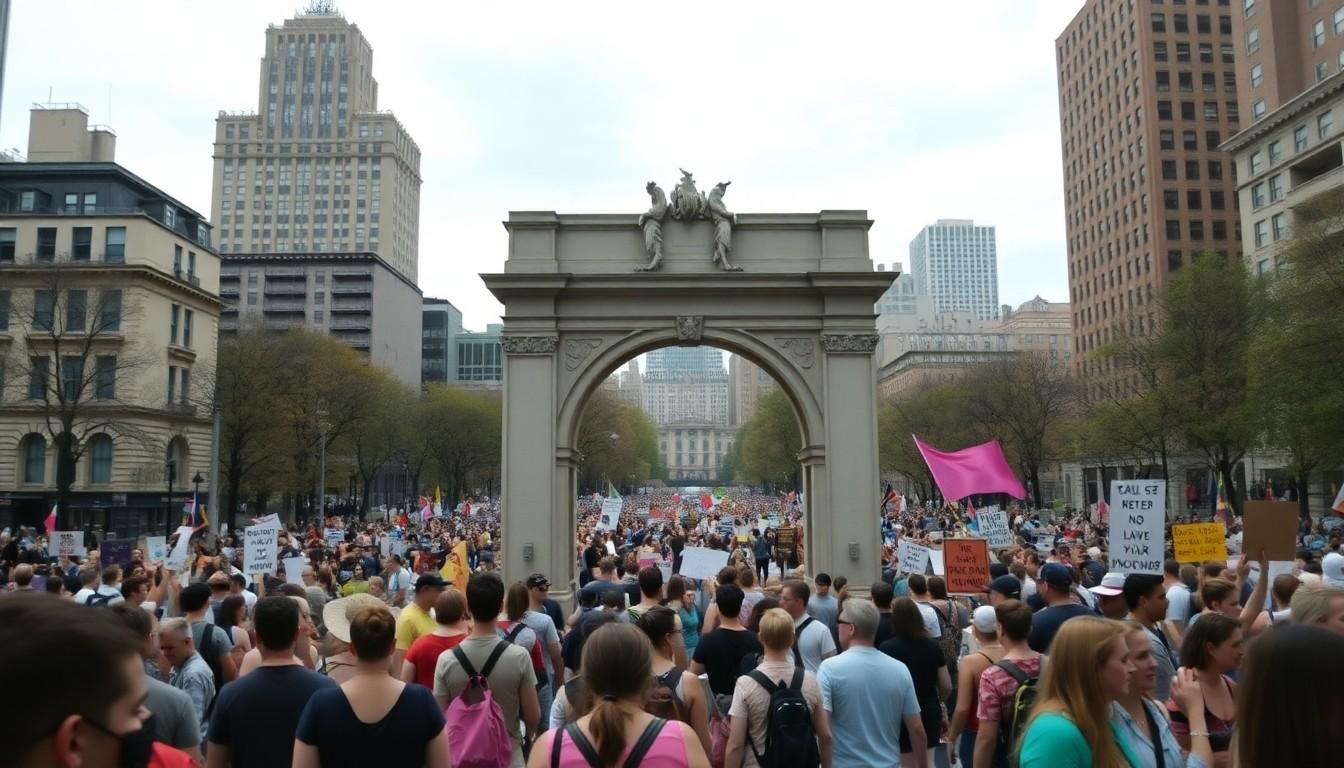
Shoppers and onlookers may have missed it, but thousands gathered on 27 June as the 2026 NYC Dyke March wound from Bryant Park to Washington Square Park, lively, defiant and unpermitted. The protest foregrounded lesbian visibility while amplifying immigrant rights, community care and joy; here’s what mattered, and how to read the signs, slogans and scenes.
Essential Takeaways
- Large turnout: Thousands marched along roughly two miles between Bryant Park and Washington Square Park, creating a dense, celebratory crowd.
- Clear theme: The march adopted the slogan “Hot Dykes Melt ICE,” tying queer visibility to protest against ICE and immigrant detention.
- Mixed messages: Some participants carried explicit political signs and portraits; others came simply to be seen and to celebrate community.
- DIY spirit: The event continued its long-standing tradition of operating without formal city permits or corporate sponsorship, emphasising grassroots organising.
- Visual immediacy: Photographers captured intimate portraits, powerful slogans and the warm, chaotic energy of the route.
Why this march felt different , and familiar
The Dyke March has a way of feeling both immediate and rooted, a loud roar that also remembers its origins. According to event listings and coverage, this year’s route stretched the familiar thirty or so blocks from Bryant Park down to Washington Square Park, packed with people who were loud, colourful and purposeful. The march’s homemade signs and unmediated energy give it a tactile texture, chalky posters, hand-painted banners, the occasional drumbeat, that you can almost see in the photographs.
Organisers have kept the event independent for decades, refusing permits and corporate sponsorships as a political statement. That continuity matters; it keeps the march from being smoothed into a festival and preserves its role as a street-level protest, not an advertiser’s backdrop.
Hot Dykes Melt ICE: what the slogan means in practice
This year’s theme, “Hot Dykes Melt ICE”, is shorthand for solidarity with people detained by U.S. Immigration and Customs Enforcement. Marchers carried portraits and signs referencing specific cases, such as the image of a young boy detained earlier in the year, which made the issue feel immediate rather than abstract. It’s a good example of how queer visibility and immigrant rights intersect: visibility isn’t just about celebration, it can also be protective and political.
If you’re wondering why a Dyke March would centre immigration enforcement, the answer is simple: many queer people are also immigrants or allies, and festivals like this increasingly frame pride as inseparable from broader social justice fights.
The people and the signs , what photographers caught
Photographers on the scene documented more than slogans. They recorded the small human details that make a march feel like a neighbourhood: the clasped hands, the tired feet, the laughter after a chant. Images ranged from bold, graphic placards to soft, candid portraits of friends sharing a moment on the pavement. That mix is why visual coverage matters, photos compress hours of chanting and walking into single frames that linger.
If you’re planning to cover or attend a march, pack a comfortable pair of shoes, bring water, and keep your camera battery topped up; the most telling images often come in between the big moments.
How the Dyke March fits into wider Pride and protest trends
The Dyke March’s refusal of permits and sponsors isn’t just old-school stubbornness, it’s a critique of how Pride has been corporatised. Across cities, activists are carving out parallel events that centre protest and community care over brand visibility. This shift is visible in the DIY signage and the specific political demands shouted along the route.
For readers trying to keep up: expect more Pride-adjacent actions that foreground intersectional issues, immigration, policing, healthcare, rather than glossy parades that mainly serve spectacle.
What to take home , tips for visitors and allies
If you want to support future grassroots events, consider these simple steps: arrive early and stay respectful of organisers’ rules, donate to community funds rather than branded stages, and amplify marginalised voices rather than speaking over them. And if you bring a sign, make it readable from a distance, bold text, a clear message, and a touch of humour help.
There’s also room for joy. Marches like this remind us that protest and celebration can coexist; being visible is both a political act and a balm.
It's a small, stubborn tradition of protest and pride that keeps the conversation alive on the city streets.
Source Reference Map
Story idea inspired by: [1]
Sources by paragraph: