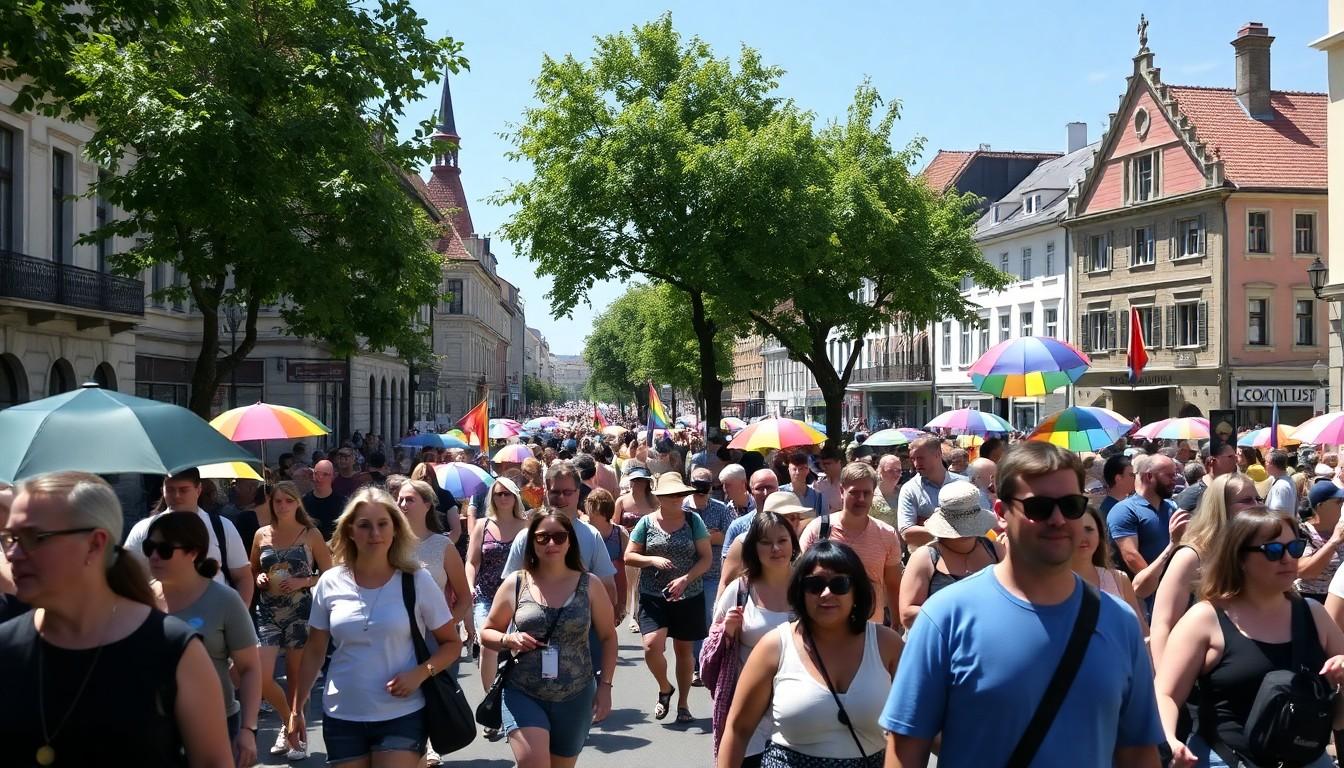
Shoppers and revellers turned out in force as Linz Pride 2026 drew about 10,000 people down the Landstraße on a sweltering afternoon, a colourful show of visibility and political support that mattered for LGBTIQIA+ people across Upper Austria.
Essential Takeaways
- Large turnout: Roughly 10,000 participants marched through Linz’s central shopping street in June, despite near-40°C heat and midday sun.
- Cross-party support: Local and national politicians from several parties gave greetings, signalling broad public solidarity and political visibility.
- Community energy: The route mixed music, floats and banners, with a lively Pride City programme before and after the parade.
- Practical scene: Organisers offered a programme of events and information hubs to keep people safe and cool in extreme temperatures.
- Local roots: The parade is connected to longstanding regional LGBTQ+ networks and unions that promoted participation and workers’ rights.
Why thousands braved almost-40°C for Pride
The boldest image from the day was how relentless colour and cheer pushed back the heat; rainbow flags, confetti and loudspeakers made the Landstraße feel more like a festival than a protest. According to local reports, about 10,000 people turned up, a reminder that visibility still matters and that public streets remain vital spaces for community and protest. Organisers had staged Pride City activities in the lead-up, so the crowd arrived already warmed up and ready to move.
How local leaders framed the march
Mayoral remarks at the Volksgarten set the tone: Linz’s leadership publicly declared no place for exclusion, and local councillors and national MPs offered greetings before the parade set off at 14:00. The range of speakers, from Green and SPÖ figures to representatives of NEOS, the ÖVP and the KPÖ, underlined that Pride here is both a civic celebration and a platform for cross-party commitments on rights and anti-discrimination. That public endorsement matters in a city where municipal backing can shape services and festivals.
What the route and programme looked like
The parade followed Linz’s main shopping spine and drew on a festival-style Pride City roster of events: information stalls, performances and meet-ups helped turn a single march into a day-long experience. For anyone who’s been to a Pride, that mix of political speech, music and community hubs is familiar, but the Linz version leaned into accessibility, signposted chill-out zones and information points helped with the intense heat. If you’re planning to attend next time, bring water, a sun hat and a plan to meet friends away from the busiest sections.
Why unions and workplace groups matter this year
Trade unions and labour groups were visible allies, connecting LGBTQ+ rights to workplace protections and fair treatment. That link lifts Pride beyond spectacle to practical politics: safer places of work, equal benefits and anti-discrimination policies are the kinds of outcomes that affect daily life. Expect future events to keep pushing labour issues, especially as the regional economy and public services debate inclusivity.
What this means for Linz and beyond
Linz Pride 2026 felt both celebratory and strategic: a festival that also cements political commitments and signals to LGBTIQIA+ people that they matter in civic life. The event’s size despite intense heat suggests growing community confidence and effective local organising. If organisers keep building the Pride City concept and maintaining ties with unions and politicians, future parades will likely be bigger, better resourced and more influential.
It’s a small, colourful step that keeps public pressure on politicians and makes the city’s streets feel more like a place for everyone.
Source Reference Map
Story idea inspired by: [1]
Sources by paragraph: