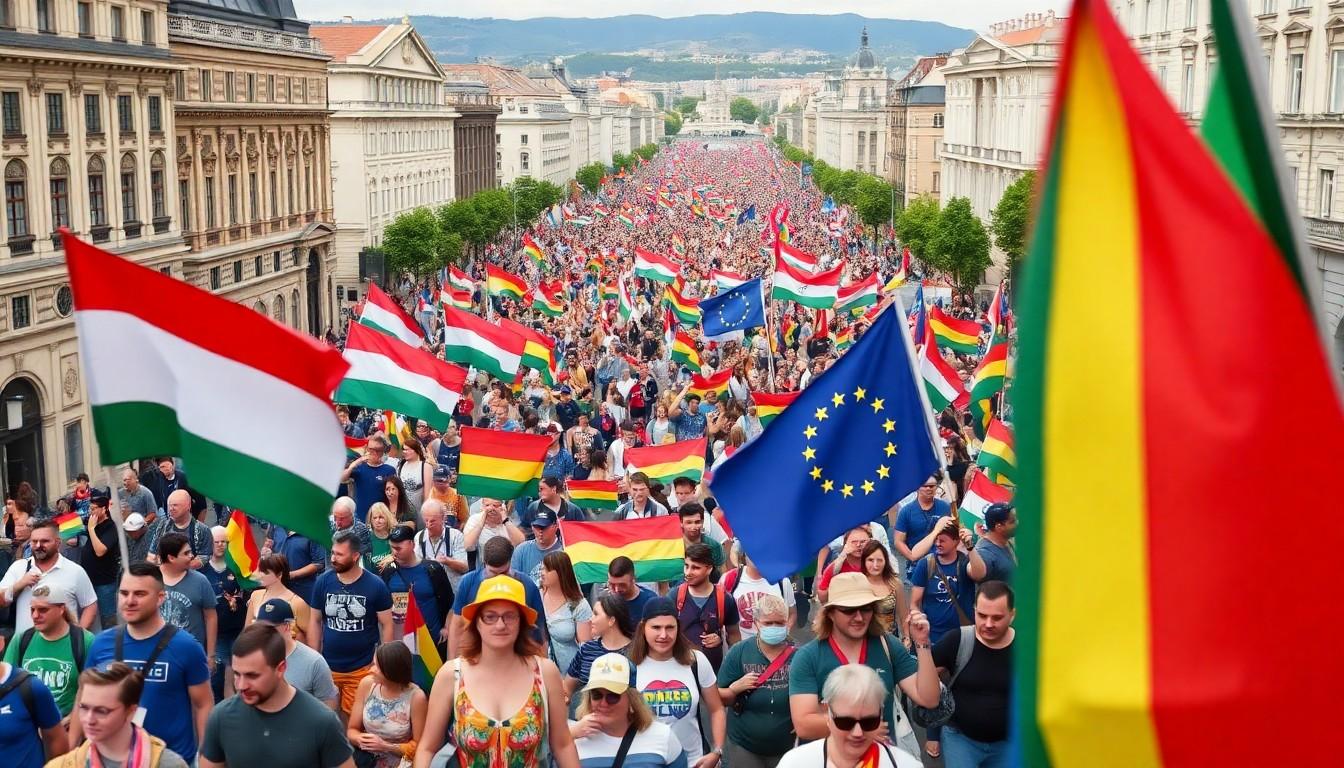
Shoppers, families and activists turned out in force as Budapest hosted its largest Pride march since Viktor Orbán left office, with more than 10,000 people walking the city centre , a visible sign of change in Hungary and why safe, permitted Pride events now matter.
Essential Takeaways
- Large turnout: More than 10,000 people marched through central Budapest, carrying flags and chanting, creating a lively, colourful atmosphere.
- Police-permitted: Authorities officially authorised the parade and provided security along the full route, a sharp contrast with past years.
- Political shift: The change follows April 2026 elections that ended Viktor Orbán’s 16-year rule and reduced state pressure on LGBTQ+ events.
- Cautious optimism: New centre-right leadership has not yet repealed discriminatory laws, but activists say the atmosphere is far less hostile.
- Practical note: Organisers and participants emphasised safety and visibility, with the event both celebratory and political.
A brighter, freer route through the city , what felt different on the ground
You could practically hear the relief in people’s voices as the march moved through Budapest’s streets, flags snapping in a warm June breeze. For many this Pride felt lighter, less fraught; police were present to keep order rather than to block or intimidate. Reuters and local reporting described a scene that was equal parts celebration and cautious testing of new freedoms.
That shift didn’t come out of nowhere. The event follows months of tense, often hostile encounters between the state and LGBTQ+ organisers under the previous government. This year’s permission to march marks a visible change in how authorities treat public gatherings tied to minority rights.
How Orbán’s departure changed the parade’s tone
Viktor Orbán’s defeat in April 2026 reopened space for marches that had previously been hindered by legal and rhetorical attacks. Media outlets reported that the police decision to authorise the march was welcomed by European officials and human-rights groups alike. Instead of last-minute bans or punitive measures, organisers encountered formal approval and a policing presence that emphasised safety.
That doesn’t mean the legal landscape has been rewritten overnight. The new government under a centre-right coalition has signalled conservative instincts remain, but the pressure from state institutions has visibly eased. Activists described the mood as cautiously hopeful rather than triumphant.
Why this matters beyond a single parade
Budapest Pride has often been more than a party; it’s been a litmus test for democratic space in Hungary. Past laws restricting so-called “promotion” of LGBTQ+ matters and rules introduced to limit Pride parades made the event a flashpoint of wider civic contestation. This year’s permitted march sends a message that public dissent and visible minority communities can reclaim space without immediate administrative suppression.
International reaction was notable: European institutions and human-rights organisations framed the allowed parade as a step in the right direction. Observers also pointed out that visible, peaceful assemblies help normalise everyday coexistence in a society where some laws remain discriminatory.
Practical takeaways for participants and organisers
If you’re planning to attend or organise a Pride in a shifting political climate, a few basics still count. Secure official permits early, coordinate with police for safety plans, and make contingency communication channels. Keep messaging clear , balancing celebration with calls for legal change helps build wider civic support.
Organisers in Budapest stressed community outreach and visible family-friendly elements this year, which helped broaden public sympathy and underlined that Pride is about people’s lives, not just politics.
What’s next for rights and reform in Hungary
The march is a milestone, not a finish line. Parliament has only just begun debating potential revisions to the old restrictive laws, and the new administration has urged patience while discussions proceed. Rights groups are pushing for concrete legal rollbacks rather than informal tolerance, while politicians are navigating domestic pressures and European scrutiny.
Expect more public demonstrations, incremental legal debates and continued attention from EU institutions as Hungary’s political landscape settles into its post-Orbán chapter.
It's a small but powerful reminder that public visibility matters , and that change often arrives one permitted march at a time.
Source Reference Map
Story idea inspired by: [1]
Sources by paragraph: